Use this guide as a starting point alongside the detailed sources below. Health concerns, unexplained changes in behavior, or feeding problems belong with a veterinarian experienced with arachnids.
Adult enclosure recommendation
Our recommended minimum: 6″ × 6″ × 9″ (15.3 × 15.3 × 22.9 cm), length × depth × height.
Preferred target: 8″ × 8″ × 1′ (20.4 × 20.4 × 30.5 cm), length × depth × height.
Usable internal space for 1 adult animal. One adult Phidippus regius; both sexes; minimum is scoped to the adult size description in this guide, not related species or breeding groups. Adult body length is commonly about ¼–⅞″ (6–22 mm); this is body length, not leg span. University of Florida extension guidance gives overlapping male and female size ranges.
Height is the usable internal envelope, including the space reserved for substrate and water. Check the remaining movement space and lamp clearance after installation.
The larger editorial target adds connected furnished routes and service room.
The 6″ × 6″ × 9″ (15.3 × 15.3 × 22.9 cm) adult baseline follows Exotic Pet Vets general jumping-spider guidance, applied to the stated P. regius adult scope with furnished upper routes. The larger preferred target and soil/clearance allocation are Creature Corner choices, not a housing trial result.
- Floor space
- 6″ × 6″ (15.3 × 15.3 cm) internal floor; retain accessible routes after the retreat and water provision are installed.
- Climbing space
- Connected branches, cork and foliage to protected upper retreats, with access that does not tear the silk. Adapt routes for an older animal with reduced grip.
- Substrate
- Reserve 0.5″ (1.3 cm) of substrate and 8.5″ (21.6 cm) of space above it before furnishings. These are internal dimensions; the stated height already includes the substrate.
- Water
- Accessible small drinking droplets; check daily and allow drying. Tiny spiderlings need especially fine droplets. Optional safely accessible shallow adult dish does not replace droplet observation.
- Security and ventilation
- One animal. Latch or clip the lid securely, keep gaps too small for escape and retain effective ventilation. Plan safe service access and transfers with a catch cup and a large empty catch tub in a closed room. Check the furnished enclosure against the retreat, water and safety requirements as well as its dimensions.
Meeting these dimensions alone does not establish suitability. Check the usable layout, environmental conditions, equipment clearance and the individual animal’s requirements before occupation.
References: [3]
Choose a spider whose daily life you can support
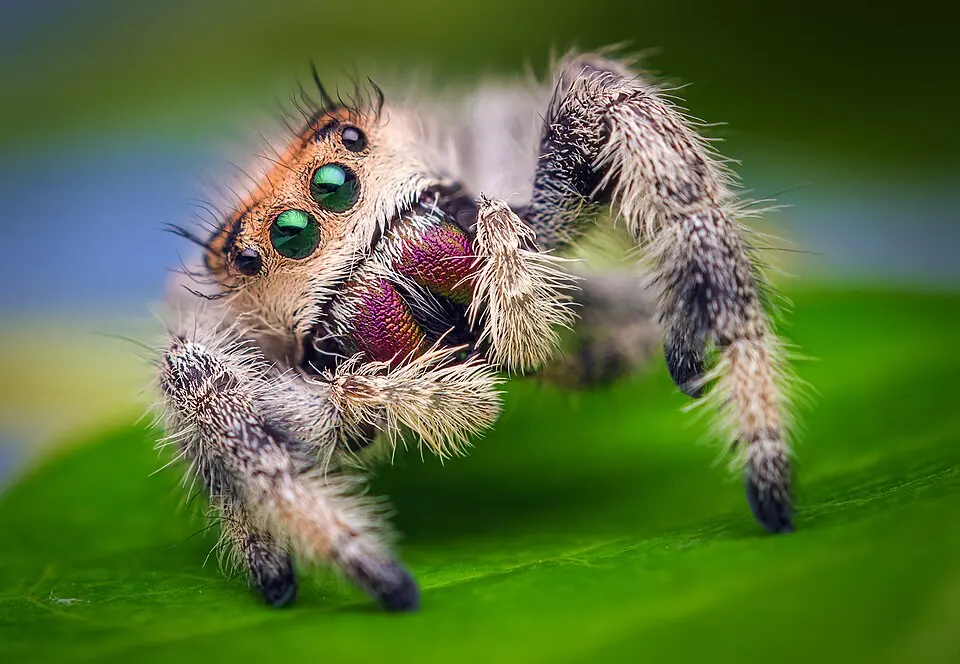
A regal jumping spider is a small daytime hunter. It follows movement with its large front eyes, stalks insects and uses silk to make a sleeping and molting retreat. Its needs are therefore quite different from a ground-dwelling tarantula’s: the important space is a network of elevated surfaces with secure places to rest, usable daylight and prey it can actually locate.
This guide covers Phidippus regius, not every spider sold as a jumper. Similar-looking Phidippus audax and Phidippus otiosus need their own identification. Females vary greatly in color, so a named color form or iridescent mouthparts do not establish species. Ask for captive-breeding history, hatch date if known, current stage, last molt and recent food before choosing an animal.
Adults can fall within a body-length range of about ¼–⅞″ (6–22 mm); the legs are not included in that measurement. Plan for a relatively short but attentive commitment. Veterinary guidance describes roughly 1–2 years for many pet jumpers, while breeder estimates differ and females may outlive males. A mature male of unknown age should not be sold with a promise of years remaining. Daily checks, feeder care, escape prevention and access to an exotic-animal veterinarian still matter for such a small pet.
Give an adult connected upper space
Our recommended minimum for one adult is 6″ × 6″ × 9″ (15.3 × 15.3 × 22.9 cm) of usable internal length × depth × height. This follows the veterinary adult reference, not a scientifically tested welfare threshold. We prefer 8″ × 8″ × 1′ (20.4 × 20.4 × 30.5 cm) when it can be furnished densely enough for easy feeding and observation. More space should create additional reachable routes, rather than leave the spider isolated at the top of an empty box.
A ½″ (1.3 cm) floor layer in the minimum leaves 8½″ (21.6 cm) above it before furnishings. The preferred enclosure leaves 11½″ (29.2 cm). A thin layer of clean coconut fiber (coir) is optional for moisture management; it is not burrowing habitat. Plain paper can make waste and escaped prey easier to see during separate arrival observation, provided it is changed when soiled and drinking access remains reliable.
Choose access that leaves the upper retreat undisturbed, such as a well-designed front or low opening. Fit small ventilation openings on more than one side and check every door edge against the spider’s current size. A container that holds an adult may not contain its offspring or a tiny juvenile. Put the enclosure somewhere stable, away from direct sun, kitchen sprays, pesticides, curious pets and repeated vibration.
Build surfaces the spider can use
Anchor branches, cork and safe artificial or live foliage so the spider can move from the floor toward several upper perches without crossing a large blank gap. Include sheltered upper corners and broad resting surfaces. Check that decorations cannot shift when a door opens, and keep feeding access clear of the eventual silk retreat.
Leave a completed silk retreat in place. The spider may use it to rest, molt or lay eggs, and opening it to check on the animal removes the very protection you provided. As an older spider loses grip or mobility, bring routes closer together and place accessible resting and feeding surfaces lower down. This is an individual accessibility adjustment, not a reason to remove all climbing from a healthy adult’s home.
Measure a moderate environment and a useful day
Use 70–80°F (21–27°C) air around the animal as a practical maintenance range, favoring its middle rather than trying to heat the enclosure to the upper edge. Measure near an occupied perch in shade and check a second position; keep the probe from touching a wall or being warmed directly by a lamp. Check the room’s coldest overnight and warmest daytime conditions. We do not prescribe an additional night drop when the enclosure already remains within this moderate range.
Provide useful diffuse visible light during the day and darkness at night. A 12-hour light/12-hour dark timer is a convenient starting routine, with shaded retreats always available. Specialist breeders differ on how bright the hunting area should be; if the spider remains concealed or ignores food, review light together with temperature, stage and molt history instead of assuming one cause. A lamp that raises temperature sharply needs repositioning or replacement.
Keep the enclosure out of direct sunlight. If the room needs warming, a controlled room-level solution is easier to monitor than heating a tiny container. Do not put it on an uncontrolled heat mat. This guide does not prescribe an ultraviolet B (UVB) lamp or a numerical exposure dose: ultraviolet sensitivity in spider vision does not itself demonstrate a captive UVB requirement.
Make drinking possible without keeping everything wet
Lightly add small droplets to one accessible wall or leaf, away from the spider and its retreat. Check daily whether water is available and whether the enclosure is drying. Small spiderlings need especially fine droplets, because a large drop can trap a very small animal. Use clean water and a fine sprayer or dropper; a damp enclosure is not proof that the spider has found a drink.
A starting reference of 50–60% relative humidity is supported by veterinary guidance, measured at the spider’s resting height, with the temperature recorded. It is not a reason to shut the vents or wet every surface. Keep a drier route and allow droplets to disappear between additions. Persistent condensation, sodden paper or visible mold calls for a review of water quantity, airflow and cleaning.
Sources disagree on automatically raising humidity during a molt. Our choice is to maintain dependable drinking opportunities before the retreat closes and a stable, ventilated environment while it is occupied. Do not open the silk or soak it to reach a new number. A very shallow dish is an optional adult arrangement only if the animal can enter and leave safely; it does not replace observed droplet access for a tiny spiderling.
Offer prey the spider can safely find
Use captive-reared flies, small crickets or suitably small roach nymphs. Start with prey around the length of the spider’s abdomen rather than testing the largest insect it might overpower. Keep feeder insects healthy and well fed, and vary appropriate prey over time. Wild-caught insects bring pesticide and parasite uncertainties.
As a starting routine, offer juveniles small meals two or three times weekly and review an adult’s appetite about weekly. Observe capture and record what was actually eaten. A rounded abdomen, repeated refusal, a sealed retreat or an aging adult may call for less frequent offers; a shrinking abdomen needs a review of successful feeding, water and health. A calendar cannot tell you that an insect was found or a meal was completed.
Supervise feeding and remove a rejected insect at the end of the offer rather than leaving a surplus supply. Crickets and mealworms can injure a vulnerable spider. Do not disturb a retreat to deliver food, force-feed, or assume a hungry spider will attack prey immediately. No routine reptile calcium or vitamin-dusting schedule is prescribed here; nutritional treatment requires an individual veterinary reason.
Let the silk retreat do its job
A spider preparing to molt may stop feeding and remain in a thicker closed retreat. Remove loose prey and leave the web intact. Continue checking the enclosure quietly from outside; poking the retreat to provoke movement can interrupt a normal process. A missing spider is also a reason to inspect doors and gaps without dismantling every refuge.
After it emerges, allow time for the new exoskeleton and mouthparts to harden. Veterinary guidance uses at least two to four days after a molt as a precaution, but visible recovery and normal movement matter more than a countdown. Wait longer if it remains soft or unready to hunt. Record the date and return to modest prey when it is ready. Never pull off retained cuticle, bathe the spider or apply oil as a home molt treatment.
Plan maintenance around a single animal
Keep one spider per enclosure. Brief courtship observations in nature do not justify routine cohabitation, and this guide does not provide a pairing protocol. A female may make an egg sac; an adult of uncertain history can arrive already mated. Keep her secure and seek a separate plan for identifying, containing and caring for young before opening or moving an egg retreat.
For necessary transfers, prepare a clear catch cup, a soft guiding brush and a large empty catch tub in a room with the doors and windows closed. Let the spider move into the cup rather than gripping it. Keep other pets out of the room. Routine hand-to-hand jumping is not needed to provide good care and introduces opportunities for loss or a fall.
Make the first week easy to observe
Before arrival, run the final furnished enclosure through ordinary day and night conditions, check all openings and confirm that water can be offered without damaging an upper retreat. Arrange a supply of prey at the animal’s current size and record the seller’s last successful meals and molt. Keep the new spider separately from other animals and use dedicated tools while observing its health.
During settling, check closure, drinking access, temperature and the spider’s position each day. Offer food when it is out and ready, using the existing feeding history rather than repeatedly interrupting it. Remove dead prey, droppings and spoiled floor material through the lower access. Keep occupied silk unless contamination makes removal necessary. A planted enclosure still needs this inspection; neither plants nor cleanup organisms make it self-maintaining.
Useful equipment is a secure furnished enclosure, independent thermometer, small hygrometer used with context, fine water applicator, safe feeder containers, catch cup and soft brush. Price these and a veterinary reserve before acquisition.
Recognize deterioration without diagnosing from one sign
A small or wrinkled abdomen, persistent weakness, inability to grip or stand, abnormal discharge, visible parasites on the animal, or a damaged body warrants advice from a veterinarian who accepts arachnids. Food refusal alone can occur before a molt; refusal together with ongoing shrinkage or loss of normal movement deserves prompt attention. Fluid loss or obvious trauma needs urgent assessment.
Send clear photographs and the species, stage, last molt, food record and actual environmental readings when asking for help. Do not improvise pesticides, medications, forced drinking or forced shedding. If a bite occurs, obtain appropriate medical advice rather than relying on a claim that every jumping-spider bite is harmless.
Sources & further reading
Read the full recommendations and check details for your animal, equipment, and local conditions.
- World Spider Catalog: Phidippus regius
- Regal Jumping Spider, Phidippus regius
- Jumping Spider Care Guide
- How to care for your first Phidippus regius spiderling
- Phidippus care guide
- Jumping Spider care sheet
Original Creature Corner guide. Editorial fact and citation checks are recorded; independent veterinary review has not been performed.