Use this guide as a starting point alongside the detailed sources below. Health concerns, unexplained changes in behavior, or feeding problems belong with a veterinarian experienced with arachnids.
Adult enclosure recommendation
Our recommended minimum: 20″ × 20″ × 1′ (50.8 × 50.8 × 30.5 cm), length × depth × height.
Usable internal space for 1 adult animal. One adult Tliltocatl albopilosus; both sexes; minimum is scoped to the adult size description in this guide, not related species or breeding groups. Allow for approximately 6½″ (17 cm) diagonal leg span, not body length; individual adults vary.
Height is the usable internal envelope, including the space reserved for substrate and water. Check the remaining movement space and lamp clearance after installation.
A larger footprint can add useful retreat and drinking choices. Keep the same substrate, climbing or low-fall requirements, ventilation and safe access.
Creature Corner editorial allocation of usable floor, retreat, substrate and clearance informed by the cited ecology and husbandry practice. Exact dimensions are not experimentally validated welfare limits. The article explains the conditions and limits behind this recommendation.
- Floor space
- 20″ × 20″ (50.8 × 50.8 cm) internal floor; retain accessible routes after the retreat and water provision are installed.
- Climbing space
- Low stable retreats and ground routes; do not add exposed height or a hard fall path. Secure heavy supports independently of burrowable soil.
- Substrate
- Reserve 8″ (about 20.3 cm) of substrate and 4″ (10.2 cm) of space above it before furnishings. These are internal dimensions; the stated height already includes the substrate.
- Water
- Clean shallow drinking water continuously available; stable vessel, easy exit, inspected daily and after contamination.
- Security and ventilation
- One animal. Latch or clip the lid securely, keep gaps too small for escape and retain effective ventilation. Plan safe service access and transfers with a catch cup and a large empty catch tub in a closed room. Check the furnished enclosure against the retreat, water and safety requirements as well as its dimensions.
Meeting these dimensions alone does not establish suitability. Check the usable layout, environmental conditions, equipment clearance and the individual animal’s requirements before occupation.
Plan for a burrowing animal and a long female lifespan
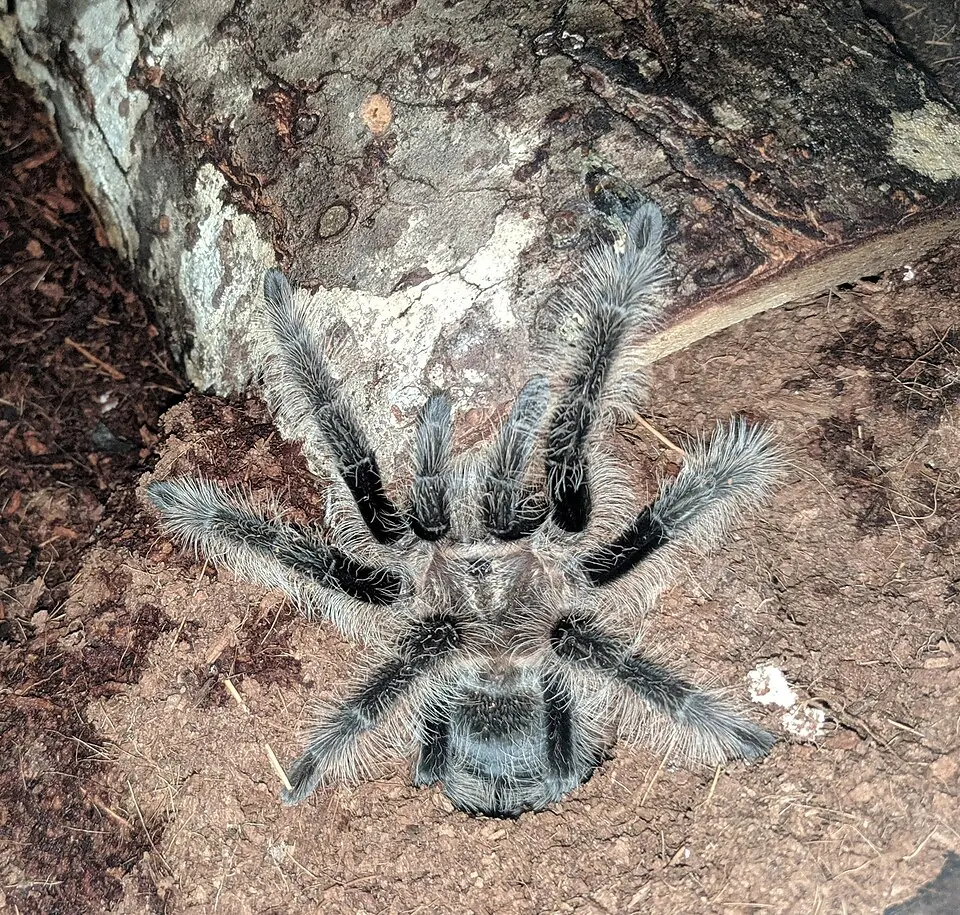
A curly hair tarantula is an animal to watch on its own terms. It may rearrange soil, web a retreat and remain out of sight for long periods. The setup succeeds when it allows those choices, not when it keeps the spider continuously visible. Expect to manage live insect prey, drinking water, molt periods and secure access without routine handling.
The accepted name is Tliltocatl albopilosus; older labels commonly use Brachypelma albopilosum. This guide concerns that species. Names such as Honduran or Nicaraguan curly hair are trade labels whose provenance should be recorded, not proof of a pure lineage or a hybrid diagnosis. The current World Spider Catalog lists Costa Rica, while hobby accounts often describe a wider range. We do not resolve that difference by inventing a locality history for a purchased animal.
Allow for an adult diagonal leg span of roughly 6½″ (17 cm), measured across the spread legs rather than along the body. Specialist lifespan estimates reach about 25 years for females and around five years for males from hatching, but these are keeper estimates rather than measured survival averages. A female can be a commitment lasting decades; the remaining life of an adult of unknown age is uncertain.
Reserve the height for soil before choosing the box
For one adult of approximately that leg span, our recommended minimum is 20″ × 20″ × 1′ (50.8 × 50.8 × 30.5 cm) of usable internal length × depth × height. Reserve 8″ (about 20.3 cm) for burrowable substrate, leaving 4″ (10.2 cm) above it before furnishings. These are our explicit layout choices, informed by terrestrial care guidance and the need to limit exposed falls; no experiment establishes these exact axes as a universal minimum.
A larger footprint is welcome when it adds separate retreat and drinking locations without making access difficult. We do not claim a second precise size is an optimum. Extra empty height is not the useful upgrade for a heavy-bodied ground spider. If you use a taller enclosure, add appropriate soil rather than create a long drop onto hard decorations.
Fit a securely latched or clipped lid and ventilation that cannot be pushed open or admit the spider’s current body size. Retain usable ground around the retreat and water dish, and keep tall hard ornaments out of an exposed fall path. Do not put loose heavy rocks on soil a burrow can undermine.
Give the spider a retreat it can alter
Use a clean soil and coconut fiber (coir) mixture that can be packed into a stable digging medium without fertilizers, pesticides or aromatic wood shavings. Check the actual product ingredients. Place a low cork retreat at a started depression so the spider can choose to deepen or close it. Support the retreat securely; a loose decorative pile is not a safe burrow roof.
Maintain moisture in part of the lower soil while allowing upper ground to dry. Add water to a corner gradually and inspect the result instead of pouring until the entire enclosure is wet. The spider should have a drier surface and retreat choice. A substrate percentage or a bag’s tropical label cannot tell you whether the lower layer is dry, flooded or holding together.
Webbing and moved soil are functional parts of the enclosure. Leave them when spot cleaning. Do not reopen a blocked entrance to make the tarantula appear, and avoid a full substrate replacement simply because the animal has completed a molt.
Use measured room conditions rather than a hot basking spot
For routine nonbreeding maintenance we recommend air temperatures around 70–76°F (21–24°C). This modest working range falls within the species account’s care band; it is not a clinical tolerance limit. Measure air above the soil near the retreat and at the opposite end, with probes out of direct heating and not touching a surface. Check overnight conditions as well as afternoon readings.
If extra heat is necessary, warming the room is a practical option. Any local heater needs appropriate thermostatic control, an independently checked result and space the animal can move away from. Avoid heating beneath the burrowing layer or placing an uncontrolled lamp over a small enclosure. Do not raise heat to accelerate growth or prescribe winter cooling from a country’s weather.
Provide a normal visible day and dark night; 12 hours of each is a convenient starting routine. Keep the retreat shaded and avoid direct sun. No numerical ultraviolet B (UVB) target or dedicated UVB lamp is prescribed for this species. Evidence reviewed for this guide does not establish one, and reptile lighting or supplement rules cannot fill that gap.
Supply a drink and inspect the moisture gradient
Keep a shallow, stable dish of clean water available and refresh it daily or as soon as it becomes contaminated. Make entry and exit easy, and replace a dish that is repeatedly buried with one whose position can be maintained. Do not use a sponge as a substitute for an accessible water surface.
We do not prescribe a whole-enclosure humidity percentage for this animal. Lower-soil moisture, a usable retreat, ventilation and actual drinking access are more actionable than chasing a single air reading. A small hygrometer can help track changes if you record its location and temperature, but it does not measure water inside a burrow. Persistent condensation or wet, sour material calls for a review of water additions and airflow.
Make a feeding record, not a fixed adult ration
Offer captive-reared crickets, roaches or other suitable insects, with prey no longer than the tarantula’s abdomen as a conservative starting size. Feed the insects properly before offering them. There is no need to include vertebrates or pieces of raw meat in an ordinary insect-based care plan. For a tiny spiderling, use pinhead crickets, tiny roach nymphs or a small pre-killed insect placed within reach of the retreat.
Start by reviewing an adult for a modest meal every two to three weeks, a juvenile every seven to ten days, and a small spiderling for small offers about twice weekly. These are adjustable starting intervals from specialist practice. Offer one item at a time and record the actual prey size and feeding response; a large roach and a small cricket are not equivalent portions.
If the abdomen is already very full or the spider refuses, remove the prey and review the next offer rather than adding insects. Growth, a mature male’s condition and a coming molt can change appetite. Persistent shrinkage or weakness requires a health review. No routine calcium or multivitamin-dusting schedule is recommended; this guide does not assume that reptile supplement instructions apply to a tarantula. Remove any uneaten prey and food remains within 24 hours; remove them sooner if the spider refuses, retreats to molt or appears vulnerable.
Treat fasting and a closed burrow with patience
Reduced feeding, a darker abdominal area and a sealed retreat can precede a molt. Remove uneaten live food, keep drinking water available and leave the retreat alone. A tarantula lying on its back may be shedding normally; do not turn it over or move it just to check a response.
After a molt, wait until the new body and mouthparts have hardened before offering prey. If the fangs are visible without disturbing the spider, they should be dark again rather than pale or reddish. Do not handle it or open its retreat to check; wait if readiness is uncertain. Larger animals can need well over a few days; a date on the calendar does not prove readiness. Begin again with modest prey when the spider is moving normally and ready to take it. Never pull retained cuticle or apply a home oil/bath treatment. If a molt is incomplete and the animal is deteriorating, arrange qualified veterinary advice with photographs and the care record.
Adjust care to the animal in front of you
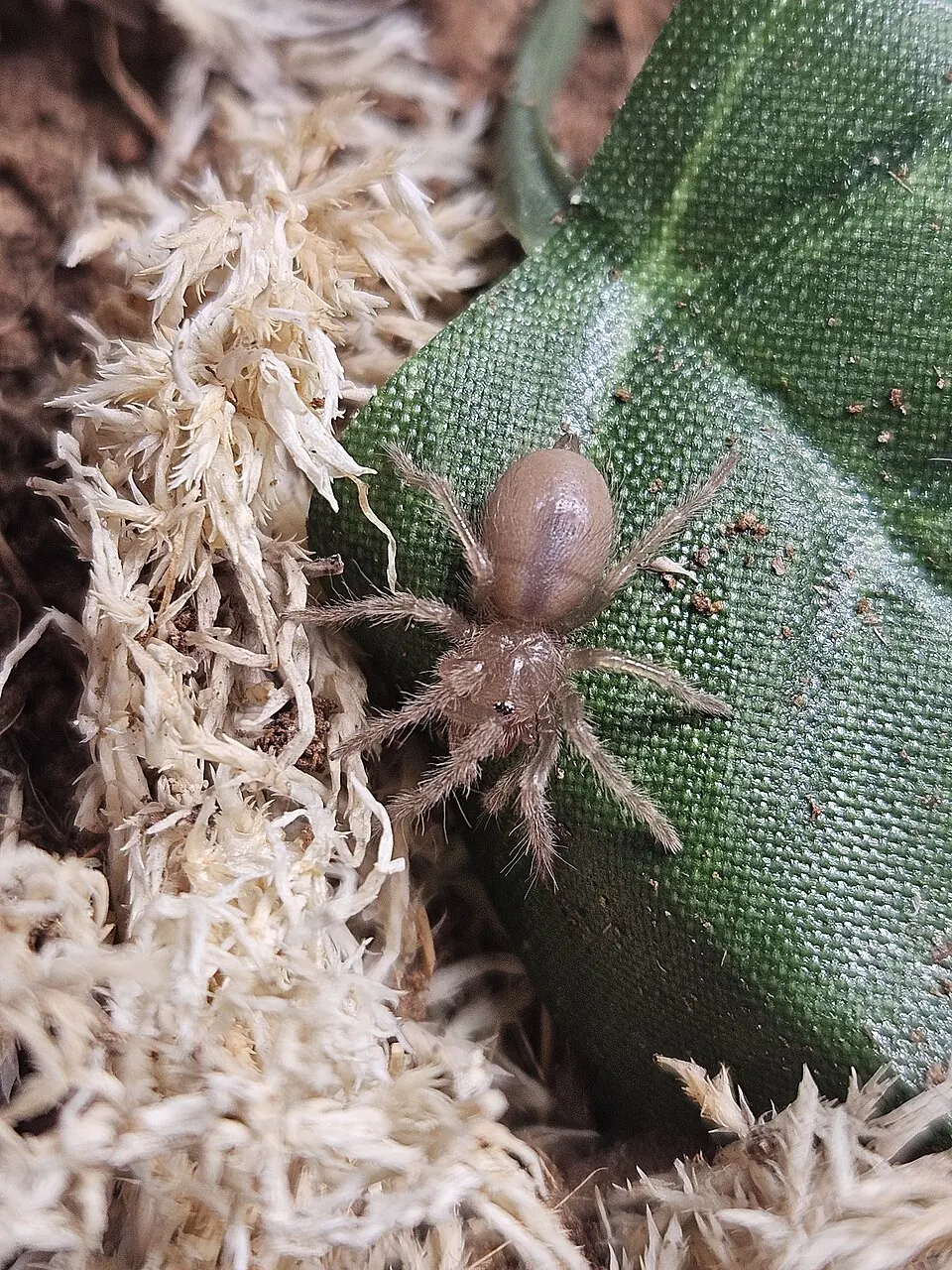
A tiny spiderling needs finer escape checks, smaller prey and closer attention to drying than the adult layout implies. A temporary container must still contain soil and a retreat, permit air exchange and let you observe water and food without excavating the animal. As it grows, enlarge the housing and prey while maintaining those functions; a small raising cup is not its permanent adult home.
For a mature male, use reliable sexing and maturity information rather than assuming an active wanderer needs a mate or more food. Do not overfeed to stop wandering. Ordinary maintenance does not require pairing, egg-sac extraction, forced cooling or a seasonal drying experiment. Breeding and care of a female with young need a separate species-qualified plan.
Keep one animal and use planned transfers
House one curly hair tarantula. A calm reputation does not remove the possibility of a bite, urticating hairs or a rapid escape. Urticating hairs are irritating defensive hairs; avoid rubbing your eyes after servicing the enclosure and use appropriate protection when handling used substrate.
Prepare long tools, a clear catch cup and a large empty catch tub in a closed room before opening the enclosure for a transfer. Guide the spider gently into the cup instead of gripping legs or lifting its body. Routine handling adds fall risk without supplying a husbandry resource. Arrange the habitat so water and waste can normally be serviced without touching the animal.
Set up a routine that protects the retreat
Run the complete furnished enclosure through day and night before arrival, checking air readings, lower-soil moisture, the water position and every opening. Obtain the animal’s identity, last molt, food and source history. Favor traceable captive-bred stock and check current transport or international-trade requirements with the relevant authority before a purchase crosses borders.
Check the enclosure and water daily, removing visible food remains, waste and contaminated material without dismantling an occupied burrow. A full strip-down is for a real contamination or maintenance need, not a weekly ritual. Keep new arrivals separate and use dedicated tools while observing their condition.
Prepare the adult enclosure, deep suitable soil, low cork retreat, shallow dish, independent air thermometers, feeder containers, long tools and catch cup. Budget for continuing feeder supplies, substrate replacement when needed, environmental control and a veterinarian who will examine arachnids. No daily-minute estimate or promise of negligible care is made.
Respond to changes with evidence
Seek veterinary help for fluid loss after trauma, persistent collapse or inability to stand, an incomplete molt with deterioration, or abnormal white material/discharge around the mouth with feeding difficulty. A very small or wrinkled abdomen deserves a review of drinking, successful feeding and health. Fasting alone is not enough to diagnose dehydration, parasites or a molt problem.
Record the species, stage, last molt, prey history, air readings and moisture arrangement before asking for help. Do not treat a shaky gait with a guessed medication or use pesticide products around the enclosure. Eye exposure to irritating hairs also warrants medical advice; do not dismiss it because the spider itself appears calm.
Understand why this guide chooses depth and restrained feeding
Commercial enclosure examples can be smaller than the same source’s stated leg-span rule. Generic veterinary guidance also ranges from leg-span-based floor planning to a broad aquarium volume. We choose an explicit 20″ (50.8 cm) square floor with deep soil and a short exposed clearance so the actual layout can be assessed. Neither liters nor a large advertised height can substitute for those resources.
Feeding guidance likewise ranges from several weekly offers in general tarantula material to much longer adult intervals in the species account. Our starting routine follows the slower adult reference and changes with actual condition. It does not declare frequent feeding always harmful or promise that every adult should accept a meal on the same day.
Sources & further reading
Read the full recommendations and check details for your animal, equipment, and local conditions.
- World Spider Catalog: Tliltocatl albopilosus
- Tliltocatl albopilosus Care Guide
- Tarantula Care
- Care and Keeping of Tarantulas / When Your Pet Has Eight Legs
- Basic guide to keeping
Original Creature Corner guide. Editorial fact and citation checks are recorded; independent veterinary review has not been performed.