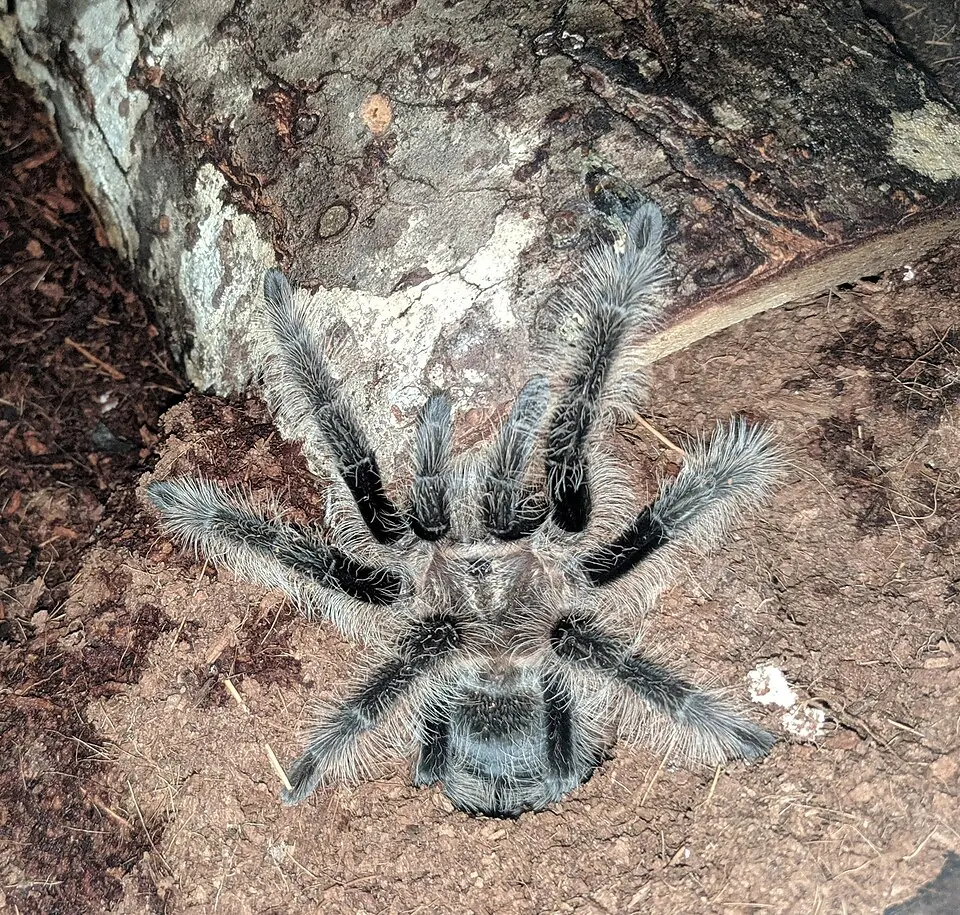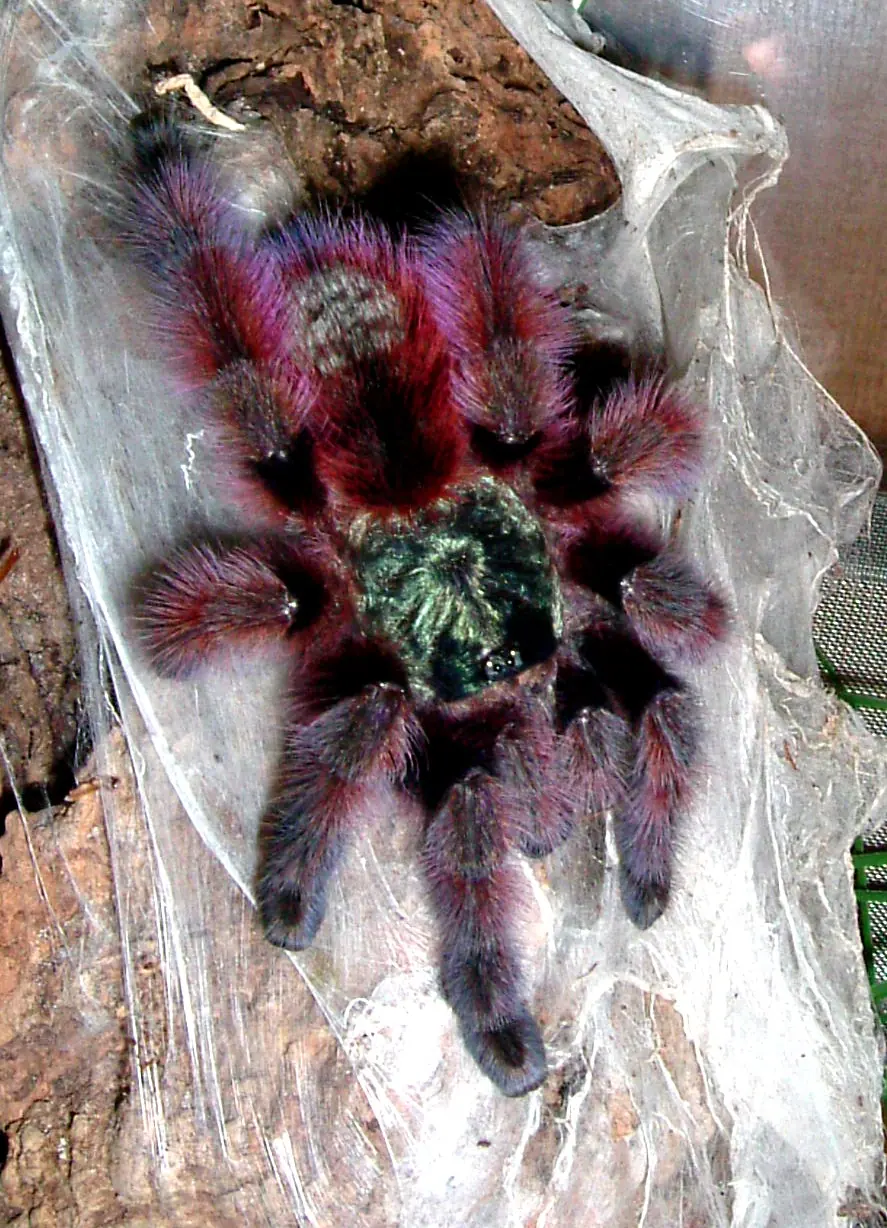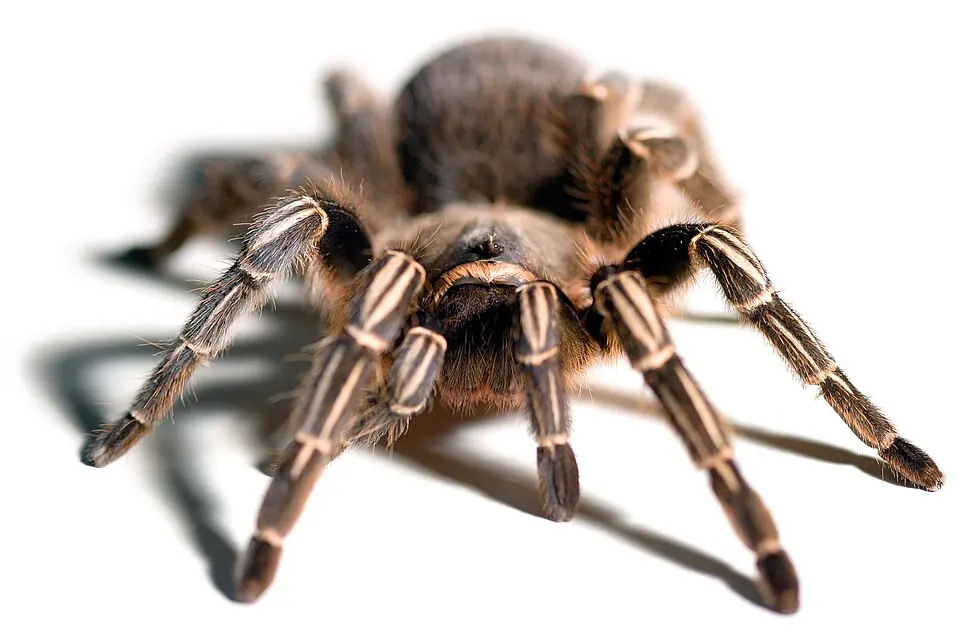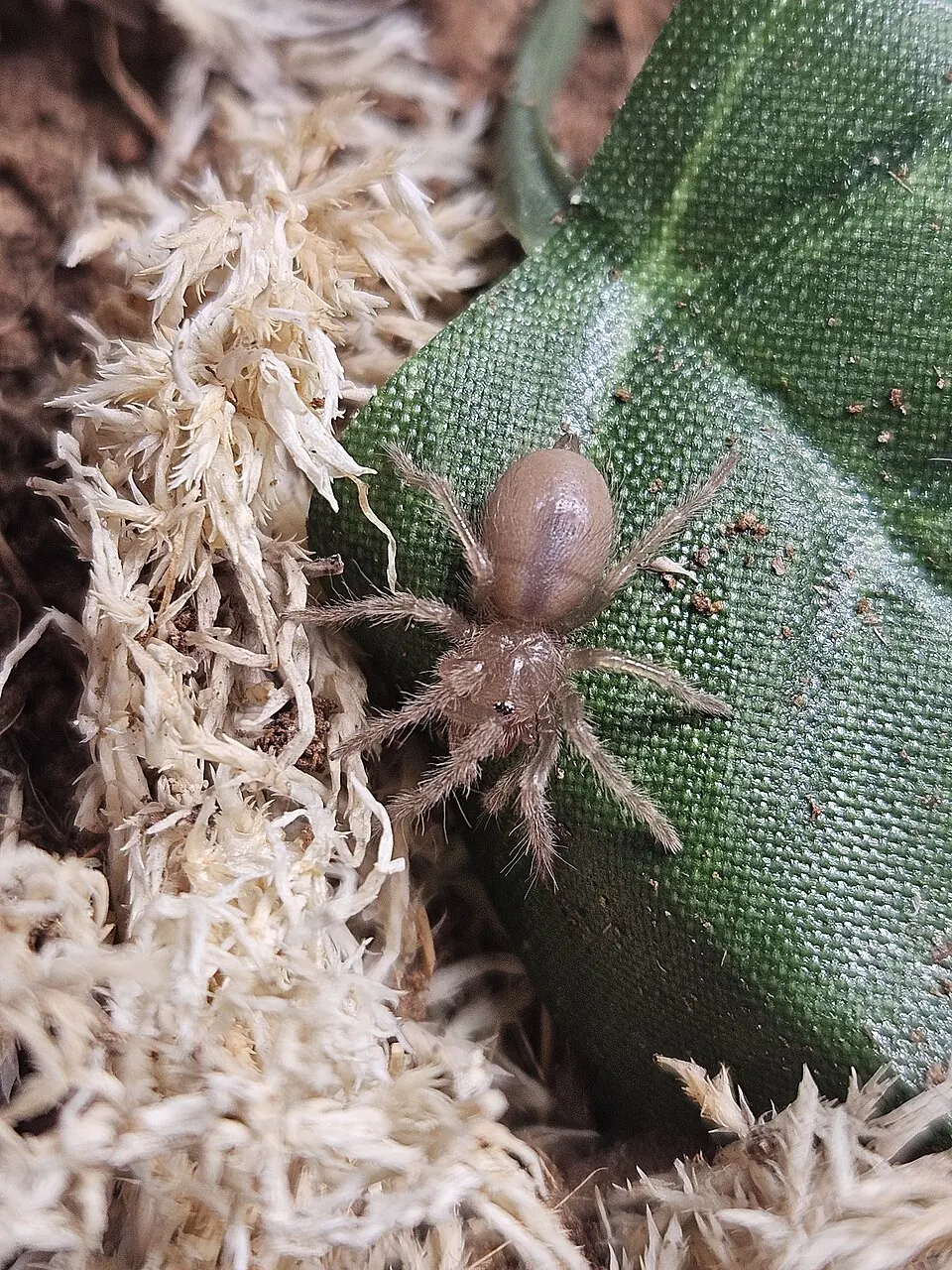
Use this guide as a starting point alongside the detailed sources below. Health concerns, unexplained changes in behavior, or feeding problems belong with a veterinarian experienced with arachnids.
Adult enclosure recommendation
Our recommended minimum: 18″ × 18″ × 1′ (45.8 × 45.8 × 30.5 cm), length × depth × height.
Usable internal space for 1 adult animal. One adult Brachypelma hamorii; both sexes; minimum is scoped to the adult size description in this guide, not related species or breeding groups. Plan around 5½″ (14 cm) diagonal leg span; this describes the spread of the legs, not body length.
Height is the usable internal envelope, including the space reserved for substrate and water. Check the remaining movement space and lamp clearance after installation.
A larger footprint can add useful retreat and drinking choices. Keep the same substrate, climbing or low-fall requirements, ventilation and safe access.
Creature Corner editorial allocation of usable floor, retreat, substrate and clearance informed by the cited ecology and husbandry practice. Exact dimensions are not experimentally validated welfare limits. The article explains the conditions and limits behind this recommendation.
- Floor space
- 18″ × 18″ (45.8 × 45.8 cm) internal floor; retain accessible routes after the retreat and water provision are installed.
- Climbing space
- Low stable retreats and ground routes; do not add exposed height or a hard fall path. Secure heavy supports independently of burrowable soil.
- Substrate
- Reserve 8″ (about 20.3 cm) of substrate and 4″ (10.2 cm) of space above it before furnishings. These are internal dimensions; the stated height already includes the substrate.
- Water
- Clean shallow drinking water continuously available; stable vessel, easy exit, inspected daily and after contamination.
- Security and ventilation
- One animal. Latch or clip the lid securely, keep gaps too small for escape and retain effective ventilation. Plan safe service access and transfers with a catch cup and a large empty catch tub in a closed room. Check the furnished enclosure against the retreat, water and safety requirements as well as its dimensions.
Meeting these dimensions alone does not establish suitability. Check the usable layout, environmental conditions, equipment clearance and the individual animal’s requirements before occupation.
Start with the correct redknee
Brachypelma hamorii is one of the spiders sold as a Mexican redknee, but that common name does not identify every orange-kneed tarantula. Brachypelma smithi remains a separate accepted species. Many older records labelled smithi actually concern hamorii; that history is an identification problem, not permission to merge the two animals or assume a seller’s old label has been corrected.
Ask for the scientific name, captive-breeding history, approximate hatch date, last molt, feeding record and any reliable sexing information. Keep original labels and purchase records even when an identification is revised. Color alone may be insufficient to resolve an uncertain animal.
Plan around an adult diagonal leg span of about 5½″ (14 cm), with individual variation. Keeper estimates put female longevity around 25–30 years and males around ten years from hatching; these are not population averages or a guarantee of remaining life. A female’s care can span changes of home and caretaker. Include a long-term backup keeper and an arachnid-capable veterinary reserve in the decision.
Choose a low, soil-filled adult layout
Our recommended minimum for one adult is 18″ × 18″ × 1′ (45.8 × 45.8 × 30.5 cm) of usable internal length × depth × height. Reserve 8″ (about 20.3 cm) for soil, leaving 4″ (10.2 cm) above it before furnishings. The dimensions are Creature Corner’s layout recommendation informed by terrestrial husbandry and fall prevention, not an experimentally validated welfare boundary.
Use any additional size to improve usable floor, retreat choices and service access. We do not claim a second numerical optimum. A tall empty enclosure is a poor way to make the home larger: the spider can climb the walls even though it is a ground animal, and a fall onto hard furnishings can injure it.
Check that substrate depth remains possible below the door opening, that the lid latches or clips securely and that vents do not admit the current animal. Keep a clear ground route between the retreat and water. Anchor hard supports independently of loose soil, avoid exposed sharp edges, and do not crowd the floor with decorative rocks.
Give shelter that stays useful when the spider digs
Provide a low cork retreat and a started depression in a clean, compactable soil and coconut fiber (coir) mix. Use products without fertilizers, pesticide residues or aromatic wood shavings. The soil should hold a depression and permit digging; loose decorative chips alone do not supply that function.
Keep most upper ground dry, with a localized slightly damp lower corner. Add small amounts of water where you can inspect the result, rather than spraying the entire spider and retreat. The animal needs dry resting choices as well as access to drinking water. A dry-region origin does not mean every layer must be powder dry indefinitely.
Let the tarantula rearrange its home. Soil piled against a hide, silk over the entrance or a period below ground can be normal. Reopening the retreat for a better view defeats its purpose. Build a servicing plan that leaves the retreat secure during ordinary water changes and food-remain removal.
Keep a stable moderate room range
Use 70–78°F (21–26°C) air around the animal as the routine maintenance target. Measure near the retreat at ground level and at the other end with independent air thermometers, including overnight checks. A thermostat controls equipment; it is not the only evidence of the air the animal experiences. No basking-surface temperature or growth-accelerating heat target is prescribed.
If normal room conditions do not maintain the plan, use controlled heating that leaves a cooler choice and is checked independently. Room warming is often easier to manage than a local hot spot. Do not heat underneath the soil a burrowing animal uses as refuge, and do not put the enclosure in direct sunlight.
Provide a visible day/night rhythm with a shaded retreat. Twelve hours of light and twelve of darkness is a practical starting timer routine, not a claim about every wild season. No ultraviolet B (UVB) dose has been established by this research, so a dedicated UVB lamp is not included in the ordinary plan. Reptile lamps and supplement schedules should not be added by analogy.
Maintain water without converting the habitat to a wet box
Provide a stable shallow drinking dish and refresh it daily and whenever it is contaminated. Check that the spider can approach and leave it, and that soil has not filled it. A damp patch near the dish is compatible with a drier upper surface; soaking the whole enclosure is not required.
We do not assign a universal relative-humidity percentage. The meaningful routine is to inspect lower-soil moisture, dry resting ground, ventilation and actual water access. If you use a hygrometer, record its location and nearby temperature so readings can be compared. A single air percentage does not describe the retreat or prove hydration.
Persistent condensation, moldy food remains or sour wet soil call for maintenance and an airflow/watering review. Repeated wall-climbing can have several causes, including recent disturbance or unsuitable conditions; review the complete setup instead of trying to diagnose humidity from one behavior.
Match meals to slow development and actual condition
Use well-kept captive-reared insects such as crickets or roaches. Start with prey no longer than the spider’s abdomen and offer it individually, so you can see whether a meal is taken. There is no need for a routine vertebrate prey item, raw meat or a reptile vitamin-dusting program. For a tiny spiderling, use pinhead crickets, tiny roach nymphs or a small pre-killed insect placed within reach of the retreat.
Begin adult meal reviews about every two to three weeks, juvenile reviews every seven to ten days and small spiderling offers about twice weekly. These intervals are starting husbandry choices, not orders to feed a full ration regardless of condition. Different prey sizes and developmental stages make a fixed cricket count misleading.
If the abdomen is already very full, the animal refuses or it closes its retreat, remove the feeder and reconsider the next offer. Do not leave crickets to graze in the enclosure or repeatedly present food to a fasting spider. A shrinking abdomen, poor movement or persistent feeding difficulty merits a health review; a quiet fast with stable condition can occur before molting. Remove any uneaten prey and food remains within 24 hours; remove them sooner if the spider refuses, retreats to molt or appears vulnerable.
Protect the vulnerable period before and after a molt
A darkening abdominal patch, reduced appetite and a sealed retreat may signal premolt. Remove loose prey, maintain the established environment and keep water available. If the spider lies on its back, observe without touching it; this can be the normal molting position.
After shedding, the new body and fangs must harden before it can safely take prey. If the fangs are visible without disturbing the spider, they should be dark again rather than pale or reddish. Do not handle it or open its retreat to check; wait if readiness is uncertain. Adults may need a substantial waiting period, so do not treat a fixed number of days as clearance to feed. Resume with modest prey only once the animal is normally mobile and ready. Record the molt rather than removing the old skin while it may still be attached.
Do not pull cuticle, massage limbs, bathe the spider or apply oils. If the animal is stuck and deteriorating, or fluid is leaking, obtain prompt advice from a veterinarian who works with invertebrates. Share clear images and the molt/environment history rather than guessing at a home treatment.
Keep maintenance separate from breeding
Tiny spiderlings require smaller escape openings, smaller prey and more frequent checks that local moisture and a drink remain accessible. A raising container is temporary unless it meets the adult recommendation. Increase housing and food in response to growth while preserving the low fall distance and deep retreat substrate.
A mature male may be more mobile and have a different appetite from an immature female. Record verified sex and maturity when available, and adjust meals to condition rather than trying to stop wandering by feeding. Routine care does not require introducing another tarantula.
This guide does not prescribe forced winter cooling, egg-sac extraction or seasonal breeding triggers. A female with eggs or an animal of uncertain reproductive history needs a separate management plan. Do not turn a source’s breeding temperatures into a year-round maintenance requirement.
Use a cup and a plan instead of bare hands
Keep one animal. Routine handling creates a fall opportunity and is unnecessary for good care. This species can bite and has urticating hairs, the irritating hairs used in defense; a calm individual still deserves a no-grab service routine. Do not touch or rub your eyes with hands or tools that have contacted the animal or its substrate. Wash your hands after servicing the enclosure.
Before a necessary transfer, close the work area to escape, prepare a catch cup and long soft guiding tool, and leave a clear route into the cup. Do not pinch legs or lift the abdomen. Place water and inspection access where ordinary servicing can happen without moving the animal.
Make a long-term record from the first day
Test the final furnished enclosure through day and night before acquisition, checking closure, air, soil depth and drying, the retreat and drinking access. Keep a new arrival separate with dedicated equipment while observing its condition. Retain the seller’s identity and last-molt/food record; obtain current official advice before international transport rather than relying on an old care sheet’s permit summary.
Inspect water and enclosure security daily. Remove food remains, waste and spoiled substrate through routine access without reopening a closed retreat. A full soil change is appropriate when contamination requires it, not simply because the calendar says to dismantle the home. A bioactive substrate still needs these checks.
The equipment list follows this care plan: suitable adult enclosure, deep soil mix, low retreat, shallow dish, independent thermometers, controlled heating only when required, feeder containers, long tools and catch cup. Budget for the full female planning horizon and veterinary care.
Know which changes need qualified help
Urgent problems include fluid leaking after a fall or wound, collapse or persistent inability to stand, and an incomplete molt with worsening condition. Abnormal material around the mouth together with feeding difficulty also needs veterinary assessment. Do not assume these signs have one cause or treat them with household products.
For an appointment or advice, supply the scientific name, age/stage if known, last molt, food record, enclosure photographs and measured day/night air. Include any pesticide or spray exposure and recent changes. If irritating hairs reach a person’s eyes or a bite causes symptoms, seek appropriate medical advice rather than relying on a casual comparison to an insect sting.
Keep the source disagreements in context
General tarantula recommendations can suggest large aquarium volumes, small retail examples or a multiple of leg span. Those are not equivalent measurements. Our explicit adult soil-and-clearance layout makes the proposed minimum inspectable without presenting it as a scientific consensus.
General feeding advice is also more frequent than the slow adult routine in the species account. We select the slower starting interval and then observe condition. Historical smithi advice needs a separate identity check before it is used for hamorii; similar appearance alone does not settle which animal a source actually kept.
Sources & further reading
Read the full recommendations and check details for your animal, equipment, and local conditions.
- World Spider Catalog: Brachypelma hamorii
- Brachypelma hamorii Care Guide
- Tarantula Care
- Care and Keeping of Tarantulas / When Your Pet Has Eight Legs
- Basic guide to keeping
Original Creature Corner guide. Editorial fact and citation checks are recorded; independent veterinary review has not been performed.