Use this guide as a starting point alongside the detailed sources below. Health concerns, unexplained changes in behavior, or feeding problems belong with a veterinarian experienced with arachnids.
Adult enclosure recommendation
Our recommended minimum: 1′ × 1′ × 18″ (30.5 × 30.5 × 45.8 cm), length × depth × height.
Usable internal space for 1 adult animal. One adult Caribena versicolor; both sexes; minimum is scoped to the adult size description in this guide, not related species or breeding groups. Adult diagonal leg span commonly reaches about 5½–6″ (14–15 cm), with variation.
Height is the usable internal envelope, including the space reserved for substrate and water. Check the remaining movement space and lamp clearance after installation.
A larger footprint can add useful retreat and drinking choices. Keep the same substrate, climbing or low-fall requirements, ventilation and safe access.
Creature Corner editorial allocation of usable floor, retreat, substrate and clearance informed by the cited ecology and husbandry practice. Exact dimensions are not experimentally validated welfare limits. The article explains the conditions and limits behind this recommendation.
- Floor space
- 1′ × 1′ (30.5 × 30.5 cm) internal floor; retain accessible routes after the retreat and water provision are installed.
- Climbing space
- Anchored vertical cork and connecting branches/foliage with upper web anchors. Preserve occupied silk; retain usable routes through the 16″ (about 40.6 cm) space above the soil.
- Substrate
- Reserve 2″ (5.1 cm) of substrate and 16″ (about 40.6 cm) of space above it before furnishings. These are internal dimensions; the stated height already includes the substrate.
- Water
- Clean shallow drinking water continuously available; stable vessel, easy exit, inspected daily and after contamination.
- Security and ventilation
- One animal. Latch or clip the lid securely, keep gaps too small for escape and retain effective ventilation. Plan safe service access and transfers with a catch cup and a large empty catch tub in a closed room. Check the furnished enclosure against the retreat, water and safety requirements as well as its dimensions.
Meeting these dimensions alone does not establish suitability. Check the usable layout, environmental conditions, equipment clearance and the individual animal’s requirements before occupation.
Plan around an elevated silk retreat
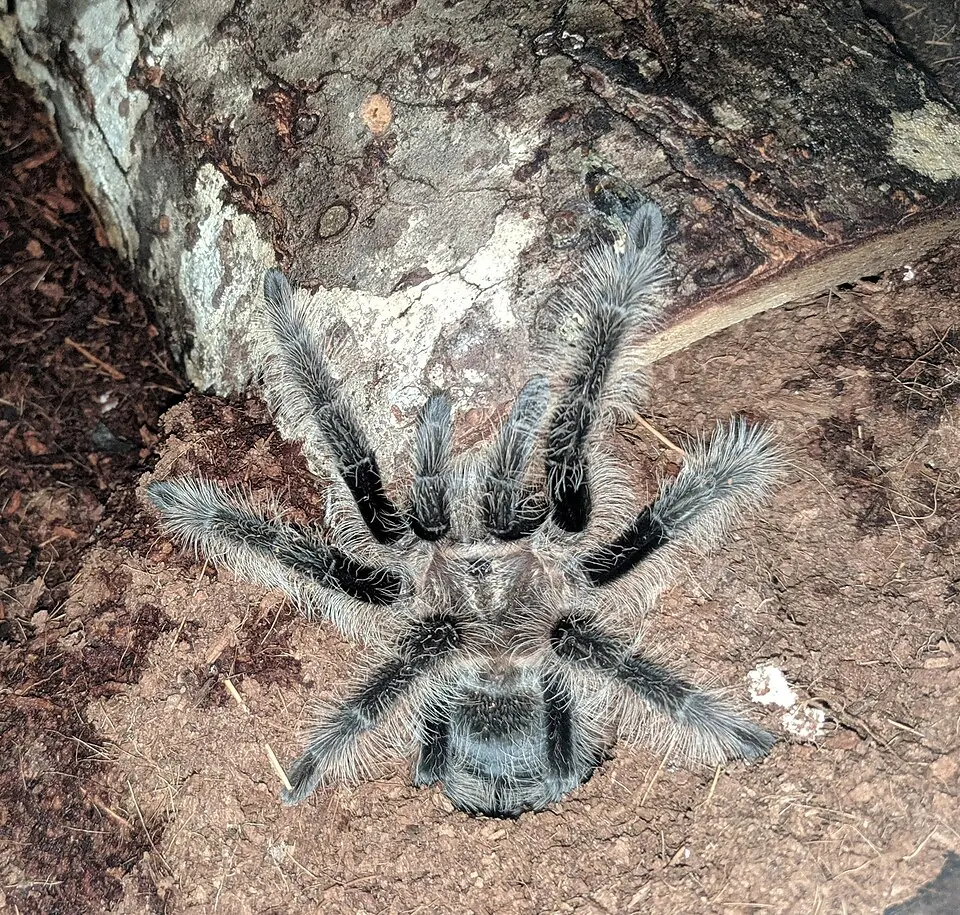
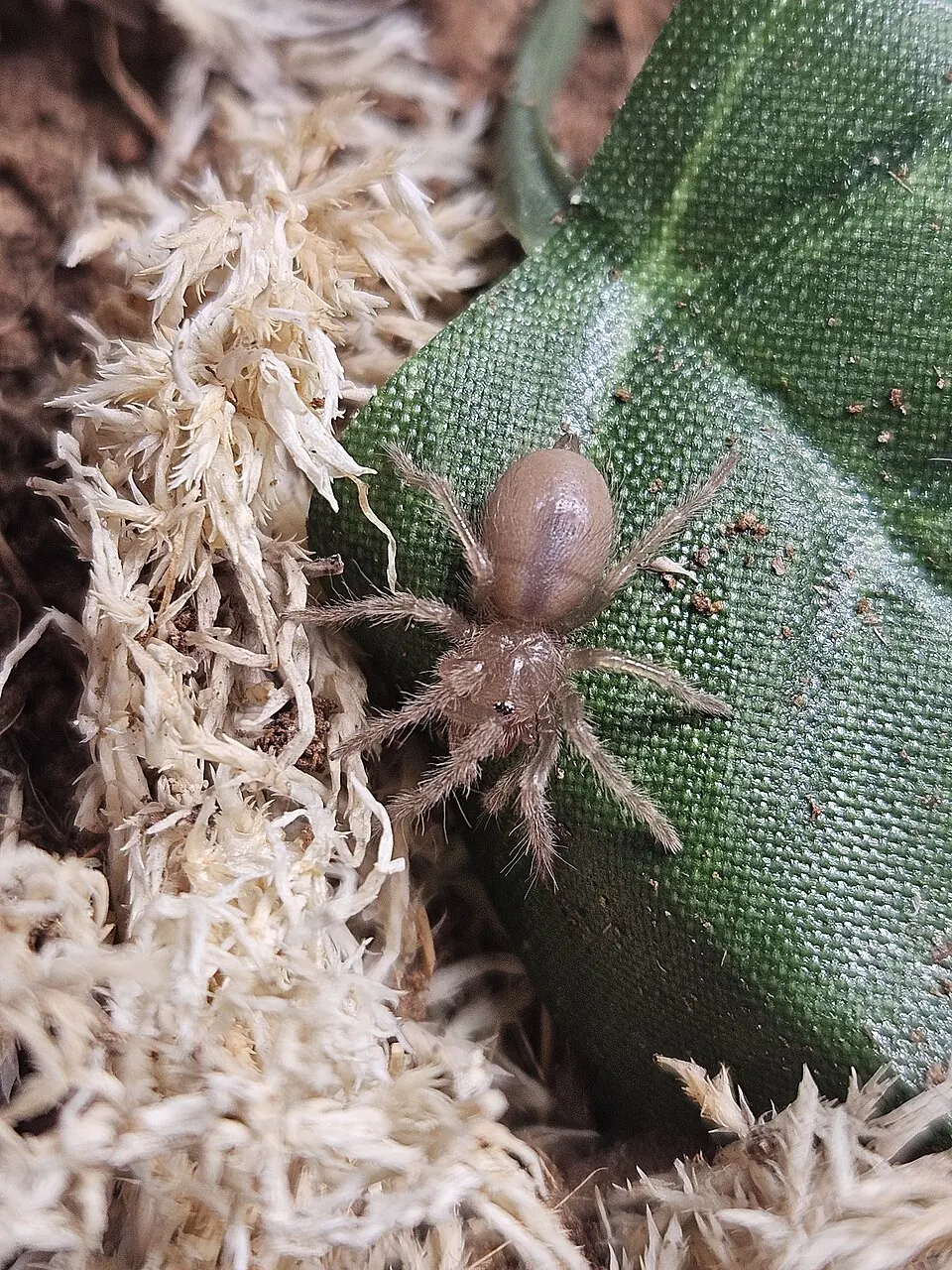
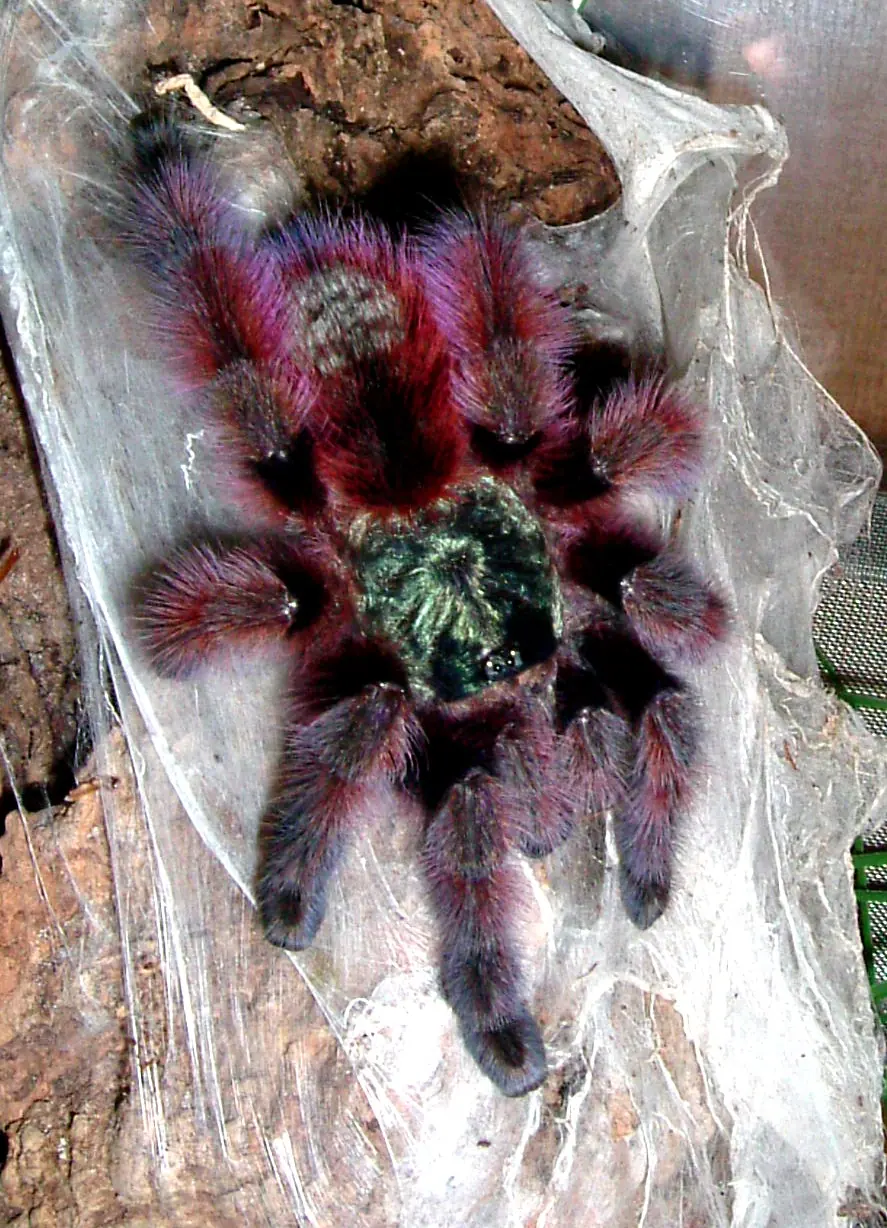
An Antilles pinktoe spends much of its life in and around an elevated web retreat. Give it connected climbing surfaces, upper web anchors and a dependable way to drink without turning the enclosure into a sealed wet chamber. The bright blue spiderling grows into a differently colored adult, so appearance can change markedly with development.
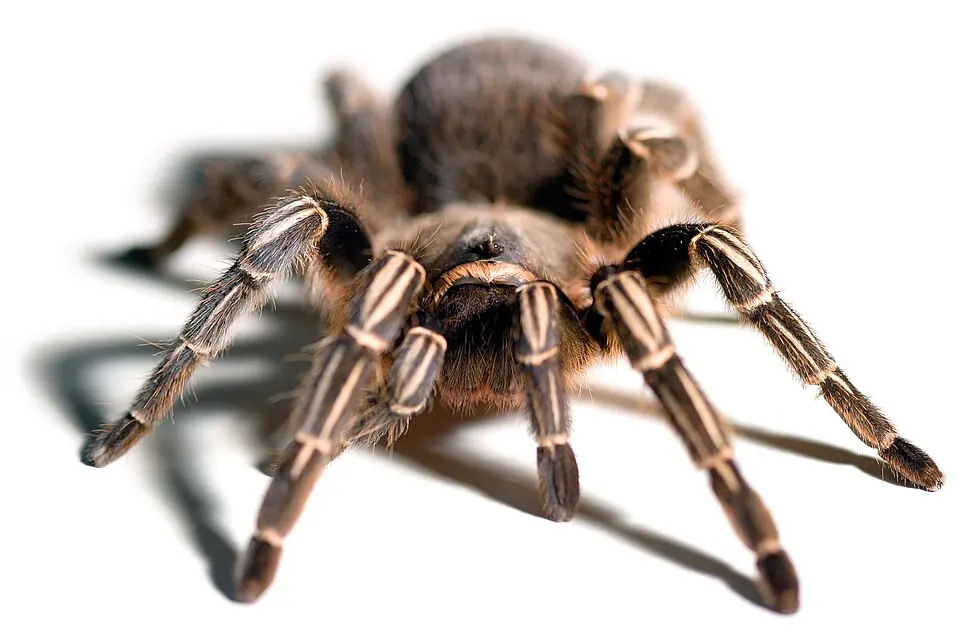
This guide is for Caribena versicolor from Martinique. Its former combination is Avicularia versicolor; Avicularia avicularia is a different accepted species. A shop label saying pinktoe is not enough to choose between them. Ask for the scientific identity, captive-breeding history, hatch date or stage, last molt and successful feeding routine.
Adults commonly reach about 5½–6″ (14–15 cm) in diagonal leg span, not body length. Keeper estimates describe females around 12 years and males around 3–4 years from hatching, with variation and weak longitudinal evidence. An adult of unknown age has an uncertain remaining lifespan. Budget for live prey, environmental checks and veterinary help as well as the enclosure.
Give height that remains usable after furnishing
Our recommended minimum for one adult is 1′ × 1′ × 18″ (30.5 × 30.5 × 45.8 cm) of usable internal length × depth × height. Reserve 2″ (5.1 cm) for substrate, leaving 16″ (about 40.6 cm) above it before furnishings. This is our practical layout recommendation supported by arboreal husbandry, not an experimentally established threshold.
We do not claim a second numerical optimum. A larger home can be useful when it provides more connected retreats and routes while allowing the keeper to confirm food and drinking access. Extra height without surfaces is not equivalent to usable climbing room. Check the final arrangement from the spider’s perspective: it should be able to move among covered supports instead of crossing an empty central space.
Choose secure access that lets you service water without tearing upper webbing. Provide effective cross ventilation and current-size escape protection at the lid, doors and vents. Do not assume a product marketed for arboreal animals has sufficient airflow when heavily furnished or partly covered.
Connect shelter, food and water routes
Secure an upright cork tube or curved slab and add branches and foliage near its upper part for web anchors. Keep supports stable and leave access around the retreat for inspection. The animal may web several pieces into one shelter; preserve that structure during ordinary cleaning.
Place a shallow water dish at the floor and, where it can be securely serviced, an additional small dish on an elevated route. Some animals drink from webbing or leaves, so occasional small droplets on accessible surfaces can add a drinking opportunity. Do not aim water at the animal or repeatedly soak its closed retreat.
A shallow clean soil and coconut fiber (coir) layer helps manage the enclosure floor but is not a substitute for vertical furnishing. Plants are optional. A planted enclosure must still dry and ventilate appropriately; choose the system around the spider’s needs rather than making the tarantula live in constantly wet conditions to keep unsuitable plants alive.
Favor a measured moderate maintenance range
For ordinary nonbreeding maintenance we recommend air temperatures around 70–76°F (21–24°C). Measure near an occupied elevated retreat and lower down, keeping probes shaded and off surfaces. Check the enclosure’s warmest period and overnight conditions. We do not prescribe an extra night drop when the home already remains within this modest range.
Tom Moran describes successful care through a wider range of seasonal room temperatures. Those observations help show that one narrow thermostat setting is not a proven biological requirement, but they do not establish safe extremes for every spiderling. Use controlled room warming if needed, independently verify any local heater and retain a cooler sheltered choice. Direct sun and uncontrolled heat sources can overheat a small enclosure.
Offer shaded visible daylight and darkness at night. Twelve hours of each is a convenient starting routine. No numerical ultraviolet B (UVB) dose is established for this species by the evidence reviewed here, so a dedicated UVB lamp is not prescribed. Measure heat consequences of any display or plant light rather than assuming light and temperature are separate.
Choose a drying, ventilated drinking routine
Keep the drinking dishes clean and filled, inspecting them daily and after contamination. Add small droplets to a wall, leaf or accessible web edge when needed, then let those surfaces dry. Check that a spiderling can reach the offered water; a full dish on an unused floor does not prove hydration.
Published protocols differ. One specialist account uses a numerical humidity range, while Moran describes successful rearing with water dishes, occasional droplets and no measured humidity target. We choose the functional drinking-and-airflow approach rather than instructing you to maintain a fixed air percentage by continual misting. That is an editorial choice with limited comparative evidence, not proof that severe dryness is harmless.
Check the retreat area, floor moisture and drying pattern along with the room temperature. Persistent condensation, wet decomposing material or covered vents need correction. Do not try to solve suspected dehydration by sealing the enclosure, and do not stop supplying water because the air seems humid.
Bring prey to the part of the habitat the spider uses
Use appropriately sized captive-reared insects such as crickets or roaches, offering one at a time near the retreat entrance. Small spiderlings may miss prey wandering far below the web: offer a pinhead cricket, tiny roach nymph or small pre-killed insect within reach of the web opening, then remove leftovers. Keep connected supports between the feeding area and retreat.
Start small spiderlings with modest offers about twice weekly, review juveniles about weekly, and review an adult for food every one to two weeks. These are adjustable starting routines. Adult accounts vary from weekly meals to substantially longer intervals, using different prey and individuals. Watch actual acceptance and abdomen condition instead of combining both rations.
Remove uneaten live prey and food remains, particularly when appetite stops or the retreat closes. Do not leave biting insects to wait for a molt. Feed the feeder insects appropriately and vary suitable types over time; no routine reptile calcium or vitamin-dusting program is prescribed for this tarantula. Remove any uneaten prey and food remains within 24 hours; remove them sooner if the spider refuses, retreats to molt or appears vulnerable.
Give a closed web time and stability
A thicker closed retreat and refusal of prey can precede a molt. Leave the silk and supporting furnishings intact, remove loose feeders and continue quiet checks of water and conditions. Do not pull the retreat open to confirm the animal is alive or force a spray into it.
After molting, wait for the body and mouthparts to harden and normal movement to return before offering prey. If the fangs are visible without disturbing the spider, they should be dark again rather than pale or reddish. Do not handle it or open its retreat to check; wait if readiness is uncertain. The waiting period differs with stage and individual; the end of a fixed number of days is not proof of readiness. Start with modest prey rather than compensating for the fast with a large meal.
Do not pull retained cuticle, handle a newly molted spider or use oil/baths as a home remedy. An incomplete molt with deterioration, fluid loss or persistent inability to move normally warrants advice from an invertebrate-capable veterinarian. A fast without deterioration is a different situation and should be assessed in its molt context.
Keep young spiders observable and escape-proof
A tiny spiderling needs finer containment and closer water/prey observation than an adult. Its raising container can be smaller while retaining ventilation, an elevated retreat and routes to food. Increase space as it grows; a small cup does not establish the permanent adult standard. Recheck opening sizes after transfers, not just the lid.
Ordinary maintenance does not require pairing or breeding heat. A female can produce an egg sac if previously mated, and breeding creates a separate containment and care task. Keep the original species and source records and seek a specific plan rather than opening or removing an egg sac on the strength of a general care article.
No forced winter cooling or deliberate seasonal drying is prescribed. Changes in appetite or activity should first be interpreted with stage, sex, molt, environment and health records.
Expect a quick climbing animal during maintenance
House one spider and plan transfers before opening the enclosure. This species can move quickly and jump; a calm previous encounter does not establish how it will respond next time. Keep a catch cup ready, use a soft guiding tool and work in a large empty catch tub in a closed room away from open windows and other animals.
Routine handling is unnecessary and risks a fall. Caribena versicolor has irritating defensive hairs that can transfer on contact, so do not interpret abdominal rubbing as affection. Do not touch or rub your eyes after handling webbing or substrate; wash your hands after enclosure work. Do not grip legs, pull a spider from its retreat or assume gloves make grabbing safe.
Prove access and drying before the spider arrives
Run the final enclosure with its actual furnishings and light through day and night. Check air readings near both upper and lower routes, secure the dishes, test access around the expected retreat and observe how quickly added droplets dry. Have prey of the animal’s current size ready, and retain the supplier’s last-molt and food record.
Inspect water and security daily. Remove accessible prey remains, droppings and contaminated material without destroying the occupied web. Major cleaning or a transfer should have a real maintenance reason, with the animal first safely contained. A bioactive floor does not remove the need to inspect upper web areas and dishes.
Prepare the exact adult enclosure, stable vertical cork, connecting foliage/branches, shallow dishes and mounts, independent thermometers, fine water applicator, feeder supplies and catch cup. Favor traceable captive-bred stock and check current official trade/import requirements before moving animals across borders.
Use the whole history when asking for help
Persistent weakness, repeated loss of grip, a shrinking or wrinkled abdomen with poor feeding, abnormal mouth discharge, fluid leakage or an incomplete molt with deterioration requires qualified advice. These observations do not identify one disease. A sealed retreat and a temporary fast can be normal, so include what changed and whether condition is worsening.
Provide clear photographs, species and stage, the last molt, actual meals, air readings and the watering/drying routine. Do not replace veterinary assessment with an unproven diagnosis of sudden death syndrome or a guessed medicine. Eye exposure to irritating hairs and symptomatic bites need appropriate medical advice as well.
Sources & further reading
Read the full recommendations and check details for your animal, equipment, and local conditions.
- World Spider Catalog: Caribena versicolor
- Caribena versicolor “The Martinique pinktoe” Husbandry Notes
- Caribena versicolor Care Guide
- Tarantula Care
- Care and Keeping of Tarantulas / When Your Pet Has Eight Legs
Original Creature Corner guide. Editorial fact and citation checks are recorded; independent veterinary review has not been performed.