Use this guide as a starting point alongside the detailed sources below. Health concerns, unexplained changes in behavior, or feeding problems belong with a veterinarian experienced with arachnids.
Adult enclosure recommendation
Our recommended minimum: 20″ × 18″ × 16″ (50.8 × 45.8 × 40.7 cm), length × depth × height.
Usable internal space for 1 adult animal. One adult Aphonopelma seemanni; both sexes; minimum is scoped to the adult size description in this guide, not related species or breeding groups. Adult diagonal leg span can approach 6″ (15 cm); leg span is not body length. The recommendation allows for this larger adult, both sexes.
Height is the usable internal envelope, including the space reserved for substrate and water. Check the remaining movement space and lamp clearance after installation.
A larger footprint can add useful retreat and drinking choices. Keep the same substrate, climbing or low-fall requirements, ventilation and safe access.
Creature Corner editorial allocation of usable floor, retreat, substrate and clearance informed by the cited ecology and husbandry practice. Exact dimensions are not experimentally validated welfare limits. The article explains the conditions and limits behind this recommendation.
- Floor space
- 20″ × 18″ (50.8 × 45.8 cm) internal floor; retain accessible routes after the retreat and water provision are installed.
- Climbing space
- Low stable retreats and ground routes; do not add exposed height or a hard fall path. Secure heavy supports independently of burrowable soil.
- Substrate
- Reserve 1′ (30.5 cm) of substrate and 4″ (10.2 cm) of space above it before furnishings. These are internal dimensions; the stated height already includes the substrate.
- Water
- Clean shallow drinking water continuously available; stable vessel, easy exit, inspected daily and after contamination.
- Security and ventilation
- One animal. Latch or clip the lid securely, keep gaps too small for escape and retain effective ventilation. Plan safe service access and transfers with a catch cup and a large empty catch tub in a closed room. Check the furnished enclosure against the retreat, water and safety requirements as well as its dimensions.
Meeting these dimensions alone does not establish suitability. Check the usable layout, environmental conditions, equipment clearance and the individual animal’s requirements before occupation.
Choose a burrower whose retreat may stay hidden
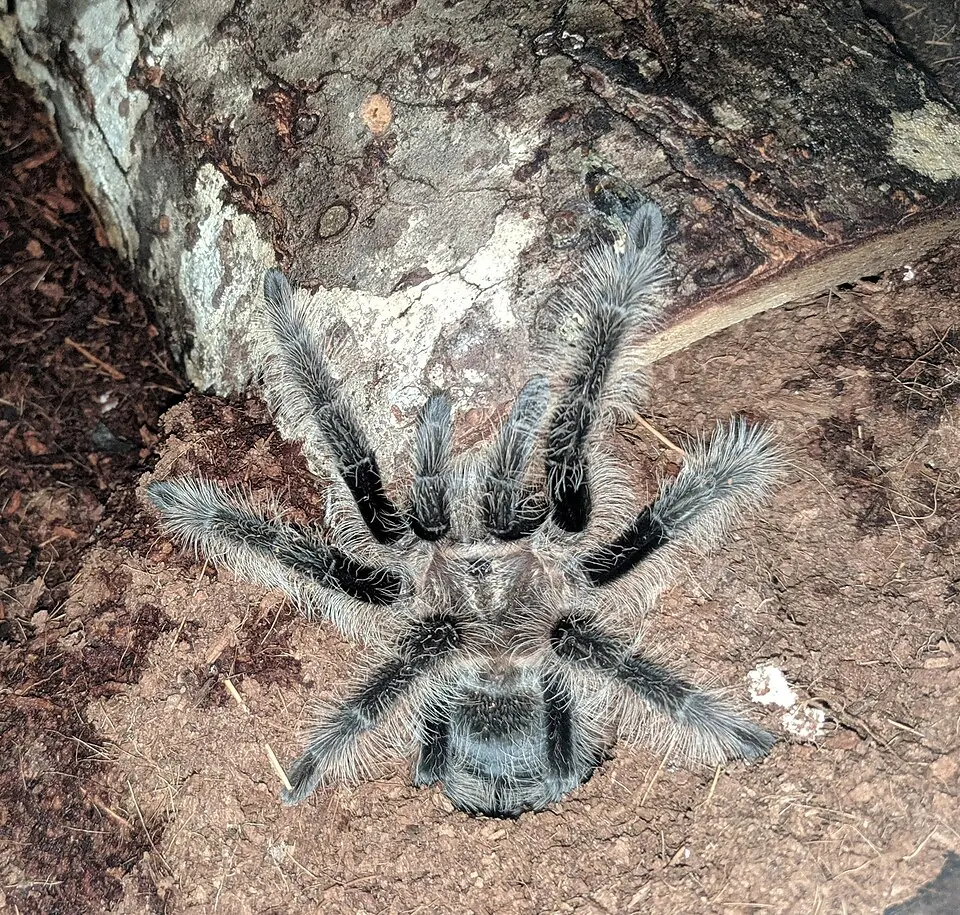
A Costa Rican zebra tarantula can spend much of its time behind a soil wall or inside a burrow. Caring for it means maintaining that retreat while checking water, food response and the environment with as little disruption as possible. A display that keeps the spider exposed is not the aim. Prepare for live-insect feeding, secure transfers and the possibility of a long-lived female before acquiring one.
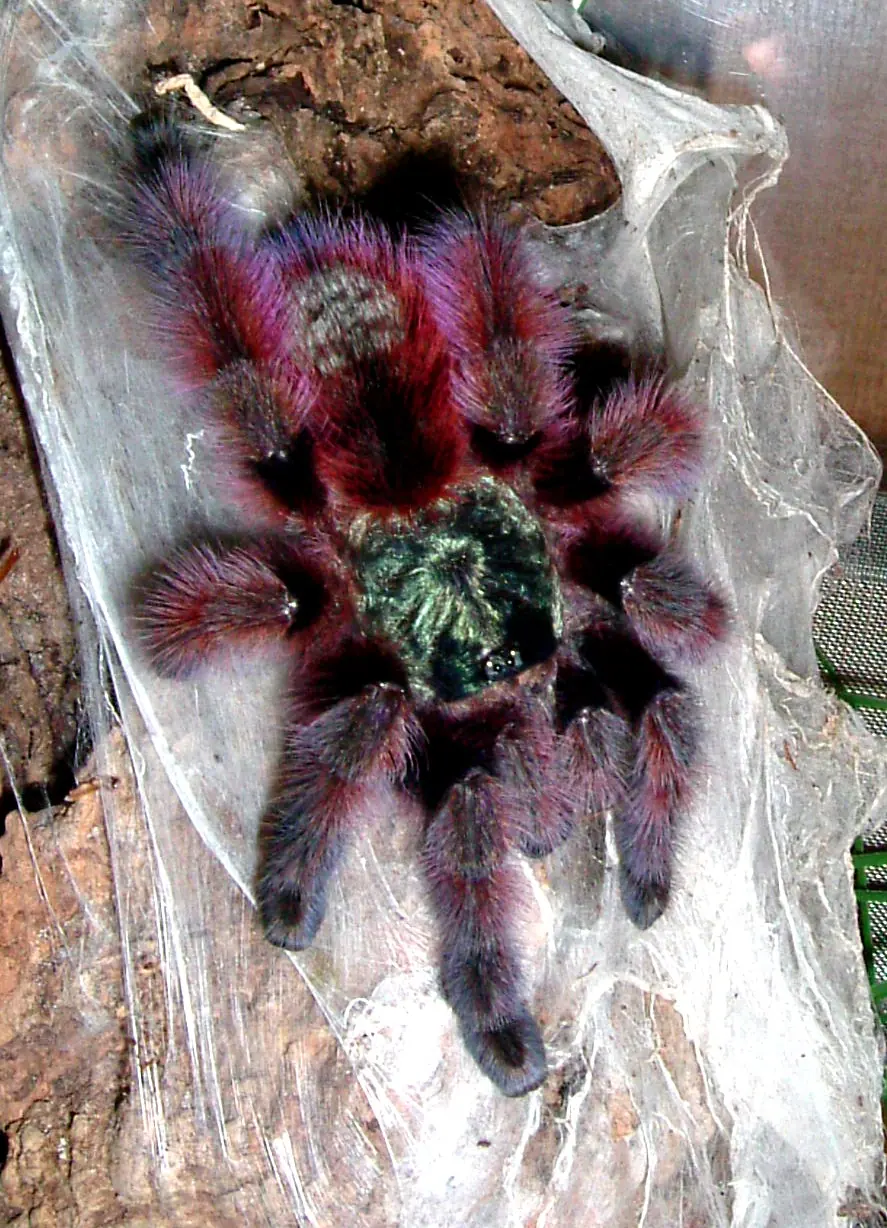
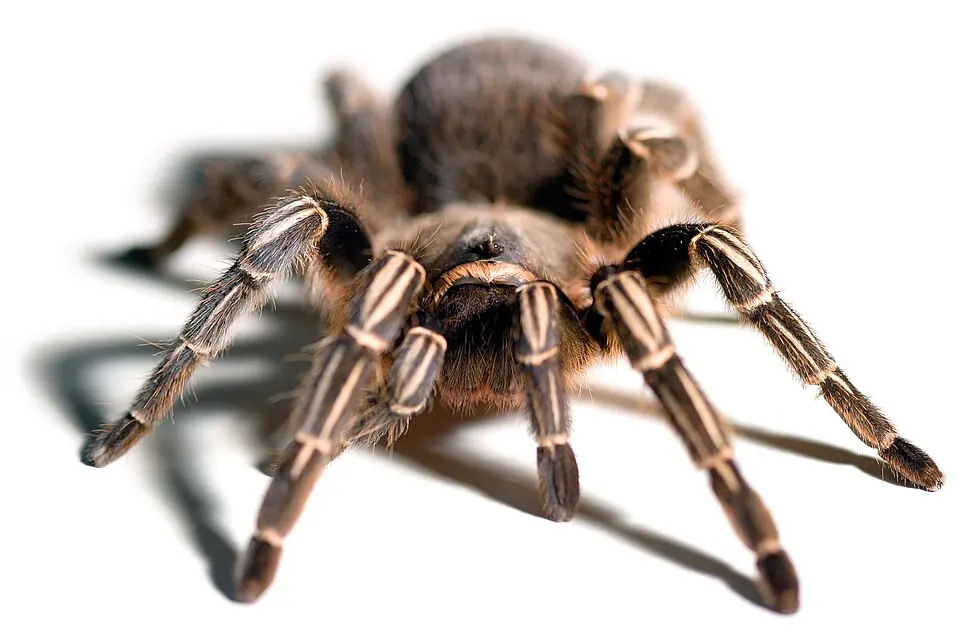
The accepted name is Aphonopelma seemanni. The current World Spider Catalog lists El Salvador, Honduras, Nicaragua and Costa Rica. A blue or brown trade description and striped knees do not independently establish species, locality or captive-bred origin. Ask for the seller’s actual identity and breeding records rather than treating a color name as provenance.
Adults may approach 6″ (15 cm) in diagonal leg span, the spread across the legs rather than body length. Keeper estimates reach about 20 years for females and roughly 5–10 years for males from hatching. These estimates lack a documented survival cohort. An adult of unknown age does not come with a predictable remaining lifespan, and an unsexed juvenile should not be budgeted as a short commitment.
Allocate usable soil depth before selecting the enclosure
For one adult up to that leg span, our recommended minimum is 20″ × 18″ × 16″ (50.8 × 45.8 × 40.7 cm) of usable internal length × depth × height. Reserve 1′ (30.5 cm) for substrate and 4″ (10.2 cm) above the soil before furnishings. These exact axes are our editorial layout choice, informed by burrowing behavior, practical floor guidance and fall protection; they are not experimentally proven welfare limits.
The floor must still provide accessible ground around the burrow entrance and drinking water after installation. A larger footprint and soil capacity can add useful choices, but no second numerical size has been established as an optimum. Extra empty height above a hard decoration is not the useful expansion for this heavy-bodied ground spider.
Use a securely latched or clipped lid and current-size escape protection at every vent, lid edge and cable gap. Check access with the final soil depth: a tall substrate layer changes the animal’s reach to doors and openings. Outer product dimensions do not tell you how much usable internal room remains after furnishing.
Build a soil retreat the spider can change
Valerio’s direct Costa Rican observations describe females making vertical soil holes in exposed ground, especially pasture. That supports the importance of a soil retreat; it does not establish a captive depth requirement. A deep burrow measurement elsewhere in the same paper concerns another species and is not a zebra-tarantula measurement.
Provide a clean, pesticide- and fertilizer-free soil and coconut fiber (coir) blend that holds an excavation when lightly packed. Avoid a loose sand-only layer, aromatic wood shavings or a hard wet slab. Set a low cork shelter over a started depression, supported so it cannot fall into a tunnel. Heavy stone should not rest on soil the spider can undermine.
Keep part of the lower medium lightly damp while letting upper ground dry. Add water gradually at a corner and inspect the effect rather than pouring until the whole enclosure is wet. The retreat should offer sheltered conditions and a drier surface choice. Leave moved soil and silk in place; a blocked entrance is not an instruction to dig the animal out.
Measure moderate air around a shaded retreat
For ordinary maintenance, use air temperatures around 70–76°F (21–24°C). This practical range falls within specialist guidance; it is not a tested optimum or a safe limit. Measure air above the soil at the retreat entrance and opposite end, checking overnight as well as afternoon conditions. A surface-temperature gun or thermostat setting does not measure that air.
If the room is too cool, consider controlled room warming first. Any local heat source needs a suitable thermostat, independent readings and a cooler refuge. Do not heat the whole floor beneath a burrowing spider or use an uncontrolled lamp over a small container. A dry-Pacific origin does not justify copying exposed outdoor highs and lows into a cage.
Provide a visible day, shaded retreat and dark night; a 12-hour day/12-hour night timer is a convenient starting routine. Avoid direct sunlight. No ultraviolet B (UVB) dose or dedicated UVB lamp is prescribed: species-specific need and a useful safe target were not established. Do not substitute reptile lighting or supplement rules for that missing evidence.
Keep drinking access separate from humidity readings
Keep clean water continuously available in a stable shallow dish with easy entry and exit. Refresh it daily and after contamination, and inspect whether digging has buried it. Arrange the dish so it can be serviced without reaching into the occupied retreat. A sponge is not needed as a drinking surface.
No fixed whole-enclosure relative-humidity percentage is prescribed. Air readings can help track changes when recorded with location and temperature, but they do not reveal moisture deep in a burrow. Assess lower-soil moisture, upper drying, ventilation and accessible drinking water together. Persistent condensation or sour, waterlogged material calls for a review of watering and air exchange.
Use stage and condition to set the next meal
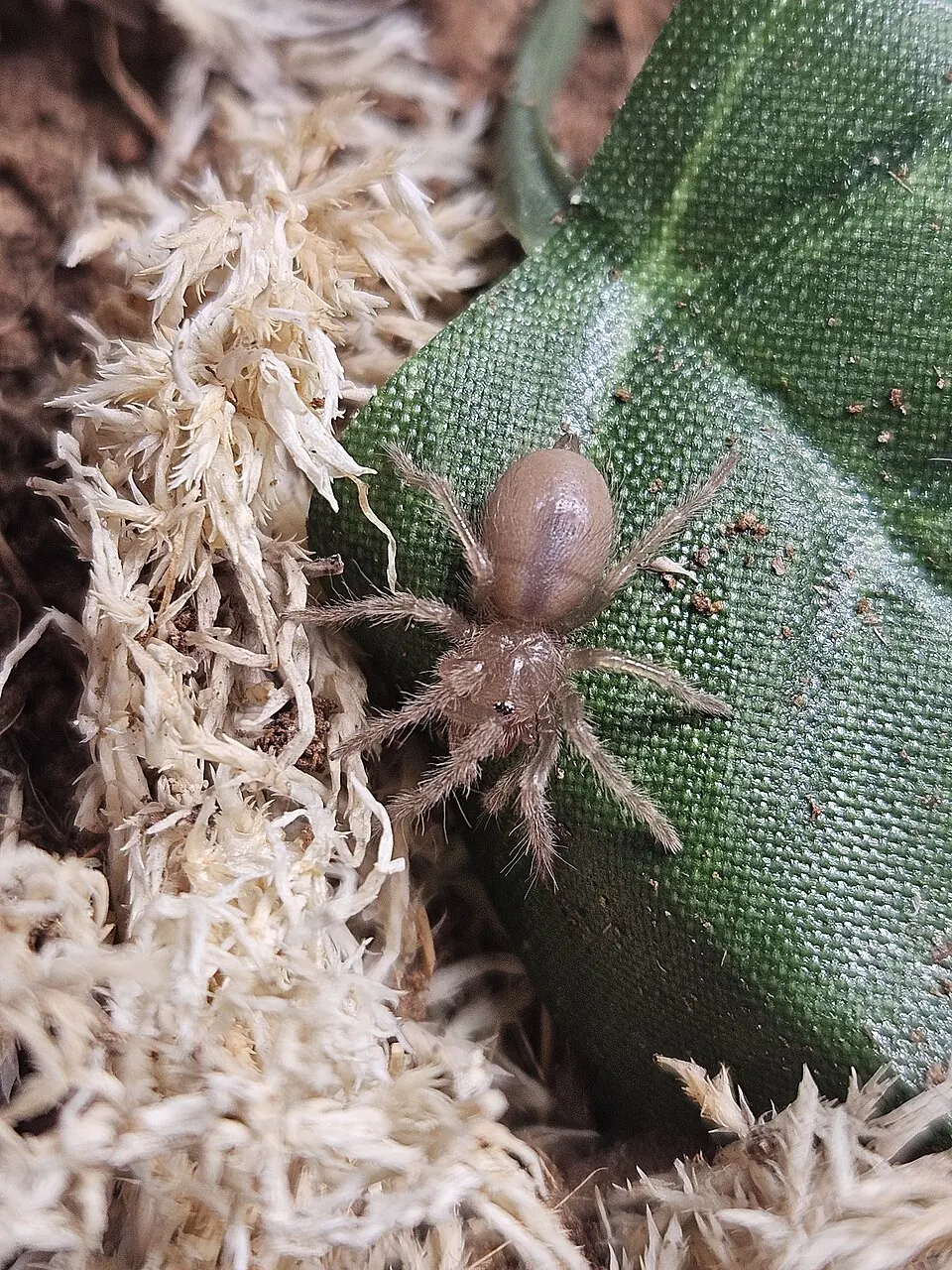
Use captive-reared crickets, roach nymphs or other suitable insects, with prey no longer than the spider’s abdomen as a conservative first size check. Offer modest portions one item at a time. Maintain the feeder insects properly and vary suitable types; vertebrate meals and raw meat are unnecessary for this routine. For a tiny spiderling, use pinhead crickets, tiny roach nymphs or a small pre-killed insect placed within reach of the retreat.
Begin by reviewing an adult for a meal every three to four weeks, juveniles every ten to fourteen days and small spiderlings for small offers about twice weekly. These starting intervals come from species keeper practice, which is slower for adults than generic veterinary schedules. They are not a fixed ration: compare the actual prey size, abdomen condition, recent molt and food response.
Remove rejected live prey rather than adding more to a hidden spider’s enclosure. A very full abdomen calls for restraint; continuing shrinkage or weakness calls for investigation. No routine calcium or multivitamin-dusting schedule is prescribed. That is not proof every insect diet is nutritionally complete; an individual nutrition problem belongs with an invertebrate-capable veterinarian. Remove any uneaten prey and food remains within 24 hours; remove them sooner if the spider refuses, retreats to molt or appears vulnerable.
Leave a closed retreat intact through shedding
Food refusal, changed activity or a sealed burrow may precede a molt. Remove loose biting prey, retain drinking water and keep established conditions stable. Do not excavate to check progress. A tarantula on its back may be shedding normally, so turning it over or touching it can interrupt the process.
After shedding, wait for normal coordinated movement and hardened mouthparts before offering live food. If the fangs are visible without disturbing the spider, they should be dark again rather than pale or reddish. Do not handle it or open its retreat to check; wait if readiness is uncertain. Large animals can take substantially longer than small spiderlings; a calendar date alone does not establish readiness. Start again with modest prey when the spider is ready. Never pull retained cuticle or apply a guessed oil, bath or drug. A deteriorating incomplete molt needs qualified veterinary advice.
Adapt young care without treating a cup as an adult home
A tiny spiderling needs smaller prey, finer escape checks and closer observation of drying and drinking access. Temporary raising accommodation must still contain usable soil and shelter, permit airflow and allow inspection without excavation. Increase floor and soil capacity with growth. The adult recommendation remains the destination, not a size to replace with a permanent feeding cup.
House one animal. Sex and maturity can alter activity and appetite; reliable sexing is more useful than guessing from a wandering spider or a color phase. Do not overfeed a mature male to stop roaming, and do not introduce a mate as ordinary enrichment. Pairing, eggs and young require a separate species-qualified plan. Forced seasonal cooling or drying is not part of this maintenance guide.
Make maintenance possible without holding the spider
Routine handling adds a fall or escape opportunity without supplying a needed resource. This species has irritating defensive hairs; avoid touching or rubbing your eyes after handling used soil or silk, wash your hands, and choose appropriate protection for substrate work. A calm-looking spider can still move quickly or bite. Use long tools, a clear catch cup and a large empty catch tub in a closed room for a necessary transfer rather than gripping legs.
Before arrival, test the furnished enclosure through the normal room day and night. Check closure, support stability, lower-soil moisture, drinking access and actual air readings. Obtain species/source records, known stage and sex, last food and molt history. Favor traceable captive-bred stock, and check current official requirements before cross-border movement.
Inspect security and water daily, remove visible waste and food remains, and leave the occupied burrow intact. A planted or cleanup-organism setup still needs this work. Prepare sufficient soil, stable cork, a dish, independent thermometers, water applicator, feeder supplies, catch cup and veterinary contact. Budget for the long female planning horizon including recurring supplies and veterinary care.
Use changes in condition to decide when help is needed
Arrange prompt veterinary assessment for fluid loss after trauma, persistent inability to stand, marked weakness, abnormal mouth discharge or a retained molt with deterioration. A small or wrinkled abdomen calls for a review of water, successful feeding and health. Fasting or hiding alone does not diagnose dehydration or parasites.
Keep the source, molt, feeding and environmental record with clear photographs when requesting help. Do not apply household mite products, force drinking or attempt manual shedding. Eye exposure to urticating hairs also warrants appropriate medical advice. The clinical sources here are general tarantula guidance; no veterinarian has reviewed this species candidate or certified its exact numerical care plan.
Sources & further reading
Read the full recommendations and check details for your animal, equipment, and local conditions.
- World Spider Catalog: Aphonopelma seemanni
- Species care guide: aphonopelma seemanni
- Tarantula Care
- Care and Keeping of Tarantulas / When Your Pet Has Eight Legs
- Basic guide to keeping
- Arañas terafósidas de Costa Rica III
Original Creature Corner guide. Editorial fact and citation checks are recorded; independent veterinary review has not been performed.