Use this guide as a starting point alongside the detailed sources below. Health concerns, unexplained changes in behavior, or feeding problems belong with a veterinarian experienced with arachnids.
Adult enclosure recommendation
Our recommended minimum: 18″ × 1′ × 18″ (45.8 × 30.5 × 45.8 cm), length × depth × height.
Usable internal space for 1 adult animal. One adult Damon diadema; both sexes; minimum is scoped to the adult size description in this guide, not related species or breeding groups. Primary systematics places body length near 1¼″ (3 cm) at the large end; the walking legs, prey-catching appendages (pedipalps) and long sensory first legs reach far beyond the body. Do not treat a sensational whip-span figure as body size or a sufficient cage-sizing measurement.
Height is the usable internal envelope, including the space reserved for substrate and water. Check the remaining movement space and lamp clearance after installation.
A larger footprint can add useful retreat and drinking choices. Keep the same substrate, climbing or low-fall requirements, ventilation and safe access.
Creature Corner editorial allocation of usable floor, retreat, substrate and clearance informed by the cited ecology and husbandry practice. Exact dimensions are not experimentally validated welfare limits. The article explains the conditions and limits behind this recommendation.
- Floor space
- 18″ × 1′ (45.8 × 30.5 cm) internal floor; retain accessible routes after the retreat and water provision are installed.
- Climbing space
- Anchored textured vertical and oblique cork, sheltered rear crevice, and an unobstructed molt route above open space. Reserve 16″ (about 40.6 cm) above the 2″ (5.1 cm) soil; retain clear space beneath the actual molt perch at least the individual’s full walking-leg spread, with free sensory-leg movement. If furnishings defeat that function, enlarge the enclosure.
- Substrate
- Reserve 2″ (5.1 cm) of substrate and 16″ (about 40.6 cm) of space above it before furnishings. These are internal dimensions; the stated height already includes the substrate.
- Water
- Continuous shallow clean drinking water with easy entry/exit, plus small reachable droplets that dry between applications; inspect both daily. Do not force mouthparts into water.
- Security and ventilation
- One animal. Latch or clip the lid securely, keep gaps too small for escape and retain effective ventilation. Plan safe service access and transfers with a catch cup and a large empty catch tub in a closed room. Check the furnished enclosure against the retreat, water and safety requirements as well as its dimensions.
Meeting these dimensions alone does not establish suitability. Check the usable layout, environmental conditions, equipment clearance and the individual animal’s requirements before occupation.
Choose a named whip spider with traceable provenance
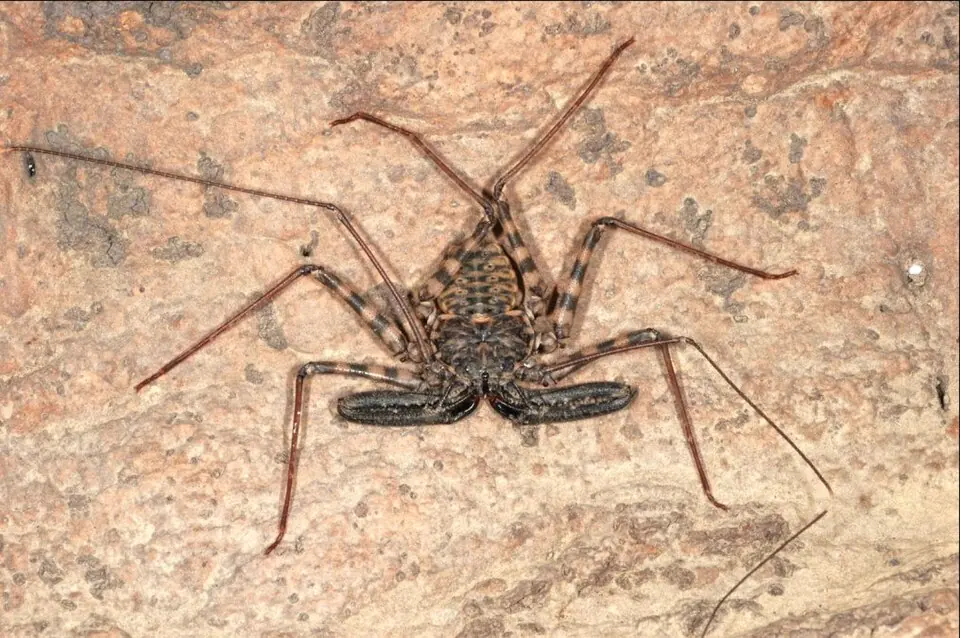
Damon diadema is a whip spider, also called a tailless whip scorpion, in the arachnid order Amblypygi and family Phrynichidae. It is distinct from true spiders and scorpions, and from Damon medius and D. variegatus. A giant, Tanzanian or tailless label does not establish species identity. Obtain provenance and competent identification when the supplier’s scientific name is uncertain.
Specimen-based research includes animals from Kenya and Tanzania and places the largest body length near 1¼″ (3 cm). The walking legs and prey-catching appendages beside the mouth, called pedipalps, extend far beyond the body. The long sensory first legs are often called whips; their span is not body length or a sufficient cage-sizing rule.
Expect years of care, but reliable sex-specific lifespan distributions were not established. One first-person keeper documented an approximately eight-year-old female and explicitly called a proposed 10–15-year average a guess. That observation does not establish an average or the remaining life of an adult. This is observation-focused care requiring stable hanging surfaces, live prey and secure access.
Make the molt space a binding part of the minimum
For one adult of either sex, our recommended minimum is 18″ × 1′ × 18″ (45.8 × 30.5 × 45.8 cm) of usable internal length × depth × height. Reserve 2″ (5.1 cm) for floor substrate, leaving 16″ (about 40.6 cm) above it before furnishings. This is a provisional editorial resource allocation informed by observed surface use and keeper practice; no experiment establishes these axes as a universal welfare threshold.
Install firmly anchored textured vertical and oblique cork with a sheltered rear crevice and an unobstructed route for hanging during a molt. Preserve open space below the actual molt perch at least as large as the individual’s full walking-leg spread. Keep sensory-leg movement and access routes free. If the final furnishing prevents those functions, enlarge or revise the layout; passing the outer dimensions is insufficient.
A larger furnished enclosure may add surface and refuge choice, but no separate numerical optimum is established. Do not use a short bare container or crowded décor simply because a small body can fit inside it.
Provide grip, a crevice and access that stays secure
Use a broad anchored cork surface and a second stable angled or vertical surface that creates a dark resting crevice. Leave enough room for the animal to enter, turn and hang freely rather than pinching it between movable slabs. Rough climbable texture is a functional requirement; plants and smooth glass alone are not equivalent molt supports.
Cover the floor with a clean lightly moisture-retaining soil and coconut fiber (coir) mix without fertilizers, pesticides or aromatic wood shavings. Keep lower material lightly damp without standing water. Substrate helps manage moisture and waste; the animal’s principal resource here is usable vertical surface, not a deep terrestrial burrow.
Fit a securely latched or clipped lid and check door corners, lid edges, vents and cable gaps against the current animal’s flattened body. Keep cross ventilation effective after furnishing. Prepare catch equipment before opening: a resting animal may move rapidly when startled, and thin appendages are easily caught between a lid and frame. Do not rely on being unable to see a gap from the front.
Use a modest provisional air plan with shade
For ordinary maintenance, use air temperatures around 72–77°F (22–25°C), measured at the resting/molt surface and opposite end through day and night. This selected moderate band lies within first-person keeper practice and is provisional. It is not a species thermal trial, a clinical tolerance limit or a reason to copy cave weather from a broad locality.
If the room requires extra heat, controlled room warming is a practical starting option. Any local source needs a suitable thermostat, independent checks and a cooler shaded choice. Avoid direct sun, a concentrated hot lamp or heating added to force growth. Check the effect of display or plant lighting at the actual occupied surface.
Provide visible daytime light, deep refuge shade and a fully dark night. Twelve hours of each is a convenient starting routine, not a species-tested constant. No ultraviolet B (UVB) dose or dedicated UVB fixture is prescribed because the reviewed evidence does not establish one. A nocturnal habit is not proof that every light intensity is harmless, so preserve a dark retreat and assess heat separately.
Maintain a drink without a constantly wet cage
Keep clean water in a stable shallow dish with easy access and exit, refreshed daily and after contamination. Add small droplets to a reachable wall or furnishing as an additional drinking opportunity. The keeper account includes direct observation of drinking, but no exact droplet schedule is established for every room. Inspect availability rather than assuming water remained all day.
Maintain lightly damp lower floor material and effective cross ventilation, allowing exposed droplets to dry between additions. Avoid puddles, saturated décor and persistent condensation. Do not repeatedly spray the animal or force its mouthparts into water. A planted system must follow this drying/airflow plan rather than require saturation to sustain unsuitable plants.
We do not prescribe a species-validated relative-humidity percentage. A generic commercial guide offers one, while the longer first-person account works from damp-versus-wet conditions. A hygrometer can document trends with recorded position and temperature; it does not measure drinking access or prove that a hanging molt will succeed. Continual wetness or rapid drying requires a review of watering, ventilation and heat together.
Offer modest prey and record capture success
Use well-maintained captive-reared insects that the whip spider can subdue without a prolonged struggle, such as a suitably sized cricket or roach nymph. Begin with one small item and observe capture where possible. Do not force prey into the pedipalps or use a large struggling insect just to create a dramatic feeding display.
Review adults for a modest offer about weekly and younger independently feeding animals for small offers about twice weekly. These are starting choices from keeper practice, not validated nutritional requirements. A group care page instead gives longer adult intervals; adjust actual portion and timing to abdomen condition, prey size, molt status and successful feeding.
Remove uneaten prey and remains, and exclude loose biting insects whenever premolt or molt is suspected. Do not let feeder insects establish themselves in the retreat. Vary suitable well-fed insects over time; vertebrates and a routine reptile calcium/multivitamin-dusting schedule are not prescribed. This is not a claim that every feeder diet is nutritionally complete; persistent feeding or condition problems require qualified assessment.
Protect hanging space throughout adulthood
Unlike mature emperor scorpions, D. diadema can continue molting as an adult. Primary observations include mature female molts; the keeper account also describes adult shedding. A mature purchase still needs full textured grip and open hanging clearance. Do not let new plants or moved décor gradually fill the space under the molt surface.
A quieter animal or food refusal can precede shedding, but does not establish a diagnosis by itself. Remove loose prey, preserve established water and air conditions, and do not move a hanging animal or peel its old cuticle. Newly shed animals are especially vulnerable to prey and other insects; inspect security against ants and keep food out.
Resume live feeding only after hardening and normal coordinated movement/capture readiness. A source’s short calendar wait is not a universal certificate. An animal with a clearly incomplete molt, loss of grip or worsening weakness needs an invertebrate-capable veterinarian. Do not improvise a bath, oil, pesticide or manual molt rescue.
Keep early family tolerance separate from adult housing
House one animal for ordinary maintenance. The primary behavioral study found extended friendly contact among young and their mother, followed by changed spacing and aggression around maturity. Injured appendages, starvation while avoiding siblings and deaths occurred. That evidence does not support a blanket promise that related animals remain safe together indefinitely.
A keeper page’s permanent communal claim conflicts with those specimen-vouchered observations, so it is not adopted. Providing more food or several hides does not establish a stable adult group. A female carrying eggs or young needs a separate species-qualified plan rather than an improvised adult introduction or routine separation schedule.
Small young also need textured surfaces, molt clearance, small prey, fine escape protection and close drinking/drying checks. A temporary raising container is not the permanent adult recommendation. No forced seasonal cooling, pairing, egg handling or breeding stimulation is required by this maintenance guide.
Make servicing gentle and predictable
Routine handling is unnecessary. Thin sensory legs and other appendages can be trapped or injured, and a startled animal can move rapidly. Prepare a clear catch cup, gentle guide and a large empty catch tub in a closed room before a necessary transfer; never grip a whip, leg or pedipalp. Structure the enclosure so water and waste can usually be serviced while the animal remains in its refuge.
Before arrival, run the final furnished system through normal room day and night. Check every opening, support stability, free hanging clearance, actual air readings, drinking reach and drying. Ask for scientific identity, provenance, stage/sex if known, last molt and successful meals. Favor traceable captive-bred stock and check current official requirements before cross-border movement.
Inspect security, water and obvious condition daily and remove food remains, waste and spoiled material without dismantling a resting or molting animal’s surfaces. Keep new arrivals separate with dedicated tools. Prepare the exact enclosure, stable cork, shallow dish, water applicator, independent thermometers, feeder supplies and catch cup, and budget for continuing care and a willing veterinarian.
Treat persistent loss of function as a reason for assessment
Fluid loss after injury, persistent collapse, inability to grip or stand, abnormal discharge or a deteriorating retained molt warrants prompt professional advice. A single refused insect or resting position does not diagnose illness. Record successful meals, molts, body condition, watering changes and measured environment, and provide clear photographs with the source/identity history.
These warning signs call for assessment; they do not identify a particular disease. Do not use household parasite chemicals, guessed drugs, forced water or manual shedding. Arrange a veterinarian who accepts invertebrates before an emergency.
Sources & further reading
Read the full recommendations and check details for your animal, equipment, and local conditions.
- Whip Spiders of the World: Damon diadema and Damon
- Systematics of the Damon variegatus group of African whip spiders: evidence from behaviour, morphology and DNA
- Social behavior in amblypygids, and a reassessment of arachnid social patterns
- The Most Interesting Invertebrate in the World: Damon diadema
- Tailless Whip Scorpion Care Guide
Original Creature Corner guide. Editorial fact and citation checks are recorded; independent veterinary review has not been performed.