

Use this guide as a starting point alongside the detailed sources below. Health concerns, unexplained changes in behavior, or feeding problems belong with an amphibian veterinarian.
Adult enclosure recommendation
Our recommended minimum: 2′ × 18″ × 2′ (61 × 45.8 × 61 cm), length × depth × height.
Preferred target: 3′ × 18″ × 2′ (91.5 × 45.8 × 61 cm), length × depth × height.
Usable internal space for 1 adult animal. One adult Dendrobates leucomelas, typically about 1.25–1.5″ (3.2–3.8 cm) body length with form variation. A separate conditional pair alternative requires similar size, resource access and separation capacity.
Height is the usable internal envelope, including the space reserved for substrate and water. Check the remaining movement space and lamp clearance after installation.
The extra length connects more planted climbing routes to separate floor refuges and feeding access. This preferred single-frog layout does not by itself establish compatibility for a pair.
Specialist accounts document leaf-litter and climbing use, form variation and changing mature social dynamics. The dimensions are our larger functional editorial layout beyond small tank examples, not a validated welfare or density threshold.
Conditional similar-size adult pair of Dendrobates leucomelas with individual feeding access and ready separation housing
Our recommended minimum: 3′ × 18″ × 2′ (91.5 × 45.8 × 61 cm), length × depth × height. Specialist observations support possible conspecific pairing, not guaranteed compatibility. Our larger editorial layout provides multiple feeding and refuge routes; monitor maturity, resource access and condition and separate when needed.
- Floor space
- At least 2′ × 18″ (61 × 46 cm) accessible floor with leaf cover, low shelter and a visible feeding area; keep routes below climbing furnishings.
- Climbing space
- Anchored cork, branches and broad plants connect low and raised sheltered routes without exposed dead ends or hot fixture access.
- Substrate
- Reserve about 4″ (10 cm) for practical drainage/soil layers within the 2′ (61 cm) internal height, plus leaf cover; drain collected water before it floods soil.
- Water
- Very shallow standing-depth dish with easy exits, cleaned daily and after fouling using chlorine/chloramine-free water; no pond required.
- Security and ventilation
- Secure fine gaps/lid, effective air exchange alongside moist refuges and access for servicing. Pair alternative requires multiple resources, individual intake checks and ready separation.
Meeting these dimensions alone does not establish suitability. Check the usable layout, environmental conditions, equipment clearance and the individual animal’s requirements before occupation.
Plan for a small daytime climber and audible calls
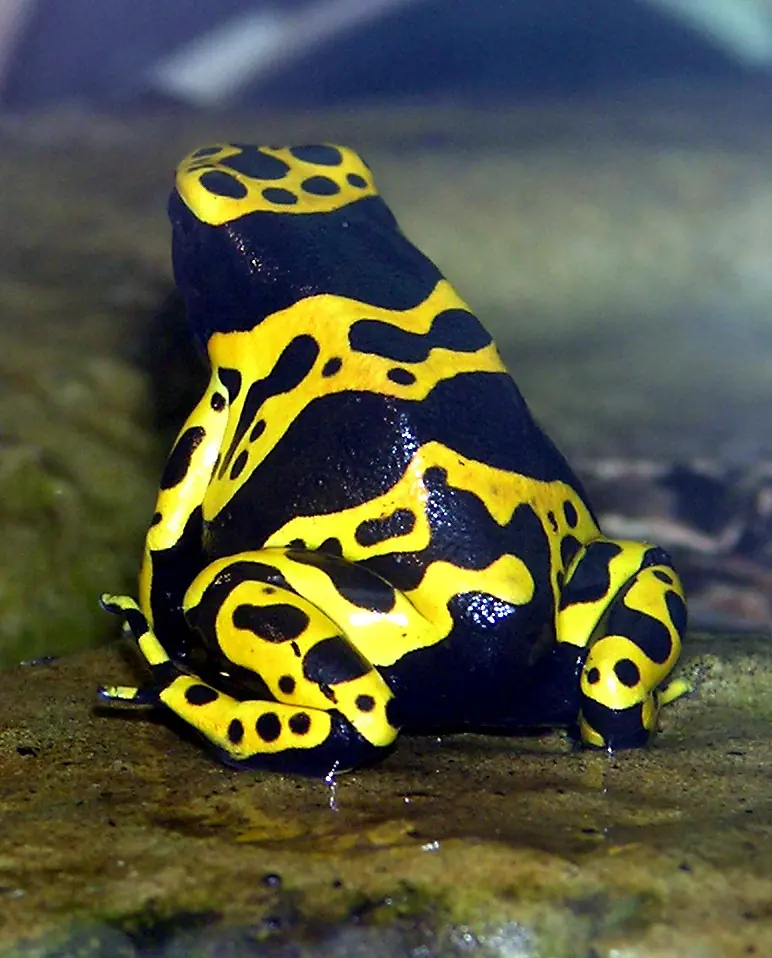
The bumblebee or yellow-banded poison dart frog, Dendrobates leucomelas, is a diurnal amphibian that searches leaf litter and readily uses planted climbing routes. Males can call audibly. Choose it for observation and habitat care, with reliable tiny prey and daily monitoring, rather than frequent contact.
Obtain the exact scientific identity, captive-bred origin and form or lineage label. Pattern and band width vary, and a broad trade name does not establish ancestry. Do not mix this species with similarly patterned frogs or combine locality forms because they look alike.
Typical adult body lengths in the producer account are around 1.25″ (3.2 cm) for males and 1.5″ (3.8 cm) for females, with form variation. The species is associated with northern South American forest habitats with seasonal conditions. Seasonal breeding observations do not mean a household pet needs forced drought.
Specialist estimates commonly describe a decade and report potential lives exceeding twenty years. Plan for that possible longer commitment, including food-culture replacement, plant and equipment maintenance, summer room cooling and veterinary care. An attractive small frog does not have a correspondingly small daily support system.
Connect climbing cover to a usable forest floor
For one adult, our recommended minimum is 2′ × 18″ × 2′ (61 × 46 × 61 cm) usable internal length × depth × height. We prefer 3′ × 18″ × 2′ (92 × 46 × 61 cm). This is our editorial furnished-space choice beyond small cube and low pair examples, not a dimension demonstrated by an enclosure trial.
Provide continuous routes from leaf litter through low cork and branches to broad planted cover. This species uses height readily, so make that height reachable without unstable leaps or exposed dead ends. Preserve low shaded resting choices and a feeding station visible enough to check intake.
A planted arrangement can reserve approximately 4″ (10 cm) for combined drainage and soil before adding clean leaf litter. Use a drainage layer of expanded-clay balls, a fine mesh separator and a well-draining soil mix made for planted amphibian enclosures. Provide a service point for removing collected water before it floods the soil. This is a practical allowance inside the stated height, not a tested requirement. Leaf cover must not conceal standing water or unstable furnishings.
A conditional similar-size pair uses at least 3′ × 18″ × 2′ (92 × 46 × 61 cm) usable internal space, with multiple feeding and retreat options and ready separation housing. It is not automatic social approval. More animals, mixed sizes or uncertain form identity require a separate assessment rather than a volume increment.
Keep occupied routes cool and checked
For ordinary healthy nonbreeding care, start with daytime occupied air around 72–76°F (22–24°C) and night air around 68–72°F (20–22°C). These targets select the low-to-mid seventies favored by the producer and sit within a second keeper range. They are practical maintenance choices, not proven optimum or precise critical limits.
Measure with independent probes near floor shelter and a higher occupied route, checking warmer points near lamps separately. Record the location and time, including the room’s warmest period. A cool floor reading cannot establish that the planted upper area is safe.
Test the complete planted habitat before arrival and assess summer cooling needs. Plant lights and a partly covered lid can heat a small enclosure even without a heater. Do not install a hot basking patch by default. When supplemental warmth is necessary, use compatible thermostatic control, secure probes and prevent contact with hot equipment.
Recheck after trimming plants, changing ventilation or replacing lamps. A large spray of water does not solve a room that stays too warm. Keep a practical equipment-failure plan so emergency moves can preserve suitable temperature and hydration without rough handling.
Use humidity as a reference alongside real refuges
Our working air reference is about 70–90% relative humidity at a recorded occupied location and temperature. Producer guidance allows 70–100%, while another keeper sheet favors 70–80% and warns about stagnant conditions. These protocols do not establish one universal optimum.
Keep lower soil and covered refuges moist while allowing exposed leaves to lose free surface water between mistings. Provide effective air exchange and drainage instead of an airtight lid. A briefly lower reading does not prove prolonged dry care is acceptable; equally, a constantly saturated meter does not prove the frog is well hydrated.
Offer a very shallow stable dish with easy exits and a standing-depth resting area. It is a clean hydration choice rather than a breeding pond. Clean and refill it at least daily and immediately after fouling. Do not make the frog cross a deep pool to reach food or shelter.
Condition the actual source water for chlorine and chloramine before it enters the dish, mister or substrate. Clean water storage and misting equipment regularly. Keep chemical residues, fertilizers and pesticides away from the habitat, and prepare new plants safely before adding them.
Offer a low measured exposure without forced basking
Use a consistent 12-hour light period and 12 hours of darkness. An optional ultraviolet B (UVB) plan offers ultraviolet index (UVI) around 0.3–0.7 at a chosen exposed route, falling to 0 in substantial shelter. Keep appropriate temperature and cover available outside that exposure.
This is a selected low-exposure practice option informed by the ultraviolet lighting guide (UV-Tool (an ultraviolet lighting reference)), not a lifelong dose proven optimal for this species. Measure toward the lamp at the frog’s back height and nearest accessible point, using the actual mesh, leaves and fixture. A bulb percentage does not tell you what reaches the animal.
Allow plant growth and pruning in the light plan: a new exposed route can change the closest reachable position, while leaves can change both shade and drying. Review the readings after those changes and follow fixture installation and replacement guidance.
Plan light and nutrition together. Use one amphibian-appropriate calcium and vitamin formulation plan that includes vitamin A and coordinates vitamin D3 with the actual ultraviolet option and life stage. Record product directions and storage rather than borrowing a dusting calendar from a differently formulated powder.
Feed the individual rather than the fruit-fly cloud
Flightless fruit flies provide practical small prey; smaller flies suit small froglets, while appropriately sized larger flies can suit adults. Suitable pinhead crickets and other cultured tiny prey add variety. Springtails can support foraging but are an addition rather than proof of a complete diet.
Establish several cultures at different ages and identify a dependable backup before the frogs arrive. A culture’s production changes over time, and a single failure can leave small frogs without appropriate food. Practice dispensing manageable amounts so excess flies do not obscure whether the frogs eat.
For settled adults, start with three modest meals weekly and assess leftovers, weight trend and body condition. Growing froglets need smaller daily offers and closer observation. Another keeper account feeds adults on alternate days. Treat these as starting routines, with no universal number of flies or all-you-can-eat window.
Offer nutritionally prepared prey at accessible clean feeding locations. If a pair is kept, provide separated feeding access and confirm each frog eats; a full habitat and one robust animal can conceal a second animal losing condition. Remove spoiled food and persistent leftovers.
Use the actual coherent supplement product plan. Calcium alone is not a complete vitamin strategy, and color-enhancement powders or breeding doses do not belong in ordinary maintenance without a specific supported plan. Poor strikes, swelling or weight loss need assessment rather than automatic home treatment for a presumed deficiency.
Preserve cover while removing contamination
Each day inspect the animals, water, feeding points and drainage, removing feces, dead insects and deteriorating organic material. Clean the bath and remove trapped drainage water before soil floods. A mature planted system or clean-up crew still needs this inspection.
Trim plants so climbing routes, ventilation and service access remain usable. Replenish leaf litter and replace contaminated or failing bedding according to its condition. Keep tools dedicated and remove visible dirt from equipment before disinfection. Follow the dilution and contact time of a product documented for amphibian equipment, then rinse away residues before returning the item.
Froglets need very small prey, escape-proof gaps, dependable moist shelter and appropriately shallow water. Use a temporary grow-out arrangement only when it actually improves observation and access, while keeping the adult habitat ready before crowding develops.
Do not impose a dry season, cold winter fast or breeding rain cycle under this maintenance guide. Eggs and tadpoles need a separate rearing plan. Normal brief skin turnover does not call for peeling or forced bathing; persistent raw areas or altered skin need environmental and veterinary review.
Prepare the habitat and food supply first
Obtain identity, form, provenance, recent feeding and treatment history. Arrange source-risk quarantine and an amphibian-veterinary examination using dedicated equipment. General guidance often uses six to eight weeks, while source, tests and other animals may require a different plan. Before buying, check local ownership and property restrictions. Never release the animal outdoors.
During the first week keep disturbance low, log actual intake and waste, and verify that each frog reaches cover and the bath. Keep records of temperature, moisture and behavior. A quiet hiding period alone does not identify a disease, but it should not conceal an animal that is failing to eat or losing condition.
Seek prompt help for weakness, impaired righting, raw skin, swelling, weight loss, persistent failed strikes or abnormal breathing. Bring the actual environmental and feeding record. Do not add concentrated supplements or medication based only on a visual impression.
Prepare the measured adult floor and climbing structure, planted drainage access, shallow easy-exit dish, treated water and dedicated containers. Have independent air probes, hygrometer, timer, appropriate heat control if needed, access to UVI measurement, staggered food cultures, backup prey and ready separation housing before choosing a pair.
Sources & further reading
Read the full recommendations and check details for your animal, equipment, and local conditions.
- Dendrobates leucomelas Steindachner, 1864 | Amphibian Species of the World
- Environment and Husbandry for Amphibians
- Reptiles and Amphibians: Healthy Pets, Healthy People
- How much UV-B does my reptile need? The UV-Tool, a guide to the selection of UV lighting for reptiles and amphibians in captivity (UV: ultraviolet)
- Feeding Pet Frogs and Toads
- Short Tongue Syndrome or Hypovitaminosis A in Frogs and Toads
- Dendrobates leucomelas: Bumblebee Dart Frog
- Hopping into the Hobby: Three Great Starter Frogs
- Feeding Dart Frogs: What, How Often, and How Much?
- Dendrobates leucomelas care sheet
Original Creature Corner guide. Editorial fact and citation checks are recorded; independent veterinary review has not been performed.
Keep a separation option even for an established pair
Specialists often describe this species as workable in conspecific groups, but that does not guarantee stable relationships for every form, sex or age. The primary recommendation here is one adult; the scoped pair alternative depends on similar size, known identity and individual observations.
Check for persistent chasing, pinning, loss of access to shelter or food, and a change in one animal’s condition. Separate promptly when access or safety is compromised. More plants are not a substitute for separation if aggression continues. Juvenile compatibility does not settle mature social behavior.
Mature females may consume eggs, and an apparent pair can create a breeding responsibility. Do not mix species, add fish to a water feature or mix locality forms. Record male calling as behavior rather than disturbing the frog to elicit it.
Essential moves are best made with a clean damp container. If support is unavoidable, use wet powder-free gloves and hold the frog low without pressure. Captive origin does not make every frog or habitat harmless; avoid eye and mouth contact, wash hands and keep maintenance away from food preparation.
References: [2] [3] [7] [8] [10]