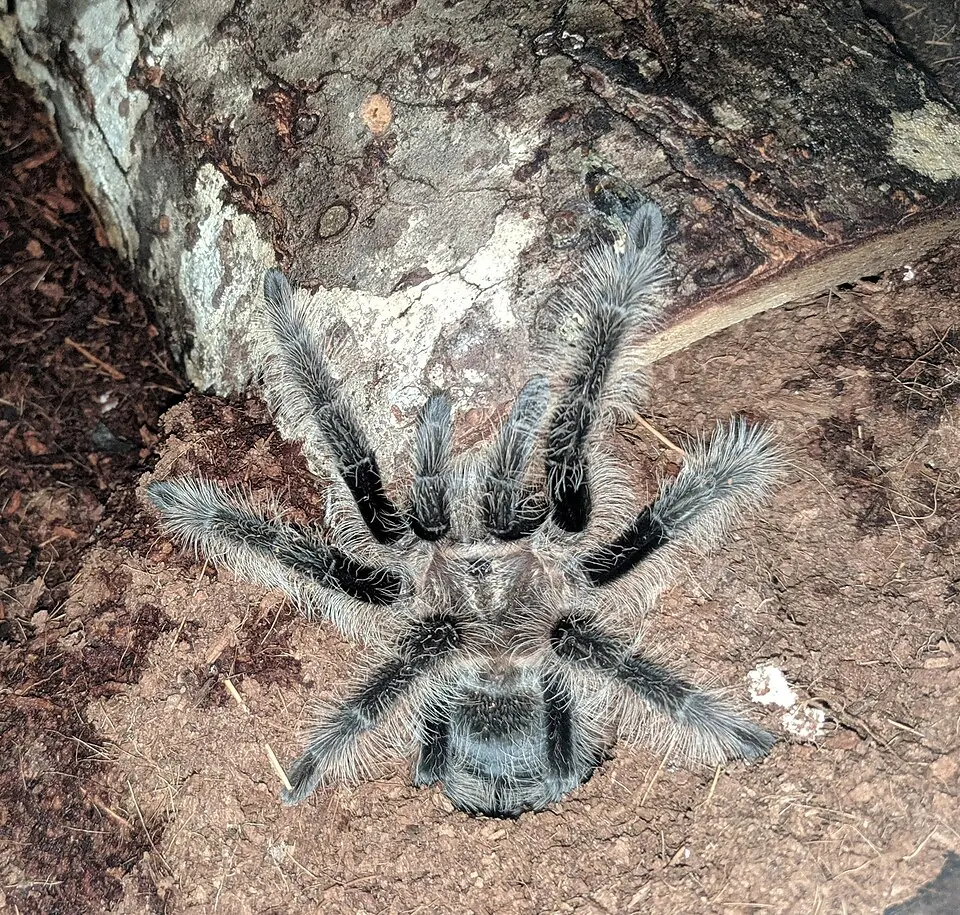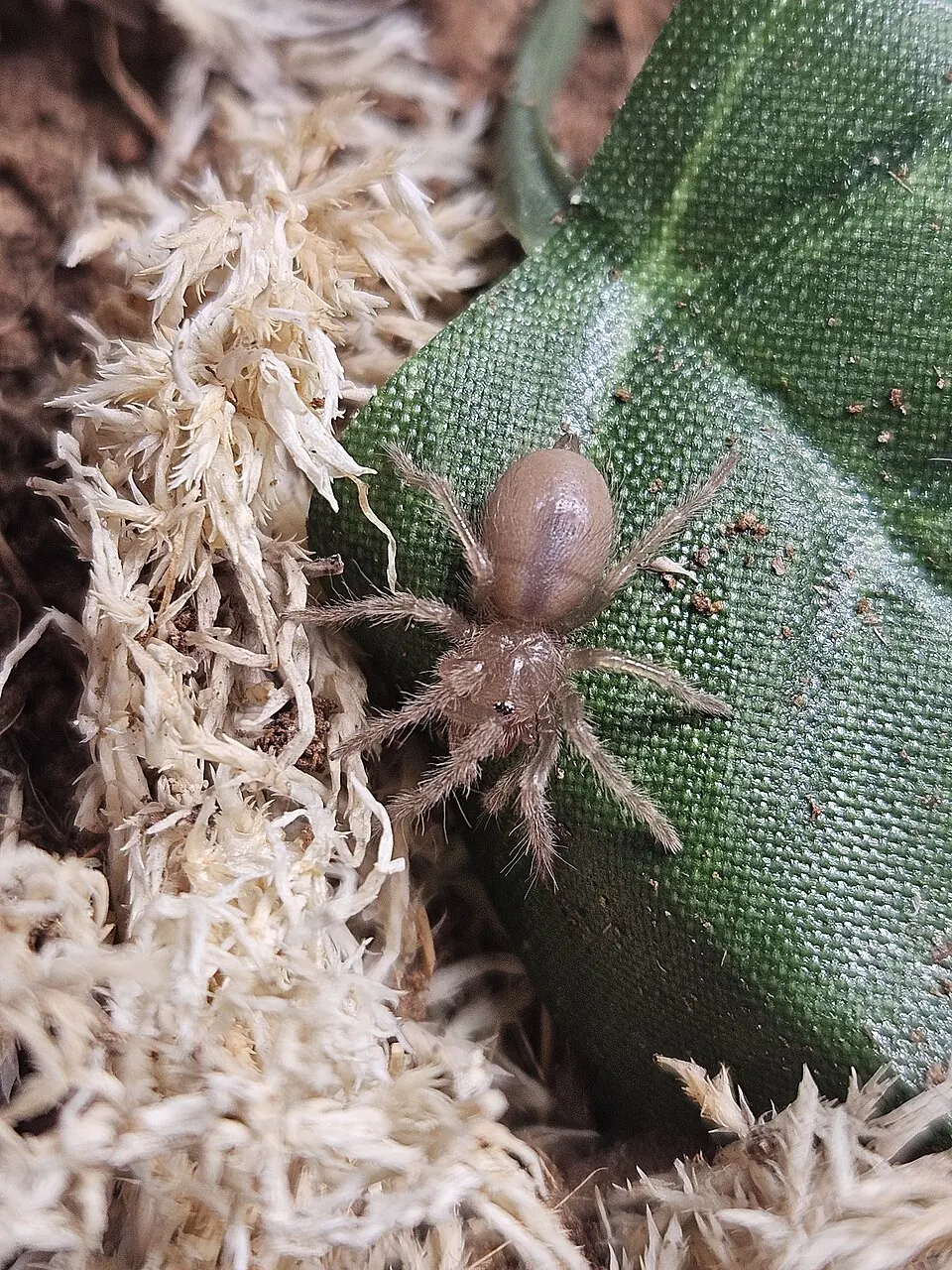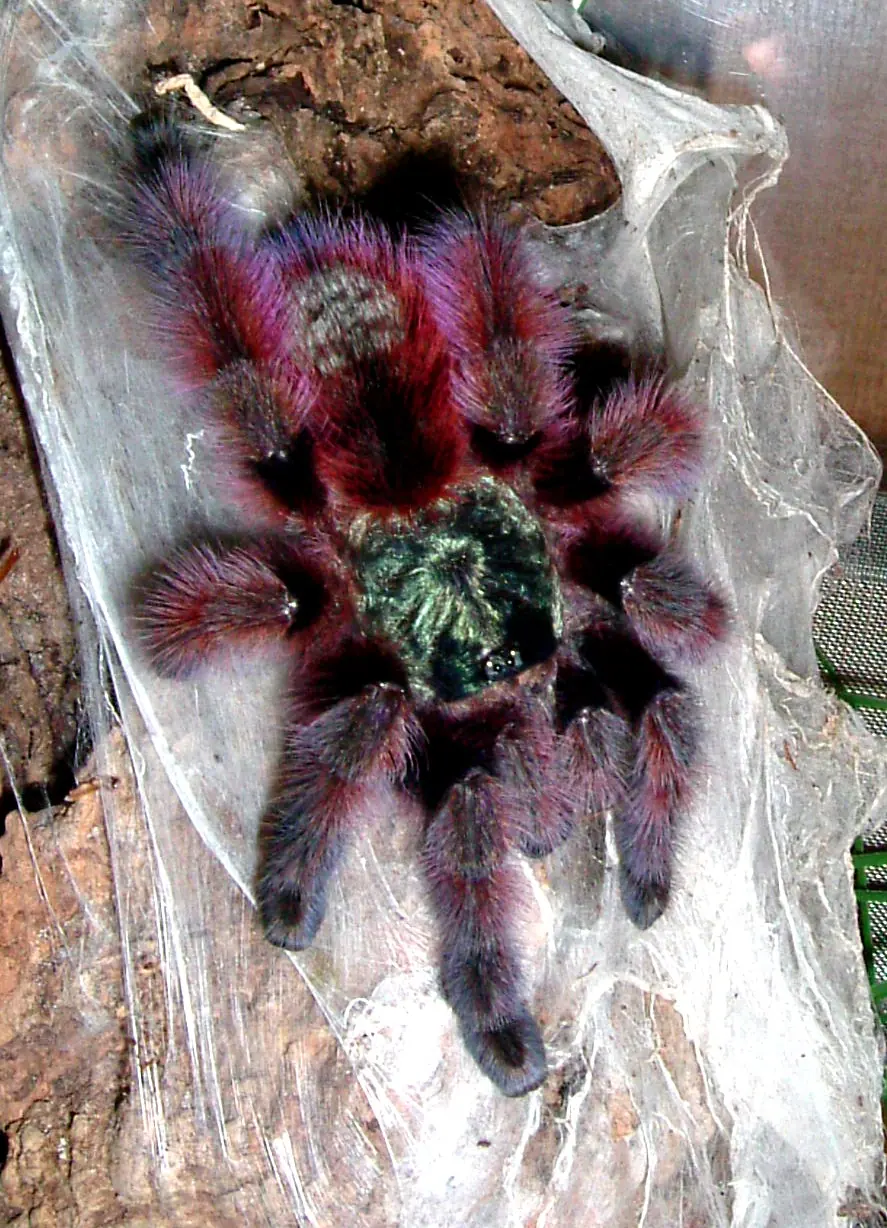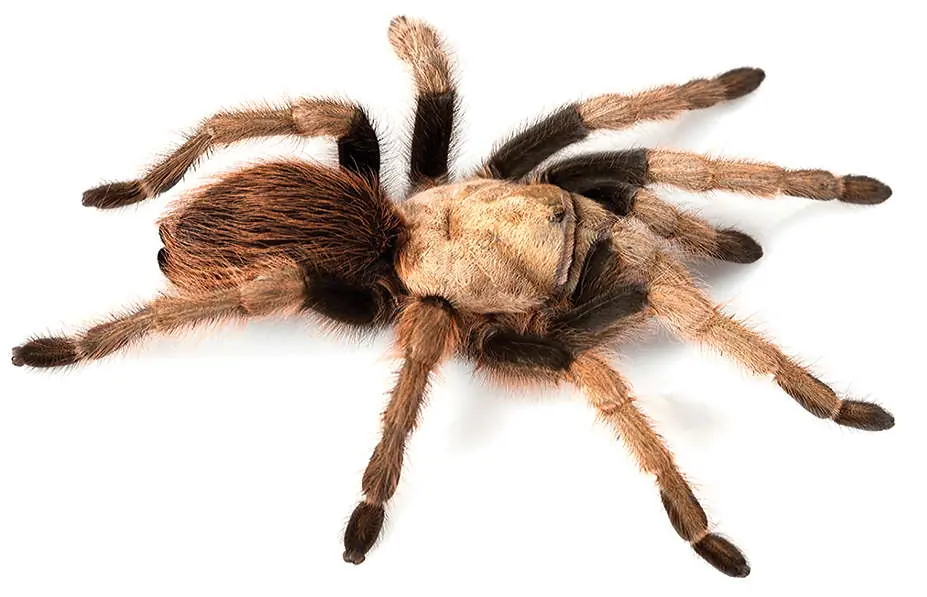
Use this guide as a starting point alongside the detailed sources below. Health concerns, unexplained changes in behavior, or feeding problems belong with a veterinarian experienced with arachnids.
Adult enclosure recommendation
Our recommended minimum: 18″ × 18″ × 1′ (45.8 × 45.8 × 30.5 cm), length × depth × height.
Usable internal space for 1 adult animal. One adult Aphonopelma chalcodes; both sexes; minimum is scoped to the adult size description in this guide, not related species or breeding groups. Adult diagonal leg span can approach 6″ (15 cm); this is leg span rather than body length. Use the individual’s observed size and reliable sex/maturity information.
Height is the usable internal envelope, including the space reserved for substrate and water. Check the remaining movement space and lamp clearance after installation.
A larger footprint can add useful retreat and drinking choices. Keep the same substrate, climbing or low-fall requirements, ventilation and safe access.
Creature Corner editorial allocation of usable floor, retreat, substrate and clearance informed by the cited ecology and husbandry practice. Exact dimensions are not experimentally validated welfare limits. The article explains the conditions and limits behind this recommendation.
- Floor space
- 18″ × 18″ (45.8 × 45.8 cm) internal floor; retain accessible routes after the retreat and water provision are installed.
- Climbing space
- Low stable retreats and ground routes; do not add exposed height or a hard fall path. Secure heavy supports independently of burrowable soil.
- Substrate
- Reserve 8″ (about 20.3 cm) of substrate and 4″ (10.2 cm) of space above it before furnishings. These are internal dimensions; the stated height already includes the substrate.
- Water
- Clean shallow drinking water continuously available; stable vessel, easy exit, inspected daily and after contamination.
- Security and ventilation
- One animal. Latch or clip the lid securely, keep gaps too small for escape and retain effective ventilation. Plan safe service access and transfers with a catch cup and a large empty catch tub in a closed room. Check the furnished enclosure against the retreat, water and safety requirements as well as its dimensions.
Meeting these dimensions alone does not establish suitability. Check the usable layout, environmental conditions, equipment clearance and the individual animal’s requirements before occupation.
Prepare for slow growth and uncertain adult age
An Arizona blonde tarantula is Aphonopelma chalcodes, a solitary ground spider whose care can span decades when the animal is female. A quiet animal still needs a usable retreat, drinking water, appropriate live prey and secure maintenance access. Do not choose it on a promise that it never bites, never needs observation or can be handled routinely.
The current World Spider Catalog lists the species in the USA (United States of America) and records changes from the 2016 Aphonopelma revision, including former A. schmidti. Older keeper pages describe a broader range. A blonde appearance or broad desert locality is not enough to authenticate a purchased specimen or justify copying outdoor weather into a cage.
Adult diagonal leg span can approach 6″ (15 cm), measured across the spread legs. Keeper estimates describe females living 25 years or more and males around 5–8 years from hatching. The Desert Museum natural-history account instead reports males maturing at 10–12 years. Field maturity and captive keeper lifespan estimates are not directly comparable, and these sources do not establish a reliable male lifespan range. An adult of unknown age has uncertain remaining life. Retain reliable sex, maturity and actual age records when available rather than treating a large adult as a short commitment.
Give a ground spider soil and a low exposed clearance
For one adult up to that leg span, our recommended minimum is 18″ × 18″ × 1′ (45.8 × 45.8 × 30.5 cm) of usable internal length × depth × height. Reserve 8″ (about 20.3 cm) for substrate and 4″ (10.2 cm) above it before furnishings. These exact dimensions are an editorial allocation for burrowing, accessible ground and fall protection, not a tested universal minimum.
A larger footprint can add retreat and water choices, provided they remain easy to service. No separate precise preferred target has been established here. More tall empty space can add an exposed fall path instead of useful habitat. An individual that stays on the surface must still have the option of a suitable burrow.
Fit a securely latched or clipped lid and current-size protection at every vent, lid edge and access gap. Test these with the final soil and furnishings in place. Keep routes around the shelter and dish, and avoid hard ornaments beneath an exposed climb. Check usable internal space with the final furnishings installed.
Start a stable retreat without forcing the spider into it
Provide clean fine soil and coconut fiber (coir) or a suitable blend without pesticides, fertilizer or aromatic wood. Pack it enough to retain an excavation, rather than relying on a loose dry pile. Place a low cork shelter over a starter depression with independently stable support. Do not rest heavy rocks on soil a tunnel can undermine.
Most upper ground should stay dry. Maintain continuous drinking water and, according to observed drying, a localized lightly damp lower corner that offers another moisture choice. Do not flood the full depth. One experienced keeper maintained an individual on dry substrate with a dish, while another source favors damp lower layers; neither supplies a comparative welfare trial resolving every setup.
A burrow and its silk remain functional even when the spider is not visible. Leave a blocked entrance alone and preserve undisturbed soil during spot cleaning. Surface sitting does not prove the burrow is unnecessary, and frequent excavation to check the animal can defeat the retreat’s purpose.
Use the retreat to buffer conditions, not to excuse extremes
Choose air temperatures around 70–76°F (21–24°C) for ordinary maintenance. This moderate plan sits within specialist practice; it is not a physiological optimum or safe-limit study. Check air near the retreat entrance and opposite ground route through day and night. A thermostat display and a surface reading measure different things from air around the animal.
If heat is required, consider controlled room warming or a compatible thermostatically regulated source that leaves a cooler refuge. Independently verify the outcome. Do not heat the full floor beneath a burrow or use direct sun or an unregulated lamp. Higher temperatures intended to speed growth are not a care objective.
Seasonal surface activity in desert tarantulas does not prescribe forced winter cooling or a scheduled hunger period in a pet. Interpret changes in appetite with stage, sex, environment and condition. Provide visible daytime light, deep shade and a dark night; a 12-hour/12-hour timer is a starting routine. No ultraviolet B (UVB) dose or dedicated UVB fixture is prescribed because a species-specific requirement and useful safe target were not established.
Keep drinking water available in an otherwise dry surface setup
Use a stable shallow dish of clean water with easy entry and exit, available continuously. Refresh it daily and after contamination. Check whether digging has buried it and reposition it without reopening an occupied retreat. Do not substitute a sponge for an accessible water surface.
No fixed relative-humidity percentage is prescribed. Assess upper-soil dryness, the localized lower moisture option, ventilation and the dish separately. A hygrometer can track trends with recorded location and temperature, but cannot tell you what is happening inside a burrow. Persistent wet condensation or sour material calls for a watering and airflow review.
Distinguish an appetite report from an adult ration
Use captive-reared crickets, roaches or other appropriate insects. Start with prey no longer than the spider’s abdomen as a conservative size guide, one item at a time. Proper feeder care and a variety of suitable insects are more useful than treating every insect as the same portion. Vertebrates and raw meat are unnecessary in an ordinary care plan. For a tiny spiderling, use pinhead crickets, tiny roach nymphs or a small pre-killed insect placed within reach of the retreat.
Begin adult meal reviews every two to three weeks, juvenile reviews every seven to ten days and small spiderlings with small offers about twice weekly. These starting intervals follow slower species practice and change with abdomen condition, prey size, maturity and feeding response. Another keeper’s new female ate weekly; that first-person observation is not a universal adult requirement.
Remove rejected live prey and food remains. Do not force food or repeatedly offer insects to end a fast. Continue water and condition checks; a stable inactive adult differs from one losing condition or movement ability. No fixed fasting duration is guaranteed harmless. No routine calcium/multivitamin-dusting schedule is prescribed, and this does not certify that every feeder diet is nutritionally complete. Remove any uneaten prey and food remains within 24 hours; remove them sooner if the spider refuses, retreats to molt or appears vulnerable.
Let the molt proceed without live prey or handling
Food refusal, a darker abdominal area or closure of the retreat may signal premolt. Remove loose biting insects, leave water available and maintain established conditions. A tarantula lying on its back may be shedding normally; do not turn it over or touch it to test a response.
After a molt, wait for hardened mouthparts and normal coordinated movement before offering a modest meal. If the fangs are visible without disturbing the spider, they should be dark again rather than pale or reddish. Do not handle it or open its retreat to check; wait if readiness is uncertain. Adult recovery can take substantially longer than a small spiderling’s. A number of days alone does not prove readiness. Never pull retained cuticle or improvise an oil, bath or medication; seek qualified advice for an incomplete molt with deterioration.
Scale resources with the current animal
Tiny spiderlings need smaller prey, finer escape checks and closer observation of water and drying than an adult dry-surface description might suggest. A temporary raising container still needs soil, shelter and air exchange; it is not an adult home. Increase usable floor and burrowing capacity as the animal grows.
Use reliable sex and maturity information when interpreting roaming or reduced appetite. Do not overfeed a mature male to make him settle or automatically introduce a mate. Keep one animal, and obtain a separate species-qualified plan for pairing, eggs or young. No forced seasonal breeding manipulation is part of ordinary maintenance.
Set up inspection and transfer before arrival
Prepare long tools, a clear catch cup and a large empty catch tub in a closed room for necessary transfers. Guide the spider without gripping its legs or body. Routine handling creates fall and escape opportunities without supplying a resource. Irritating defensive hairs can affect the eyes during substrate work; use appropriate protection and avoid touching your face after enclosure service.
Test the furnished enclosure across normal room day and night before acquisition. Check structure, closure, air readings, lower moisture and drink access. Ask for actual identity/provenance, known stage and sex, age if recorded, last molt and meals. Favor traceable captive-bred stock and verify current official requirements before cross-border movement.
Inspect water, security and obvious condition daily; spot-remove remains, waste and contaminated material without routinely dismantling the burrow. Keep new arrivals separate with dedicated tools. Prepare sufficient suitable soil, low cork, shallow dish, independent thermometers, feeder supplies, cup and veterinary contact. Budget across the possible long female lifespan, allowing for an adult’s uncertain age.
Recognize deterioration without guessing its cause
Arrange prompt veterinary advice for fluid loss or visible trauma, persistent weakness or inability to stand, abnormal mouth material/discharge with feeding difficulty, or an incomplete molt with deterioration. Progressive abdominal shrinkage requires review of drinking access, successful feeding and health. Refusal alone does not establish dehydration, parasites or a normal seasonal fast.
Provide photographs and source/stage, food/molt and measured environmental records to a clinician who accepts arachnids. Avoid household pesticides, guessed drugs, forced drinking and manual shedding. Eye exposure to defensive hairs also warrants medical advice. The clinical sources are general tarantula guidance, and no independent veterinarian has reviewed this exact combined species candidate.
Sources & further reading
Read the full recommendations and check details for your animal, equipment, and local conditions.
- World Spider Catalog: Aphonopelma chalcodes
- Species care guide: aphonopelma chalcodes
- Tarantula Care
- Care and Keeping of Tarantulas / When Your Pet Has Eight Legs
- Basic guide to keeping
- Aphonopelma chalcodes – The Desert Blonde
- Tarantulas: A Natural History of the Sonoran Desert
Original Creature Corner guide. Editorial fact and citation checks are recorded; independent veterinary review has not been performed.