Use this guide as a starting point alongside the detailed sources below. Health concerns, unexplained changes in behavior, or feeding problems belong with a reptile veterinarian.
Adult enclosure recommendation
Our recommended minimum: 3′ × 18″ × 18″ (91.5 × 45.8 × 45.8 cm), length × depth × height.
Preferred target: 4′ × 2′ × 2′ (122 × 61 × 61 cm), length × depth × height.
Usable internal space for 1 adult animal. One adult Tribolonotus gracilis through 9″ (22.9 cm) total length including tail, alone.
Height is the usable internal envelope, including the space reserved for substrate and water. Check the remaining movement space and lamp clearance after installation.
The preferred 4′ × 2′ × 2′ (122 × 61 × 61 cm) layout adds covered routes and makes water and soil easier to service without crowding the animal.
Our larger furnished floor exceeds the compact specialist care minimum to separate covered land, water access and moisture choices. No exact size trial was found.
- Floor space
- Keep 3′ × 18″ (91.5 × 46 cm) usable internal floor and connected sheltered routes around the water vessel.
- Climbing space
- Offer stable low cork and branches; the ground habitat cannot be replaced by a tall empty enclosure.
- Substrate
- Use 4–6″ (10.2–15.2 cm) damp soil and litter, leaving 12–14″ (30.5–35.6 cm) above it before fixtures in the minimum.
- Water
- Provide a clean shallow drinking/soaking dish with easy entry and exit; no deep swimming requirement is inferred.
- Security and ventilation
- Single animal, locked openings, effective ventilation above damp soil, controlled localized heat and complete light shelter.
Meeting these dimensions alone does not establish suitability. Check the usable layout, environmental conditions, equipment clearance and the individual animal’s requirements before occupation.
References: [2]
Prepare for observation, not frequent handling
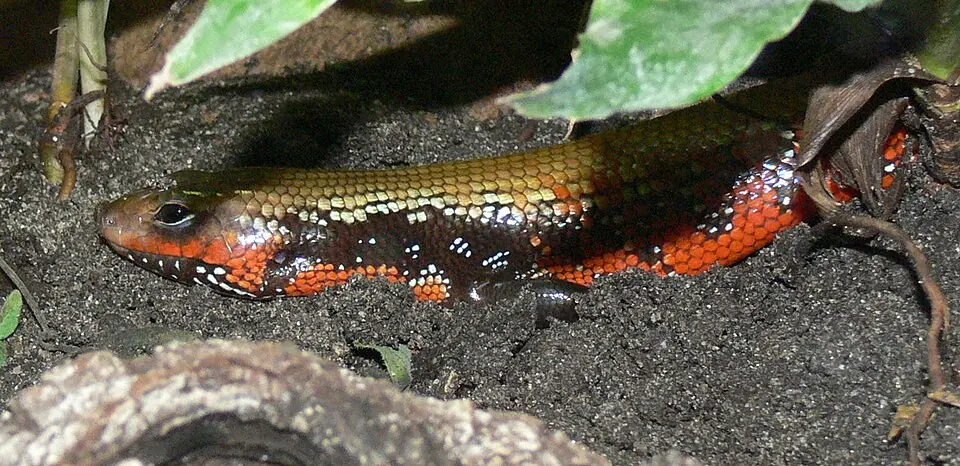
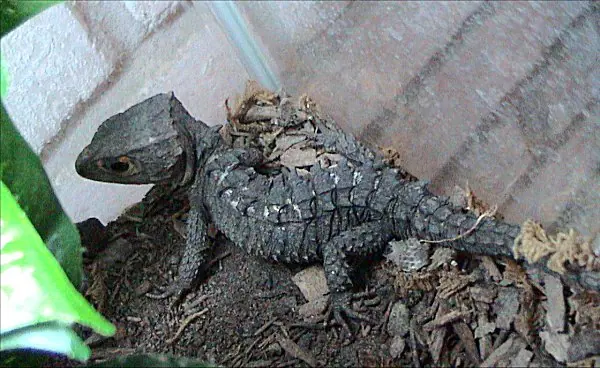
Tribolonotus gracilis is a New Guinea skink, distinct from other crocodile-skink species. Confirm the identity and prefer documented captive breeding with a feeding history. Its covered forest-floor habitat is more relevant than its dramatic appearance; this is not an aquatic miniature crocodile or a tree-only lizard.
Use an adult size example through 9″ (22.9 cm) total length including tail, recognizing that a care-sheet range is not a universal biological maximum. Plan quiet observation, a small cultured-prey supply, veterinary access and a caretaker comfortable maintaining moist refuges without disturbing the animal constantly.
Connect shelter before adding the animal
Use the internal adult dimensions in the enclosure panel for one animal. The larger floor we choose separates water, shelters and low movement routes more easily than the compact source minimum. A tall empty glass box cannot compensate for an inadequate covered floor.
Secure low cork, branches and hides on the base before adding 4–6″ (10.2–15.2 cm) of damp coconut fiber or a moisture-retaining reptile-soil blend, topped with clean leaf litter. Add a shallow drinking and soaking dish with easy entry and exit. Preserve sheltered land around it, and eliminate gaps that could trap the skink beneath furniture.
References: [2]
Warm one surface while keeping a cool refuge
Start with a localized basking surface of 82–89°F (27.8–31.7°C) and cool occupied air of 72–78°F (22.2–25.6°C). This guide uses dark-night air of 68–72°F (20–22.2°C), a practical range above the specialist’s 68°F (20°C) nighttime low. The zoo table gives a warmer night reference, so this combination remains provisional.
Use appropriately controlled gentle overhead heat and independent surface and air readings. Check inside the cool retreat as well as the open floor. A small damp enclosure can overheat quickly; room-temperature labeling is not a substitute for measuring what the animal can actually choose.
Keep air moving above the damp layer
Begin around 80–95% relative humidity, measured at occupied height with local temperature and time recorded. Check the soil and refuge separately: damp cover must not become a hot, stagnant or flooded habitat. Retain ventilation. Change the shallow dish water daily and whenever soiled, and scrub the dish at least weekly.
Provide ultraviolet B (UVB), complete shade and a regular 12-hour starting day. The provisional peak ultraviolet index (UVI) 0.5–1 is our low-exposure interpretation of the zoo tool’s zone 1 species assignment, not a measured clinical optimum. Confirm the actual fixture, mesh and closest reachable back height; a lamp percentage or generic mounting distance is insufficient.
Observe successful meals without dismantling the habitat
Offer varied nourished cultured invertebrates, such as small crickets, roaches and earthworms, around half the head size. Start with two or three suitably sized prey per meal: growing young daily and adults every other day. Check actual capture and adjust the amount to growth, weight and body condition; the same insect count is not appropriate for every prey size.
Place food where capture can be checked and remove uneaten biting prey. Quiet intake, waste and weight records help distinguish a sheltered but feeding animal from one declining out of view. Increasing handling is not a reliable way to make an unwilling animal eat.
The selected species-specialist supplement routine uses Repashy Calcium Plus LoD lightly on insects at every other feeding: alternate a dusted meal with an undusted one. That means every other meal, rather than a calendar-day rule. Shake insects gently with a little powder to give a light coat and offer promptly. This all-in-one includes calcium and vitamins with low vitamin D3; do not stack separate multivitamins, high-D3 calcium or complete powders on top.
The product’s general insect label says every meal, while the species guide uses every other meal as described above. Keep that difference explicit and use one routine consistently; neither has been established as a clinical dose for this skink. Changed lighting, reproduction, abnormal growth or a substantially different menu calls for individual nutritional review.
Treat restraint responses as a reason to pause
Keep one animal in this plan; same-sex competition and breeding management are not resolved by spare volume. Use brief supported transfers only when needed and never grip the tail. Freezing or vocalizing during restraint is not proof that the skink is content.
Check toe and tail shedding without peeling skin. An adult female may need suitable laying provision even if breeding was not intended. No automatic cooling or incubation protocol is prescribed. Straining, weakness, skin wounds, breathing effort or progressive loss of weight warrants a reptile veterinarian.
Make the quiet care routine practical
Prepare a locking enclosure, appropriate soil/litter, stable retreats, shallow water, controlled heat, a suitable ultraviolet fixture and timer, separate air/humidity probes, surface thermometer and exposure-meter access. Validate the furnished environment over repeated day/night cycles before arrival.
During the first week, prioritize secure retreats, feeding access and environmental records. Look quietly around dawn or dusk, when this secretive skink may be active. Renew water, remove waste and inspect soiled bedding without dismantling every hide. Budget for small feeders, substrate, lamps, electricity and veterinary support.
Sources & further reading
Read the full recommendations and check details for your animal, equipment, and local conditions.
- Tribolonotus gracilis | The Reptile Database
- How to Care for Your Red Eyed Crocodile Skink
- How much UV-B does my reptile need? The UV-Tool (UV-Tool: an ultraviolet lighting reference)
- Repashy Calcium Plus LoD: manufacturer label
Original Creature Corner guide. Editorial fact and citation checks are recorded; independent veterinary review has not been performed.