Use this guide as a starting point alongside the detailed sources below. Health concerns, unexplained changes in behavior, or feeding problems belong with a reptile veterinarian.
Adult enclosure recommendation
Our recommended minimum: 70.9″ × 47.3″ × 35.5″ (180 × 120 × 90 cm), length × depth × height.
Preferred target: 94.5″ × 47.3″ × 35.5″ (240 × 120 × 90 cm), length × depth × height.
Usable internal space for 1 adult animal. One adult Northern or Eastern Tiliqua scincoides with snout-to-vent length up to ≈ 11.811″ (30 cm). Measure the adult; a longer body requires the scaling rule. Tanimbar and Indonesian forms are excluded from this climate plan.
Height is the usable internal envelope, including the space reserved for substrate and water. Check the remaining movement space and lamp clearance after installation.
Our larger editorial target extends foraging routes and separation of retreats for the ≈ 11.811″ (30 cm) SVL (snout-to-vent length, excluding the tail) example. It is not an experimentally validated optimum.
We adopt the FBH (Federation of British Herpetologists) skink guideline of 6 × 4 × 3 times snout-to-vent length as a welfare-oriented planning rule, applied to a ≈ 11.811″ (30 cm) adult example. The guideline includes Tiliqua but covers many skinks and acknowledges limited experimental enclosure evidence. This broader footprint allows furnished foraging, digging and thermal choice. The earlier ReptiFiles six-foot by two-foot plan is explicitly a compromise for keeper adoption, so it is not our permanent minimum.
Measure snout to vent, excluding the tail. Multiply SVL by 6 for length, 4 for depth and 3 for height. A ≈ 11.811″ (30 cm) SVL adult gives ≈ 70.9″ × 47.3″ × 35.5″ (180 × 120 × 90 cm); a ≈ 13.78″ (35 cm) SVL adult gives ≈ 82.7″ × 55.2″ × 41.4″ (210 × 140 × 105 cm). These calculations must also leave safe equipment clearance and usable movement above bedding.
Larger adult, example at ≈ 13.78″ (35 cm) snout-to-vent length
Our recommended minimum: 82.7″ × 55.2″ × 41.4″ (210 × 140 × 105 cm), length × depth × height. The minimum applies the FBH 6 × 4 × 3 SVL rule. The preferred target is our editorial additional space for foraging and a deeper furnishing layout.
Preferred target: 94.5″ × 63″ × 47.3″ (240 × 160 × 120 cm), length × depth × height.
- Floor space
- At least about 23 ft² (2.16 m²) in the ≈ 11.811″ (30 cm) SVL example, keeping travel routes around food, hides and water; climbing shelves do not replace the footprint.
- Climbing space
- Use broad low structures and safe landing surfaces. A ≈ 35.433″ (90 cm) envelope with ≈ 3.937″ (10 cm) bedding leaves about ≈ 31.496″ (80 cm) before furnishing and lamp clearances; extra height must be added if safe installation requires it.
- Substrate
- Provide about 4″ (10 cm) of suitable soil-based digging substrate, increasing depth where needed to conceal the body. The stated height is the internal envelope including bedding.
- Water
- Shallow stable dish for drinking and voluntary soaking, with easy exit.
- Security and ventilation
- Secure latches, burrow-proof furnishing supports, ventilation and guarded heat.
Meeting these dimensions alone does not establish suitability. Check the usable layout, environmental conditions, equipment clearance and the individual animal’s requirements before occupation.
Meet the species
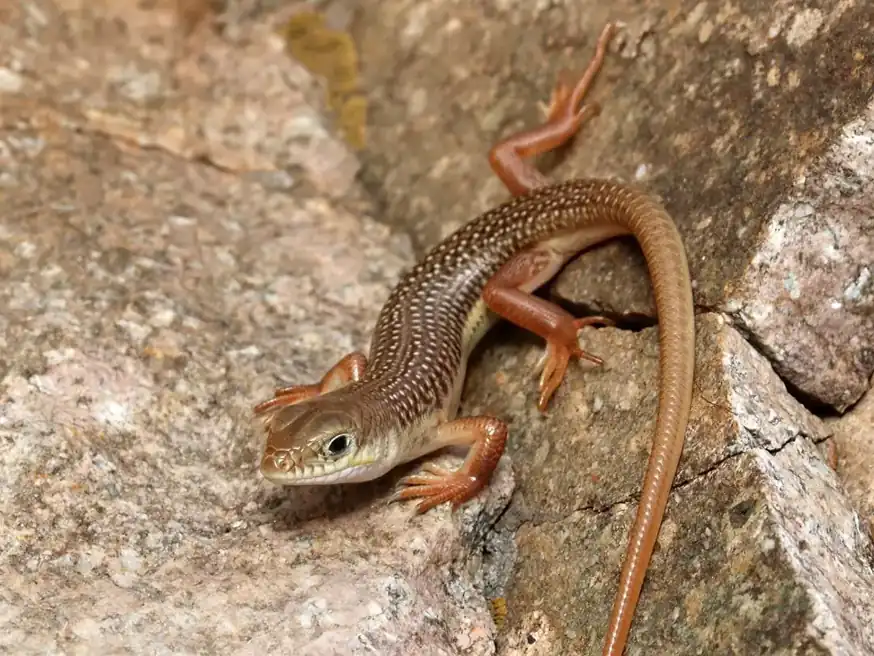
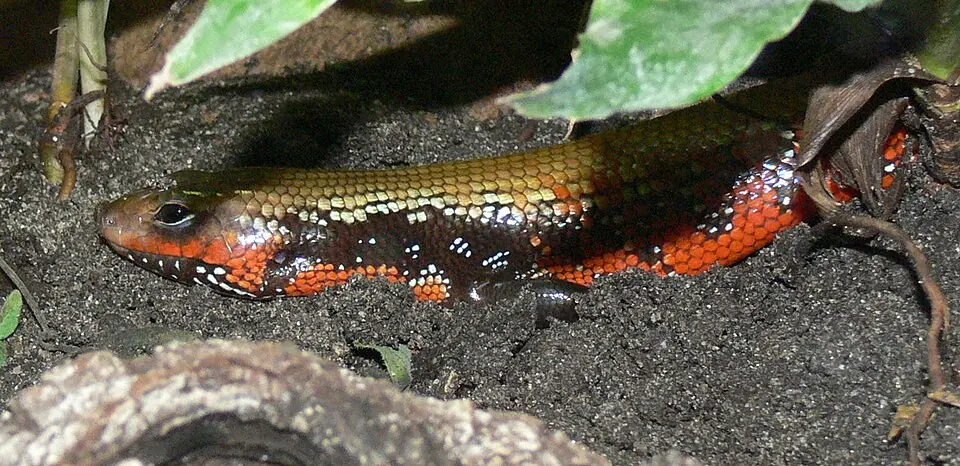
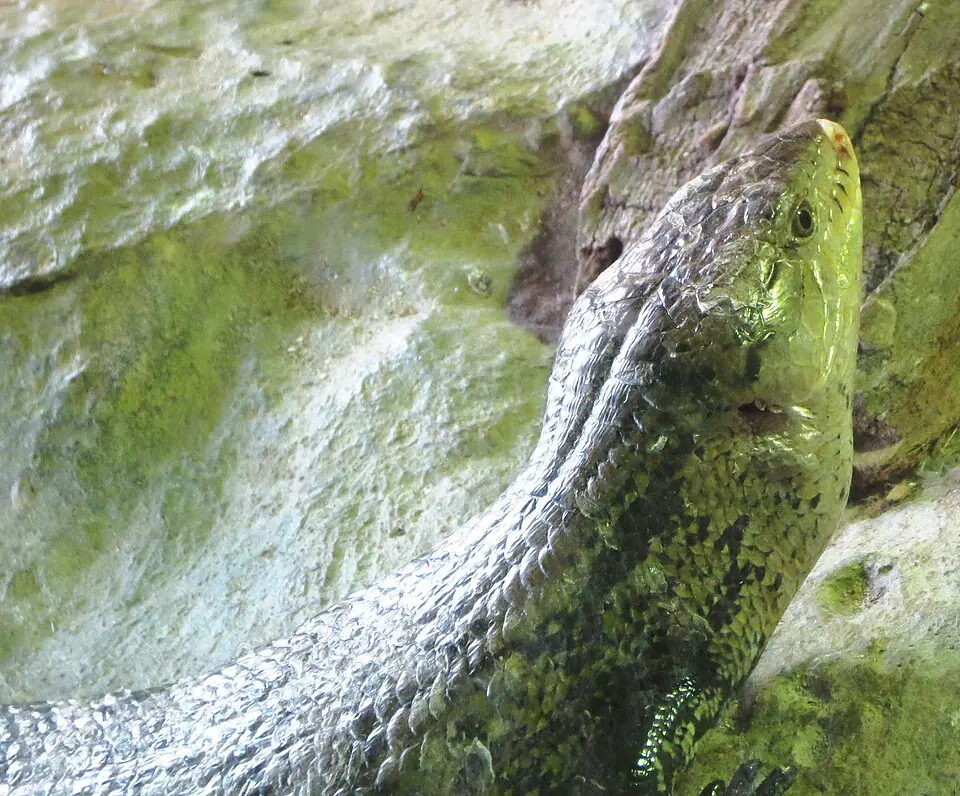
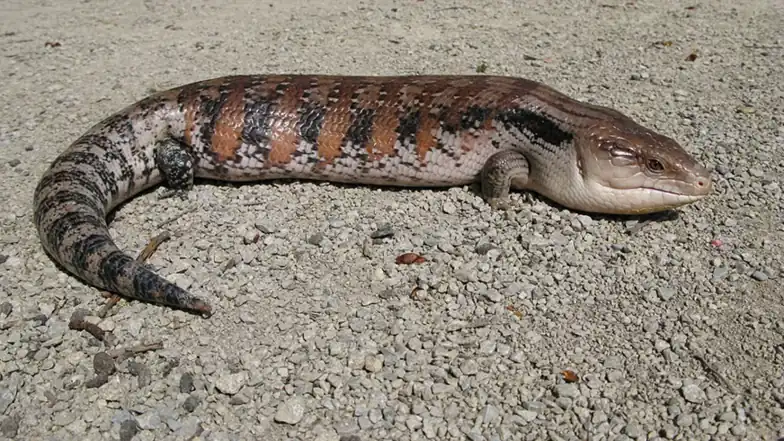
This guide focuses on Northern and Eastern Australian Tiliqua scincoides. “Blue-tongued skink” covers several species and localities with different needs. Indonesian Tiliqua gigas and the Tanimbar form should not automatically receive this humidity plan. Confirm the animal’s identity and origin with a knowledgeable breeder or rescue.
Housing
For one adult Northern or Eastern blue-tongued skink with a ≈ 11.811″ (30 cm) snout-to-vent length, our recommended minimum is ≈ 70.9″ × 47.3″ × 35.5″ (180 × 120 × 90 cm), length × depth × height of usable internal space. We prefer ≈ 94.5″ × 47.3″ × 35.5″ (240 × 120 × 90 cm) for more foraging routes and greater separation of retreats. The minimum applies professional husbandry guidance; the larger target is our design judgment, and neither is a tested welfare cutoff.
Measure from the snout to the vent, excluding the tail. Our adopted rule is six times that length for the enclosure length, four times for depth and three times for height. A larger adult measuring ≈ 13.78″ (35 cm) snout to vent needs at least ≈ 82.7″ × 55.2″ × 41.4″ (210 × 140 × 105 cm); a preferred target for that animal is ≈ 94.5″ × 63″ × 47.3″ (240 × 160 × 120 cm). Do not substitute total length or assume every ≈ 23.622″ (60 cm) long skink has the same body-to-tail proportions.
Keep warm and cool hides, a moist refuge and clear floor routes around a shallow drinking bowl. Provide about 4″ (10 cm) of suitable burrowable substrate, with heavier furnishings supported on the base. The stated height includes bedding: about ≈ 31.496″ (80 cm) remains above a ≈ 3.937″ (10 cm) layer in the ≈ 35.433″ (90 cm) enclosure, before branches and lamp clearance. Use broad low climbing pieces with safe landings; floor area remains the priority.
House alone. Young skinks can use adult accommodation with small shelters, accessible meals and covered travel; any smaller grow-out enclosure is temporary. Dimensions alone cannot provide the correct light, temperature, humidity, ventilation or security. Confirm Northern or Eastern identity before applying the climate plan, and test the completed habitat.
Heat and light
Provide a 105–115°F (40–46°C) basking surface for Northern and Eastern T. scincoides, with a cooler occupied zone around 70–85°F (21–29°C). Check the platform with an infrared thermometer and the cool air with an independent digital probe outside direct radiant heat. The source's cool-zone wording is less specific than its basking-surface target; using both air and surface checks is our practical implementation.
Provide bright daytime light and measured UVB (ultraviolet B) around UVI (ultraviolet index) 3–4 at the skink's back in its basking position, falling to zero in shelter. Start with 12 hours of light and 12 hours of darkness. Measure through installed screening and keep every reachable position within equipment clearances. Albino or unusually light-sensitive animals need a lower individual exposure plan; RSPCA (Royal Society for the Prevention of Cruelty to Animals) caps albino basking exposure at UVI 3.0.
Allow night air to fall to about 65–75°F (18–24°C) with lights off. Use a controlled non-light heater if the room falls below the selected range. This is an active-maintenance plan, not a brumation prescription; do not deliberately chill a young or unwell skink.
Humidity
Maintain around 40–60% relative humidity for Northern and Eastern forms, measured near the ground at the cool end with local temperature recorded. Expect changes through day and night. Keep a clean moist hide and dry resting surfaces, adjusting ventilation and substrate moisture together.
Check the skink's actual identity before changing moisture. Tanimbar T. scincoides and Indonesian T. gigas have different humidity guidance and are outside this plan. Persistent poor shedding warrants an environmental review and veterinary assessment rather than repeatedly soaking the whole enclosure.
Food and routine
Feed a varied mix of suitable insects and plant foods, adjusted for life stage. Adults need less frequent meals than growing juveniles. Chop vegetables appropriately, supplement insects as directed and keep fruit occasional. Replace water daily, remove food promptly and monitor body condition.
Avoid
Avoid treating all blue-tongues alike, relying on one food, overfeeding adults or using high climbing structures with hard landing surfaces. Support the whole body during handling and give a retreating skink space.
From newborn to adult
Blue-tongues give birth to live young, so a baby is a newborn rather than a hatchling. Small youngsters need narrow hide entrances, easy access to food and water, and secure cover across the enclosure. An established juvenile can use adult accommodation when those needs are met; a bare, oversized box is a poor substitute for a furnished habitat.
Reserve the adult footprint now. Our ≈ 11.811″ (30 cm) snout-to-vent example needs at least ≈ 70.9″ × 47.3″ × 35.5″ (180 × 120 × 90 cm) internally, with larger dimensions for a longer-bodied individual. Confirm growth through periodic measurements and leave usable floor routes around hides and water. Deep bedding and any raised platform must preserve lighting clearance.
Feeding through the life stages
As a starting schedule for a healthy Australian blue-tongue, offer daily feeding up to three months, three meals weekly at three to eight months, and one or two weekly thereafter. Treat these as starting intervals for healthy Australian forms, adjusted to actual growth, activity and veterinary advice. A hungry-looking adult does not automatically need a larger meal.
Keep a dated food record alongside occasional weights taken under similar conditions. Note the type and approximate quantity offered, leftovers and supplements. Growing youngsters use more animal food; mature skinks need a greater plant contribution. Rotate ingredients rather than relying on one convenient mix. Offer meals after daytime warm-up and remove perishable remains.
Build adult meals around roughly equal animal and vegetable portions; growing skinks under a year can start closer to 70% animal food and 30% plants, adjusted to growth and condition. These are husbandry proportions, not laboratory nutrient specifications. Use a varied rotation of captive-produced insects or snails and finely chopped safe greens and vegetables, with fruit only occasional. Wet dog food is a common ingredient but should not become the whole diet; we prefer an insect-and-plant base.
Gut-load insects for 24–48 hours and lightly dust them with calcium immediately before feeding. Under our measured UVB plan, avoid automatically adding high-vitamin D3 products. Use a separate reptile multivitamin about weekly for growing juveniles and twice monthly for adults, following its label and recording the product. This is the specialist starting schedule; RSPCA Australia uses fortnightly multivitamins without a separate juvenile schedule. Complete formulated reptile foods may already contain supplements, so follow their instructions instead of adding the same powders again.
Shedding, handling and useful activity
Shed normally comes away in patches. Observe toes and the tail tip without pulling loose skin; persistent constricting material or damaged skin needs veterinary assessment. Check that the humid hide remains accessible and clean. Once the skink is settled and eating, invite brief contact at ground level, support its body and feet, and stop when it withdraws.
Burrowing, investigating cork tunnels and following a changed foraging route are useful activities. Move one lightweight item at a time, keeping familiar sleeping places available. Place heavy rocks directly on a stable base so digging cannot undermine them.
Three setup problems to investigate
No comfortable cool retreat: record cool-end air and basking-surface readings after the lights have run, then again during the warmest part of the room’s day. Check probe position, lamp spread and thermostat operation before changing settings.
Persistently dusty substrate or a soggy enclosure: confirm the subspecies first, then compare humidity at the cool end with conditions inside the refuge. Adjust local moisture and ventilation separately, recording what changed instead of soaking everything at once.
Food repeatedly untouched: log the last accepted meal, recent shed, measured temperatures and body-weight trend. Check food freshness and whether a new hide or bowl blocks access. Repeated refusal, weight loss or unusual behavior warrants a reptile-vet conversation; do not force-feed.
Lifetime commitment and costs
The veterinary reference gives 15–20 years across captive blue-tongued skinks and notes individuals living longer. Exact species/subspecies identification is still necessary.
Allow for a large floor enclosure, deep usable substrate, sturdy hides and replacement furnishings that tolerate a powerful burrowing lizard.
Varied plant and animal foods, heating, UVB maintenance and humidity management are recurring commitments.
References: [6]
Measure the lighting installation
Measure UV (ultraviolet) at back height on the basking surface and the closest reachable climbing point, with shaded exits available. Use the stated UVI 3–4 target for normally pigmented Northern/Eastern animals rather than selecting a lamp from percentage alone. Recheck exposure after changing bedding, furnishings or the lamp.
Arrival and quarantine planning
Save the scientific name, locality and origin claim; do not assume a Northern/Eastern skink care plan applies to an Indonesian skink.
Prepare a separate species-appropriate arrival enclosure and dedicated equipment. Agree observation, screening and release criteria with a reptile veterinarian. Keep the animal’s identity, origin, baseline condition and care history together.
Where recommendations differ
The FBH code gives skinks a 6 × 4 × 3 snout-to-vent-length minimum. ReptiFiles gives a smaller 12 ft² (≈ 1.115 m²) floor and describes it as a compromise to encourage adoption of larger enclosures. RSPCA Australia also lists a range of smaller footprints. We choose the FBH rule for useful foraging and digging space around furnishings. It is professional guidance covering many skinks, not proof that one exact size is optimal.
Heat advice differs in measurement and species scope. RSPCA's general blue-tongue page gives a 86–89.6 °F (30–32°C) basking zone, while ReptiFiles specifies a 104–114.8 °F (40–46°C) surface for T. scincoides. We use that species-specific surface plan with independently measured cool air and surface checks. Do not set all the air to the basking-surface temperature. A clinician may choose a different complete plan for an individual; the numbers cannot be averaged.
Diet and supplement schedules vary across general skink resources. We use the Australian age-based meal intervals and a varied animal-and-plant diet, with measured UVB and light calcium dusting. Powder concentration and fortified foods matter as well as frequency. A veterinarian should set a different regimen for deficiency, illness or an unusual diet; an every-meal high-D3 schedule is not our default.
Sources & further reading
Read the full recommendations and check details for your animal, equipment, and local conditions.
- ReptiFiles: blue-tongue species and subspecies
- ReptiFiles: blue-tongue heat, light and humidity
- ReptiFiles: blue-tongue feeding
- ReptiFiles: blue-tongue enclosure size
- RSPCA Australia: Eastern blue-tongue skink care
- Long Island Bird & Exotics Veterinary Clinic; blue-tongued skink care
- RSPCA: blue-tongued skink care
- The Unusual Pet Vets; reptile quarantine
- VCA Animal Hospitals; the new reptile visit
- Federation of British Herpetologists: minimum enclosure code, May 2022
Original Creature Corner guide. Editorial fact and citation checks are recorded; independent veterinary review has not been performed.