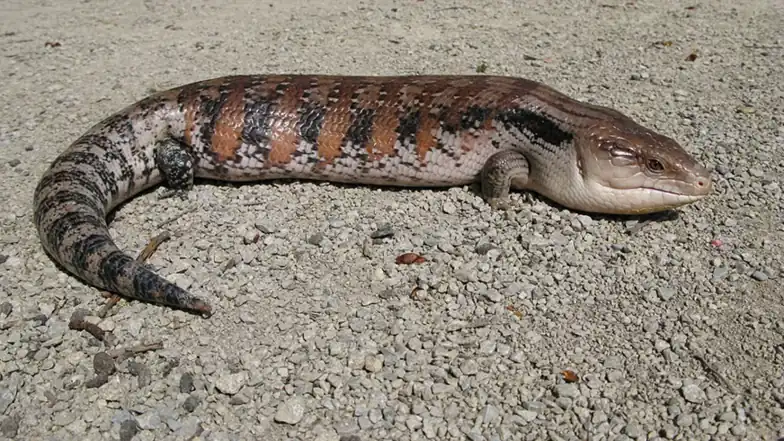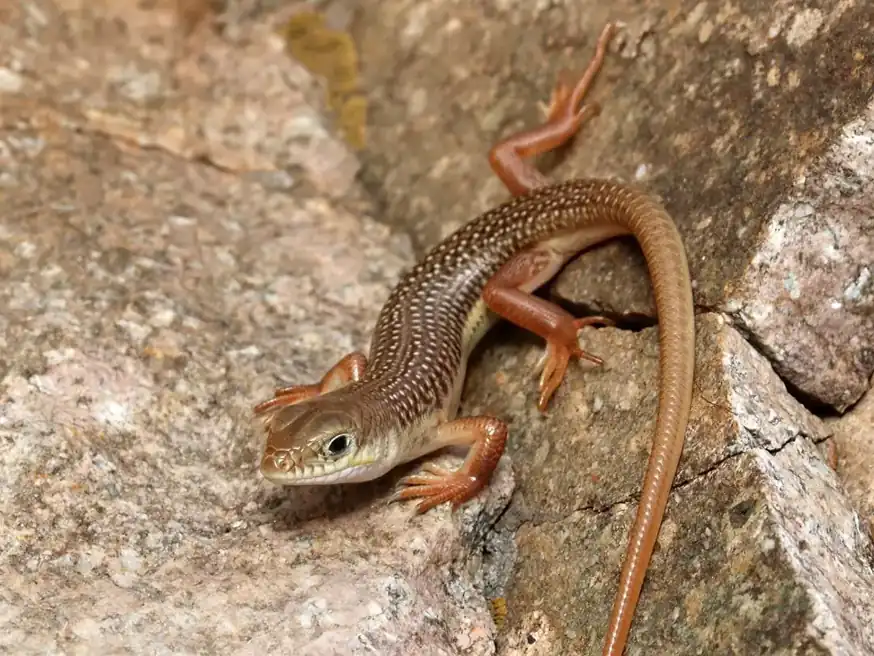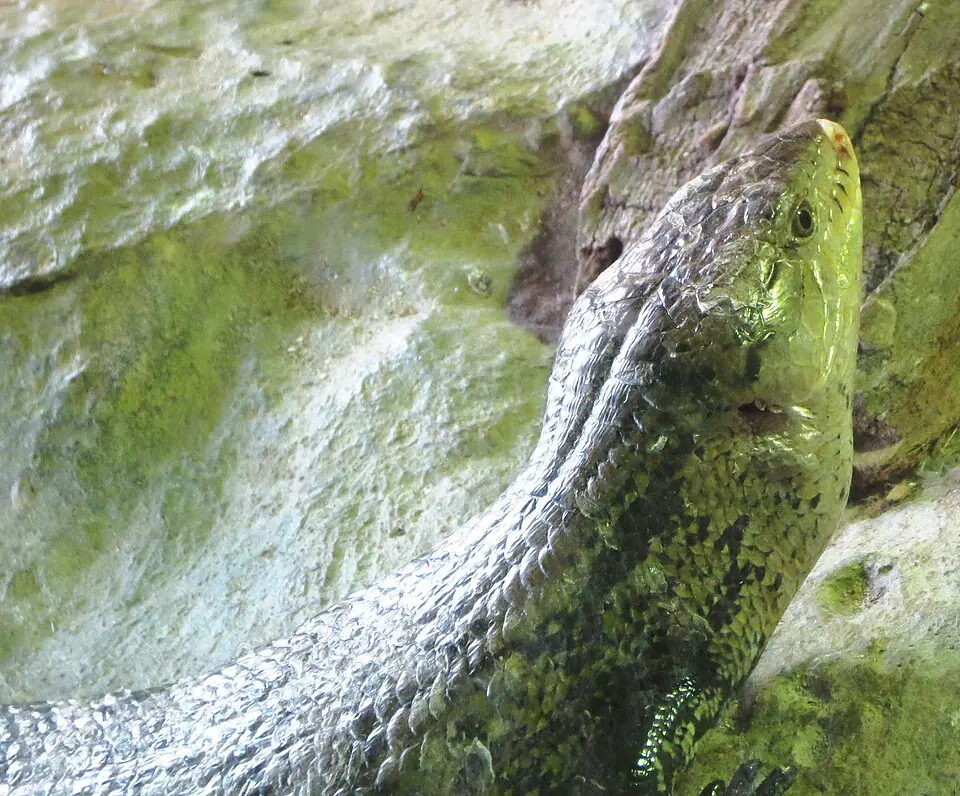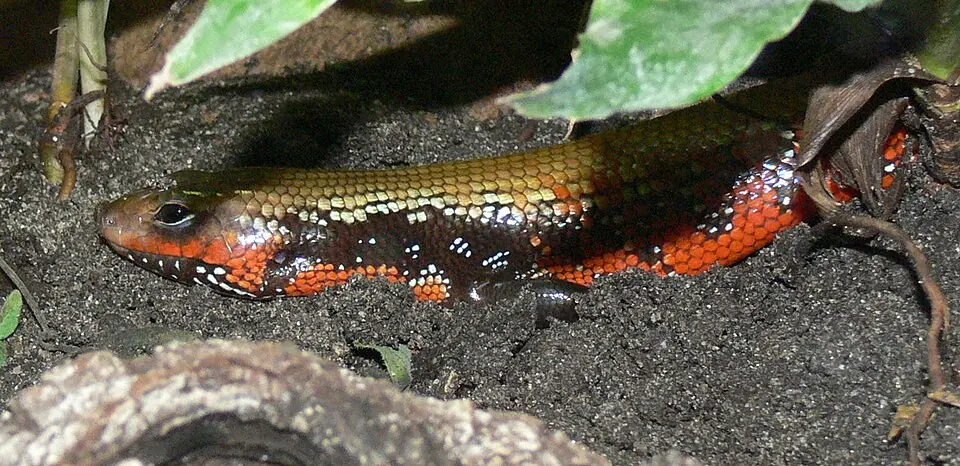
Use this guide as a starting point alongside the detailed sources below. Health concerns, unexplained changes in behavior, or feeding problems belong with a reptile veterinarian.
Adult enclosure recommendation
Our recommended minimum: 3′ × 18″ × 18″ (91.5 × 45.8 × 45.8 cm), length × depth × height.
Preferred target: 4′ × 2′ × 2′ (122 × 61 × 61 cm), length × depth × height.
Usable internal space for 1 adult animal. One adult Mochlus fernandi up to 15″ (38 cm) total length including its tail, housed alone.
Height is the usable internal envelope, including the space reserved for substrate and water. Check the remaining movement space and lamp clearance after installation.
The preferred 4′ × 2′ × 2′ (122 × 61 × 61 cm) layout makes it easier to retain deep soil, usable routes and safe lighting clearance.
The minimum follows the current specialist floor recommendation. Our larger preferred target adds covered foraging area and headroom; neither size is an experimentally validated optimum.
- Floor space
- Maintain 3′ × 18″ (91.5 × 46 cm) of usable internal floor, with routes around shelters and the water dish.
- Climbing space
- Add low anchored branches and cork routes; climbing is an opportunity alongside, not a substitute for, the floor.
- Substrate
- Provide 4–6″ (10.2–15.2 cm) of diggable moisture-retaining soil. This leaves 12–14″ (30.5–35.6 cm) above soil in the minimum envelope, before fixtures.
- Water
- Keep a stable shallow drinking dish accessible without flooding a burrow.
- Security and ventilation
- Lock the enclosure, check gaps at the current animal’s size, ventilate above the moist soil and prevent contact with hot lamps.
Meeting these dimensions alone does not establish suitability. Check the usable layout, environmental conditions, equipment clearance and the individual animal’s requirements before occupation.
A burrow is part of the habitat
A fire skink can be using its home successfully while you cannot see it. Mochlus fernandi comes from covered African habitats and spends time within soil and litter. Up to about 15″ (38 cm) total length includes the tail. Plan connected cover, digging space and feeding opportunities instead of clearing the enclosure to make the animal visible.
Choose a documented captive-bred animal with a feeding and health history. Former names such as Lepidothyris fernandi belong in the search record, but another red-sided skink is not automatically covered by this guide. Expect more observation than handling and arrange someone able to maintain the setup when you are away.
Build the underground space first
We recommend the adult dimensions in the enclosure panel for one skink. Smaller historical tank recommendations leave less room for a soil gradient and covered movement. Install heavy rocks and supports on the base before soil, so digging cannot undermine them. Keep several sheltered resting places at different temperatures and leave routes between them.
Use 4–6″ (10.2–15.2 cm) of diggable soil topped with clean reptile-safe leaf litter. One practical mix is 40% plain topsoil, 40% coconut fiber and 20% fine sand; choose ingredients without fertilizer, pesticide or sharp debris. Keep the lower layer damp while allowing some surface drying. A sour smell, flooded tunnel or waterlogged bottom calls for less watering and better drainage. Temporary paper bedding can help monitor a new or unwell animal, but it does not provide a permanent burrowing habitat.
Measure the surface, air and sheltered choices
Use controlled overhead heat at one end. Start with a basking surface of 92–96°F (33–35.6°C), cool occupied air of 75–85°F (23.9–29.4°C) and night air of 70–75°F (21.1–23.9°C). Check surfaces with an infrared thermometer and air with separate probes. Check a burrow as well; a thermostat setting does not tell you what the skink can reach.
Provide a roughly 12-hour day with bright visible light and ultraviolet B (UVB). This guide uses a small voluntary basking patch at ultraviolet index (UVI) 1–2 at the nearest reachable back height, covered routes generally at 0–0.7 and completely shaded refuges. Measure through the actual mesh and check every reachable furnishing.
This is a provisional lower-exposure plan informed by the zoo ultraviolet lighting guide (UV-Tool (an ultraviolet lighting reference))’s zone 2 classification. ReptiFiles instead recommends a 3–4 basking patch. Neither figure is a proven species dose, and the zone classification does not establish an exact optimum. Keep the stated gradient and supplement routine together, and obtain individual advice before substantially changing either.
Water the habitat without trapping stale moisture
Aim around 60–70% relative humidity near the occupied floor, logging the local temperature and time. Check the deeper soil separately and retain a drier sheltered option. Misting frequency should follow those observations, ventilation and the room; a fogger is not a necessary purchase. Keep a clean shallow drinking dish stable and accessible.
Change drinking water daily and whenever soiled; scrub the dish at least weekly. Remove waste and contaminated bedding promptly. Check toes and the tail after shedding without pulling attached skin. Repeated shedding trouble, swelling or visible decline needs an environmental review and advice from a reptile veterinarian.
Feed a hunting skink and follow its condition
Offer varied cultured invertebrates such as crickets, roaches, earthworms and silkworms, no larger than the skink’s head. Feed the prey nutritious food before offering it. For this light-and-invertebrate plan, lightly coat insects with Repashy Calcium Plus LoD at each insect meal and offer promptly. This specific all-in-one supplies calcium and vitamins, including low vitamin D3; do not add separate multivitamin or D3 products on top.
A practical starting rhythm is daily to alternate-day feeding for growing juveniles and about two meals weekly for adults. Record what is eaten and adjust portions to growth and body condition. Offer food where you can confirm capture, then remove uneaten biting insects. An increasingly heavy body or persistent refusal with weight loss matters more than finishing an arbitrary timed meal.
Use the LoD formulation named here; similarly named Calcium Plus products have different vitamin levels. This practical combination has limited species-specific evidence. Seek nutritional advice for poor growth, weight loss, reproduction, substantial diet changes or persistent avoidance of the light. Vertebrate feeders and fruit are not necessary staples.
Let the skink choose contact
House this plan’s animal alone. Extra skinks create competition and reproductive questions that these dimensions do not resolve. Begin interaction through quiet observation and food offered at a consistent place. When necessary, scoop and support the body near the floor; never restrain the tail or chase an animal through its burrow.
Record the first week’s meals, waste and ordinary activity without repeatedly excavating the enclosure. A juvenile needs the same resource choices at an escape-proof scale. No automatic winter cooling or breeding cycle is prescribed here. A female straining or deteriorating needs veterinary assessment, with laying provision reviewed for that individual.
Keep a useful record and a workable equipment list
Before arrival, run the furnished enclosure through repeated day and night checks. Prepare a locking adult enclosure, deep bedding and litter, anchored shelters, water dish, controlled heat, compatible ultraviolet fixture, timer, separate probes, an infrared thermometer and access to an exposure meter. Keep feeder supplies and cleaning equipment separate from household food preparation.
Check water, waste, controls and the animal daily. Replace contaminated bedding and clean furnishings when needed; persistent wetness or odor needs attention before the next planned cleaning. Arrange veterinary help for breathing effort, wounds, weakness, mouth changes or declining weight.
Sources & further reading
Read the full recommendations and check details for your animal, equipment, and local conditions.
- Mochlus fernandi | The Reptile Database
- Fire Skink Care Sheet | ReptiFiles
- The African Fire Skink
- How much UV-B does my reptile need? The UV-Tool
- Repashy Calcium Plus LoD: manufacturer label
Original Creature Corner guide. Editorial fact and citation checks are recorded; independent veterinary review has not been performed.