Use this guide as a starting point alongside the detailed sources below. Health concerns, unexplained changes in behavior, or feeding problems belong with a reptile veterinarian.
Adult enclosure recommendation
Our recommended minimum: 4′ × 2′ × 3′ (122 × 61 × 91.5 cm), length × depth × height.
Preferred target: 5′ × 3′ × 4′ (152.4 × 91.5 × 122 cm), length × depth × height.
Usable internal space for 1 adult animal. One adult Cyclodomorphus gerrardii through 22″ (55.9 cm) total length including tail, alone.
Height is the usable internal envelope, including the space reserved for substrate and water. Check the remaining movement space and lamp clearance after installation.
The preferred 5′ × 3′ × 4′ (152.5 × 91.5 × 122 cm) layout adds wider turning routes and separated sheltered perches while retaining floor and lamp clearance.
The floor follows specialist housing guidance, while our additional height reserves room for soil and connected climbing. No trial establishes these exact thresholds.
- Floor space
- Retain 4′ × 2′ (122 × 61 cm) of usable internal floor with covered routes and space around drinking water.
- Climbing space
- Provide broad anchored branches and hollow retreats connected at different heights; eliminate unsupported leaps and access to hot fixtures.
- Substrate
- Reserve 4–6″ (10.2–15.2 cm) of diggable soil, leaving 30–32″ (76–81.3 cm) above it in the minimum envelope before fixtures.
- Water
- Use a stable clean vessel with an easy exit; drinking access must not depend on forced bathing.
- Security and ventilation
- Single animal, locked openings, ventilation above damp soil, guarded thermostatic heat and measured light clearance.
Meeting these dimensions alone does not establish suitability. Check the usable layout, environmental conditions, equipment clearance and the individual animal’s requirements before occupation.
A climbing skink with a specialized menu
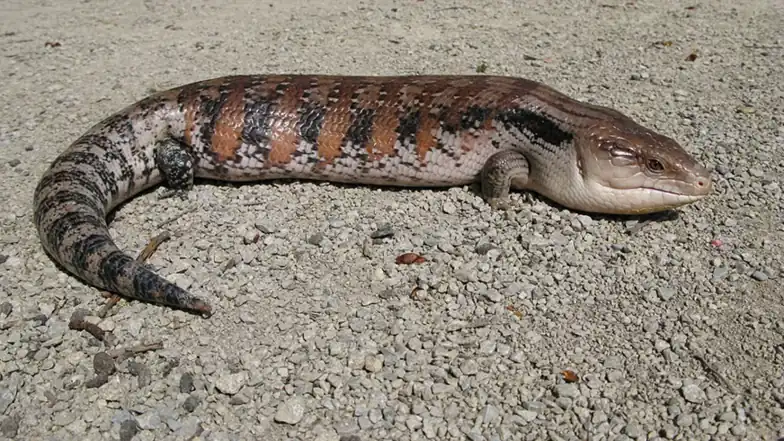
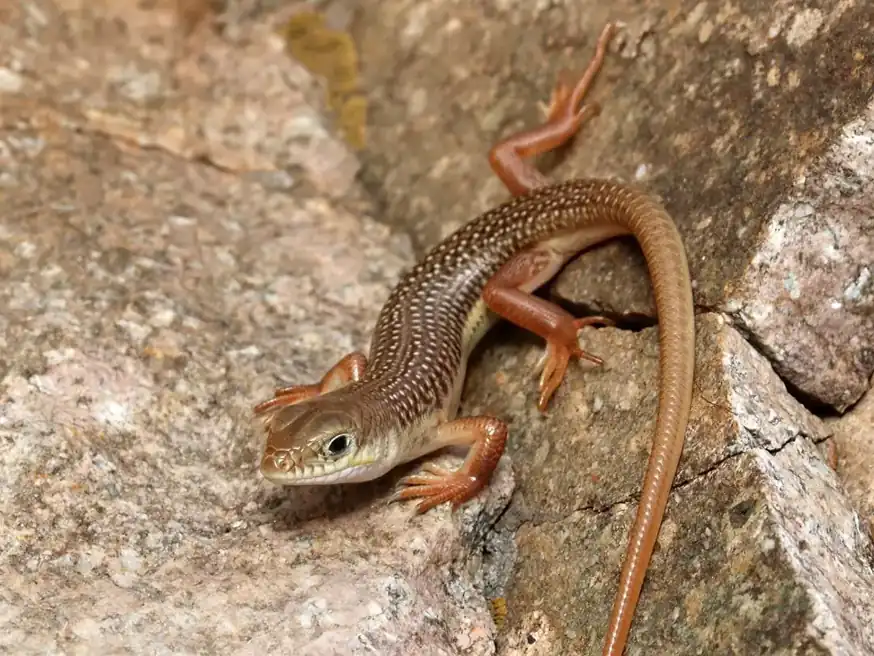
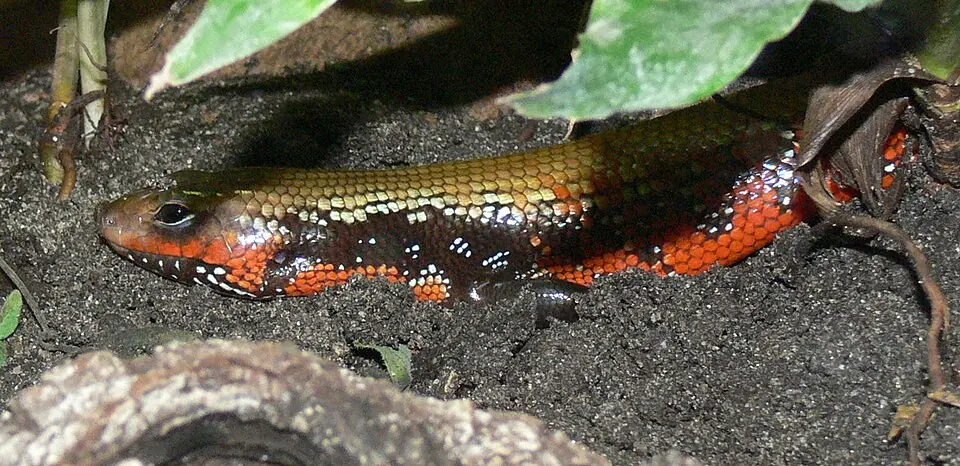
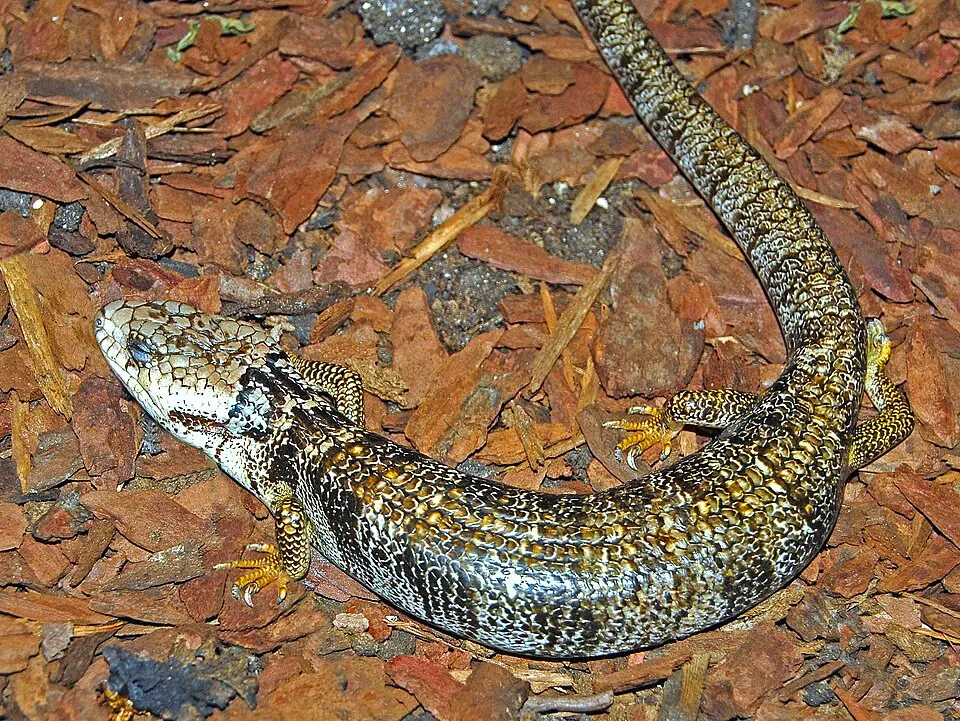
Cyclodomorphus gerrardii is a pink-tongued skink, with Hemisphaeriodon gerrardii retained as a former name. It is distinct from blue-tongued Tiliqua. The eastern Australian species uses a range of covered environments, including woodland and wetter forest, and can climb using its long tail. Juveniles can have blue tongues, so tongue color alone does not settle identity.
Arrange a reliable supply of appropriate cultured mollusks before acquisition. This is not a blue-tongue menu with the name changed. A documented captive-bred animal and a feeding history make preparation more specific; also arrange veterinary access and someone able to maintain the habitat during absences.
Build the branches as usable routes
Use the adult enclosure panel’s internal dimensions for one animal. Our taller minimum preserves the specialist floor while adding connected climbing room. Do not let an advertised height conceal lost space beneath bedding or beside internal fixtures. The preferred plan adds width and further sheltered routes rather than an empty vertical shaft.
Anchor broad branches and hollow retreats, with cover at several heights and low routes across the floor. Add 4–6″ (10.2–15.2 cm) of moisture-retaining reptile soil or a tropical soil-and-coconut-fiber mix, topped with clean leaf litter. Secure heavy furnishings on the base first. Check that the skink can turn in retreats, reach water and descend without a risky jump. Its prehensile tail can grip while climbing; never use it to lift the animal.
Check the warm perch and the cool retreat separately
Start with a localized basking surface of 93–95°F (33.9–35°C), background air 74–77°F (23.3–25°C), cool air 68–77°F (20–25°C) and dark-night air 68–73°F (20–22.8°C). Use probes at several occupied heights and a surface thermometer. Control and guard overhead heat; the whole enclosure must not approach the basking value.
Provide a regular 12-hour day with bright visible light and ultraviolet B (UVB). This guide uses a provisional, restricted basking patch at ultraviolet index (UVI) 1–2 at the nearest reachable back height, covered routes generally 0–0.7 and completely shaded retreats. Check every accessible branch through the actual mesh, with routes to food and water outside the patch.
The zoo ultraviolet lighting guide (UV-Tool (an ultraviolet lighting reference)) places this species, under its former name Hemisphaeriodon, in zone 2. That classification informs this lower-exposure plan but does not prove an exact dose. Monkfield and Swell instead recommend a 3–4 basking patch. Keep the chosen light gradient and nutrition routine together and seek individual advice before substantially changing either.
Keep moisture where the animal can choose it
Begin around 60–70% relative humidity at occupied height, following Monkfield and Swell, and record local temperature and time. ReptileSupply recommends 70–90%, so the published ranges differ. Keep damp lower soil and a moist refuge, plus ventilation and a drier surface option, rather than soaking the entire habitat to chase a number. Replace drinking water daily and whenever soiled, and scrub the accessible, easy-exit dish at least weekly.
Check shedding on toes and tail without pulling attached skin. A damp refuge can support shedding, but repeated retention, swelling or wounds call for environmental and veterinary review. A constantly wet floor and stagnant hide are not evidence that hydration has been solved.
Support the animal without making every interaction handling
Use single housing for this plan. Let the skink approach where possible, and support its body and feet near a secure surface when necessary. Hissing, escape attempts or withdrawal are reasons to reduce contact, not prove it needs taming. Check food, waste and ordinary activity without repeatedly dismantling the retreats.
This species bears live young, so an egg-laying box is not an automatic care task. Pregnancy concerns, straining or persistent decline need individual veterinary advice. Do not copy a winter-cooling schedule from an Australian species with different ecology; no brumation procedure is prescribed here.
Prepare a serviceable home and useful records
Run the furnished setup through repeated day/night checks before arrival. Prepare a locking enclosure, soil, stable connected branches and retreats, water vessel, thermostat-compatible heat, ultraviolet fixture and timer, air/humidity probes, surface thermometer and exposure-meter access. Secure a continuing cultured-food supply and dedicated cleaning tools.
During the first week, record intake, waste, quiet movement and weight when feasible without excessive contact. Renew water and remove contamination promptly while inspecting moist bedding. Breathing difficulty, weakness, wounds, progressive weight loss or straining needs a reptile veterinarian.
Sources & further reading
Read the full recommendations and check details for your animal, equipment, and local conditions.
- Cyclodomorphus gerrardii | The Reptile Database
- Pink-tongue Skink
- Pink tongue skink care sheet
- Pink-Tongued Skink care sheet
- How much UV-B does my reptile need? The UV-Tool
- Repashy Calcium Plus LoD: manufacturer label
- Pink Tongue Skink Care Guide
- How to Care for Your Pink-Tongued Skink
Original Creature Corner guide. Editorial fact and citation checks are recorded; independent veterinary review has not been performed.