Use this guide as a starting point alongside the detailed sources below. Health concerns, unexplained changes in behavior, or feeding problems belong with a veterinarian experienced with arachnids.
Adult enclosure recommendation
Our recommended minimum: 18″ × 1′ × 1′ (45.8 × 30.5 × 30.5 cm), length × depth × height.
Usable internal space for 1 adult animal. One adult Heterometrus silenus; both sexes; minimum is scoped to the adult size description in this guide, not related species or breeding groups. The 2023 examined-specimen diagnosis gives adults about 3½–5″ (9–12.5 cm) total length, including the tail; this is not a curled-tail footprint. Mixed trade estimates can be larger, so actual adult size and identification still matter.
Height is the usable internal envelope, including the space reserved for substrate and water. Check the remaining movement space and lamp clearance after installation.
A larger footprint can add useful retreat and drinking choices. Keep the same substrate, climbing or low-fall requirements, ventilation and safe access.
Creature Corner editorial allocation of usable floor, retreat, substrate and clearance informed by the cited ecology and husbandry practice. Exact dimensions are not experimentally validated welfare limits. The article explains the conditions and limits behind this recommendation.
- Floor space
- 18″ × 1′ (45.8 × 30.5 cm) internal floor; retain accessible routes after the retreat and water provision are installed.
- Climbing space
- Low stable retreats and ground routes; do not add exposed height or a hard fall path. Secure heavy supports independently of burrowable soil.
- Substrate
- Reserve 6″ (about 15.2 cm) of substrate and 6″ (about 15.2 cm) of space above it before furnishings. These are internal dimensions; the stated height already includes the substrate.
- Water
- Clean shallow drinking water continuously available; stable vessel, easy exit, inspected daily and after contamination.
- Security and ventilation
- One animal. Latch or clip the lid securely, keep gaps too small for escape and retain effective ventilation. Plan safe service access and transfers with a catch cup and a large empty catch tub in a closed room. Check the furnished enclosure against the retreat, water and safety requirements as well as its dimensions.
Meeting these dimensions alone does not establish suitability. Check the usable layout, environmental conditions, equipment clearance and the individual animal’s requirements before occupation.
Resolve the forest-scorpion name before applying the guide
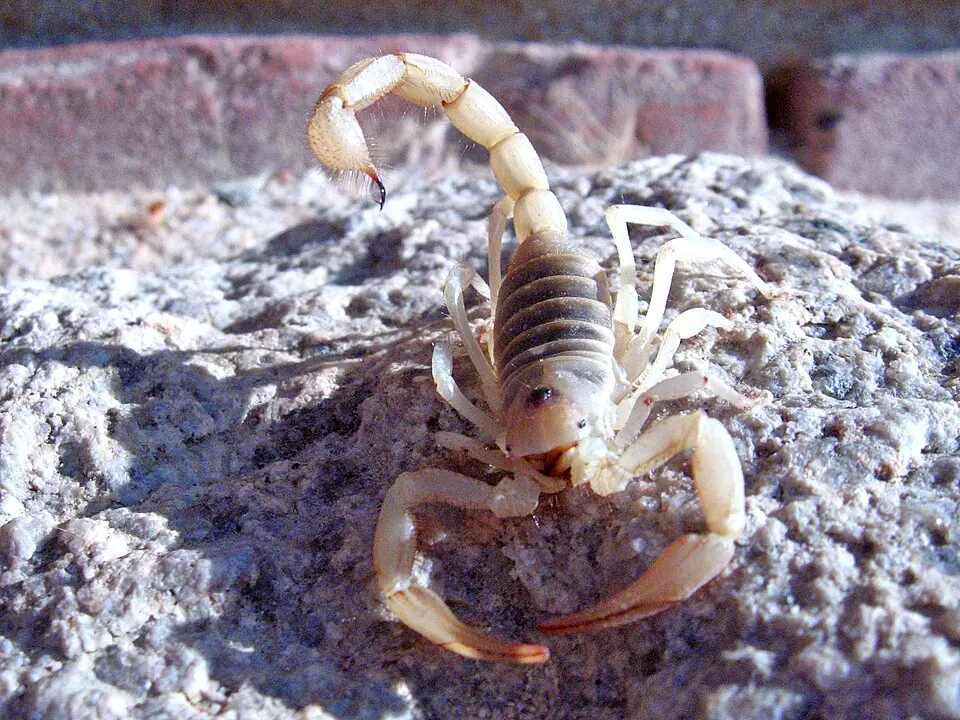
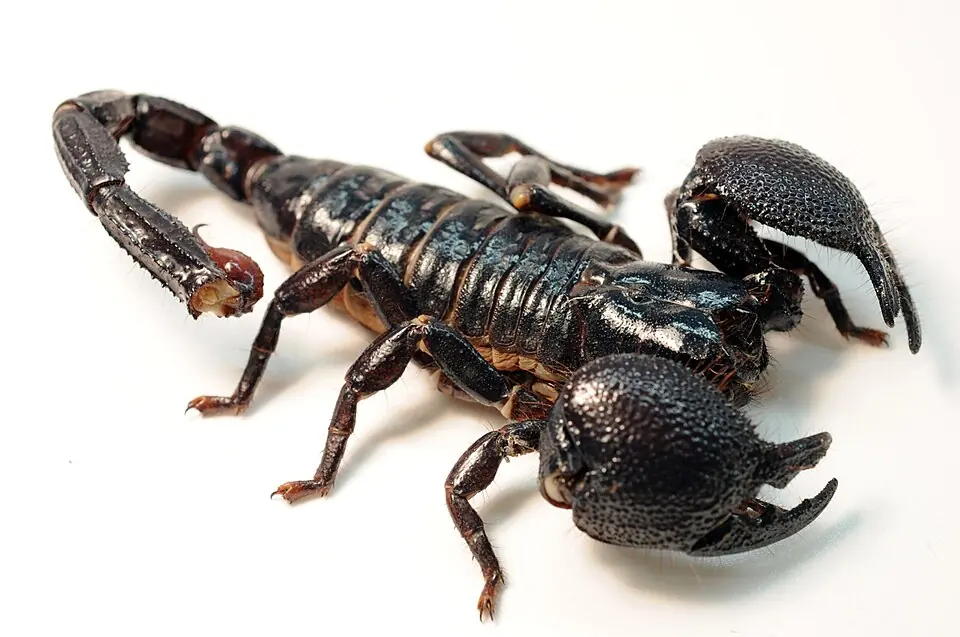
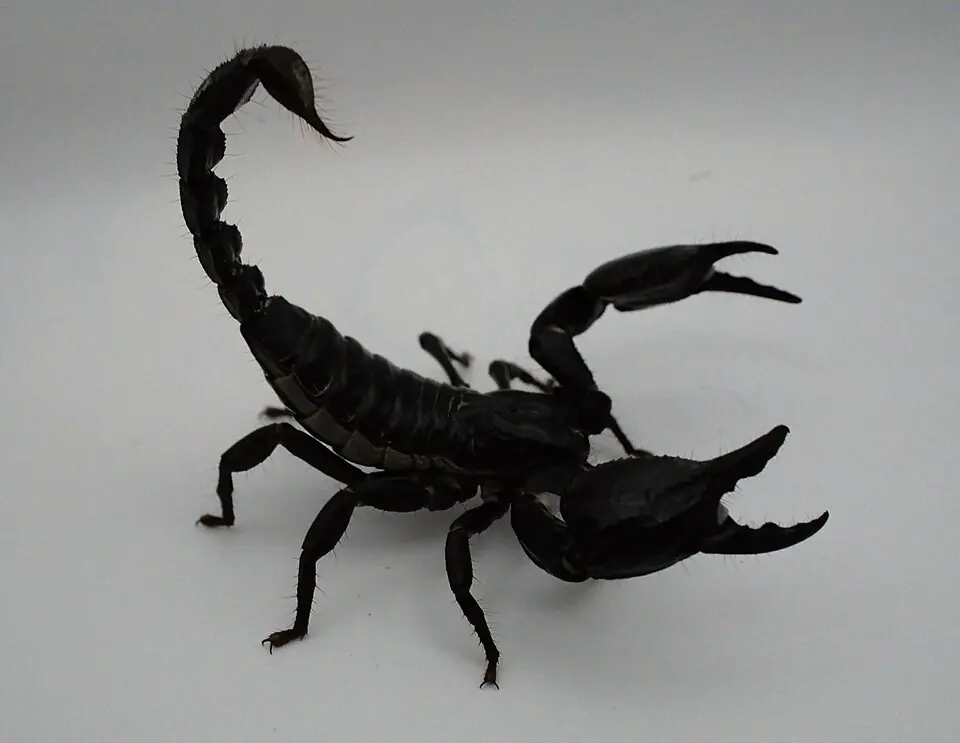
This guide concerns Heterometrus silenus, often called the Vietnamese or Asian forest scorpion. The broad common name covers several identities. The Norwegian University of Science and Technology’s Scorpion Files lists H. silenus, H. petersii, H. spinifer and H. laoticus as distinct species. A commercial formerly petersii description is trading history, not accepted synonymy and not proof that a purchased animal has been authenticated.
A 2023 taxonomic study of examined specimens documents historical petersii misidentifications and distinguishes silenus from the similar laoticus using several morphological characters. Ask for provenance and competent identification rather than relying on black color or one photograph. Do not quietly apply an emperor-scorpion guide to an uncertain Asian animal.
That primary diagnosis gives adults about 3½–5″ (9–12.5 cm) total length including the tail, rather than the curled-tail footprint. Some trade estimates are larger. Reliable sex-specific captive lifespan distributions were not established, so plan care for years without promising an average or the remaining life of an adult. Captive protocols are supported mainly by breeder practice rather than documented long-term outcomes. Preserve the actual identity, source and care records as the animal grows.
Give one animal soil depth and separate resources
Our provisional recommended adult minimum is 18″ × 1′ × 1′ (45.8 × 30.5 × 30.5 cm) usable internal length × depth × height, for one animal. Reserve 6″ (about 15.2 cm) for soil, leaving 6″ (about 15.2 cm) above it before furnishings. These axes are an editorial layout choice that expands on small breeder enclosures to retain digging, retreat, water and maintenance access. They are not a tested welfare threshold.
We do not claim a second exact preferred size. Extra floor and soil capacity can be useful if they add protected choices. Empty height and a larger advertised volume do not replace a workable burrow. Keep a continuous ground route around the retreat and drinking dish.
Use positive locks or securely clipped closure and test vents, door corners and cable openings at the current animal’s size. Keep decorations away from lid edges and prevent them from shifting. An adult footprint cannot be reused for several animals merely by adding more hides.
Maintain a damp retreat without flooding it
Use clean water-retentive, compactable soil and coconut fiber (coir) material without pesticides or fertilizers. Install a stable low cork hide and a starter depression so the scorpion can deepen or modify a retreat. Heavy supports must be secured independently of loose soil; excavation must not undermine the roof.
Add water gradually into the soil and inspect beneath the surface at an accessible edge. Keep deeper material damp rather than flooded, with a ventilated upper area and a less-wet surface choice. A spray that darkens the top for a few minutes may not maintain the lower retreat. Conversely, standing water at the bottom means the medium is too wet.
Do not repeatedly excavate the animal to confirm it is present. Burrowing and periods out of sight are expected resources and behaviors in this group. Design the water and cleaning access so you can maintain the enclosure while leaving the retreat intact.
Use a modest measured air plan
For this provisional maintenance plan, aim for daytime air of 75–80°F (24–27°C), with a cooler sheltered end. At night, 72–78°F (22–26°C) is a moderate working choice within the broader breeder ranges. These separate day/night choices are editorial operating targets, not measured species optima or hard tolerance limits.
Measure shaded air near the ground and retreat entrance at both ends and check overnight readings. If heat is needed, controlled room warming or a compatible externally controlled side source can be used while preserving a cooler choice. Independently measure the result and secure the control probe as the actual equipment requires. Do not heat the floor beneath the animal’s burrowing refuge.
A thermostat setting does not establish the temperature inside a retreat. If an enclosure becomes unusually warm or dries rapidly, correct the equipment and room exposure before adding more water. Keep it out of direct sunlight and away from radiators or other uncontrolled heat.
Check the burrow and dish as well as the hygrometer
Keep clean water continuously available in a shallow stable dish with an easy exit. Refresh it daily and when contaminated, and keep it reachable without forcing the scorpion into open exposure. Use gradual soil watering to maintain lower moisture rather than relying on the drinking dish to wet the whole habitat.
A provisional near-surface relative-humidity reference around 75–80% reflects published breeder practice. Record the reading’s position and local temperature. The deeper retreat and the ventilated upper air are different places; a meter near one wall does not represent them both.
Some specialist advice reduces ventilation to retain moisture. Our choice is to preserve effective air exchange and regulate actual water additions. Do not seal vents to chase a number. Persistent condensation, decomposing wet matter or sour soil calls for inspection and adjustment. The evidence does not validate a single humidity percentage for every correctly identified H. silenus or stage.
Offer shade and a quiet dark period
Provide shaded ambient daylight and darkness at night. A 12-hour light/12-hour dark timer is a practical routine when room light is irregular; it is not a replication of every natural season. Keep the retreat dark enough for the scorpion to choose concealment.
No ultraviolet B (UVB) dose or dedicated UVB lamp is established for this maintenance guide. Fluorescence under ultraviolet light is a physical response, not evidence that an animal benefits from a blacklight display. Do not use continuous night illumination for viewing. If a lamp is used to see the enclosure during the day, measure its heating effect and retain shade.
Use modest insect meals and record acceptance
Offer captive-reared crickets or roach nymphs, starting with prey around the length of the scorpion’s head region rather than a large vertebrate or another scorpion. Feed the feeder insects appropriately, vary suitable types and offer one item at a time near an accessible retreat entrance.
Begin adult food offers about weekly and small juvenile offers about twice weekly, then adjust to successful capture, body condition and refusals. These are practical starting routines, not a quota. Do not compensate for hiding or a refused meal by leaving several insects in the enclosure. Remove uneaten prey and remains, and stop offers around a suspected molt.
No reptile calcium or vitamin-dusting schedule is prescribed. Evidence reviewed here does not establish a species-specific routine supplement need, nor prove every insect diet complete. Feeding difficulty, deterioration or an individual nutritional concern needs qualified assessment instead of a guessed additive.
Protect the retreat when the animal is vulnerable
A growing scorpion may stop feeding and remain concealed before molting. Remove loose biting prey, leave the retreat undisturbed and keep the established environment stable. Do not excavate a hidden animal, pull off old cuticle or attempt to soften a molt with a bath or oil.
Resume modest food only after the new exoskeleton and mouthparts have hardened and normal movement returns. A fixed waiting period does not certify recovery. Evidence on successful care through the earliest molts is limited. Very small scorplings need a reliable raising plan from an experienced breeder, close drying checks and appropriately tiny prey.
A female may arrive gravid and later carry newborns on her back. Do not brush them off, introduce another adult or treat a mother-and-young event as routine communal keeping. Preserve security and obtain a separate species-qualified plan before disturbing the family or moving young.
Choose solitary housing and protected service access
We recommend one animal per enclosure. Commercial pages describe communal groups but also acknowledge cannibalism, and their identities and outcomes are not sufficiently documented to endorse group housing here. This is a deliberate care choice; no communal numerical alternative is supplied.
A forest scorpion can pinch and sting. Do not handle it with bare hands or grip its tail or limbs for an identification photograph. Arrange a catch cup, long guiding tools and a large empty catch tub in a closed room for a necessary transfer. Keep other people and pets away from the open service area and account for the animal before closing it.
For sex identification, use clear photographs through a transparent container if the animal can move there safely, and obtain experienced help. Do not press it against the base with cloth or restrain it merely because a sales page describes that technique.
Document what is known and what is still uncertain
Before acquisition, validate the furnished enclosure through day and night, including soil moisture, dish access, air readings and closures. Obtain the supplier’s actual last food and molt record and a documented scientific identity. Keep the new animal separate with dedicated tools while observing health and behavior.
Check water, enclosure security and obvious condition daily. Remove food remains and spoiled surface material without dismantling an occupied burrow. A planted or bioactive system still needs direct inspection, and mold or mites should not be treated with household insecticides.
Prepare the adult enclosure, deep soil, stable low retreat, shallow dish, independent thermometers, a hygrometer, feeder supplies, long tools and catch cup. Budget for continuing care and an invertebrate-capable veterinarian.
Seek help for deterioration rather than assuming a cause
Fluid leakage, visible injury, persistent inability to stand, abnormal discharge or a clearly incomplete molt with worsening condition needs prompt assessment by a veterinarian who accepts invertebrates. A long period hidden or a refused meal alone does not establish disease. Keep photographs and the day/night environment, water and food history so changes can be evaluated.
Do not diagnose venom potency, dehydration, infection or a molting disorder from a trade label or online photograph alone. No drug, forced-fluid or manual-molt treatment is provided here. If a person is stung, contact an appropriate medical or poison-information service; statements that every large forest scorpion is harmless are not a substitute for individual advice.
Food refusal, a shrunken appearance or molt difficulty can have more than one cause. Check the care record and contact an invertebrate-capable veterinarian if condition is worsening; do not diagnose dehydration from a single sign or force water into the animal’s mouth.
Understand what the current evidence can establish
The taxonomic literature distinguishes this species from similar forest scorpions, but identifying a purchased animal still requires provenance and competent assessment. The care evidence remains breeder practice with limited specimen/outcome methods, including mixed petersii language on one supplier page. Our 18″ × 1′ × 1′ (45.8 × 30.5 × 30.5 cm) internal layout, 6″ (about 15.2 cm) soil and 6″ (about 15.2 cm) above it are explicit resource choices; no captive trial validates them as an optimum.
The proposed air and moisture values are a provisional working plan within those care references, not a result of averaging outdoor weather or a proven clinical safe range. Single housing, a stable soil retreat, drinking access and planned transfers make the recommendation concrete while keeping identity and evidence limitations visible. Mixed historical naming on a supplier page remains a reason to preserve provenance and seek identification when uncertain; this article does not certify supplier stock.
Sources & further reading
Read the full recommendations and check details for your animal, equipment, and local conditions.
- The Scorpion Files: Scorpionidae
- Out of India, thrice: diversification of Asian forest scorpions reveals three colonizations of Southeast Asia
- Asian Forest Scorpion - Heterometrus silenus SCORPLING (Captive Bred)
- Heterometrus silenus
- The Scorpion Files: Scorpionidae according to Prendini 2026
- Systematic Revision of the Asian Forest Scorpions (metadata and linked Figure 182)
- Heterometrus silenus treatment in A Review of Heterometrus in Thailand
- The hemolymph composition of the African emperor scorpion & suggestions for parenteral fluids
Original Creature Corner guide. Editorial fact and citation checks are recorded; independent veterinary review has not been performed.