Use this guide as a starting point alongside the detailed sources below. Health concerns, unexplained changes in behavior, or feeding problems belong with a veterinarian experienced with arachnids.
Adult enclosure recommendation
Our recommended minimum: 2′ × 1′ × 16″ (61 × 30.5 × 40.7 cm), length × depth × height.
Preferred target: 30″ × 18″ × 20″ (76.2 × 45.8 × 50.8 cm), length × depth × height.
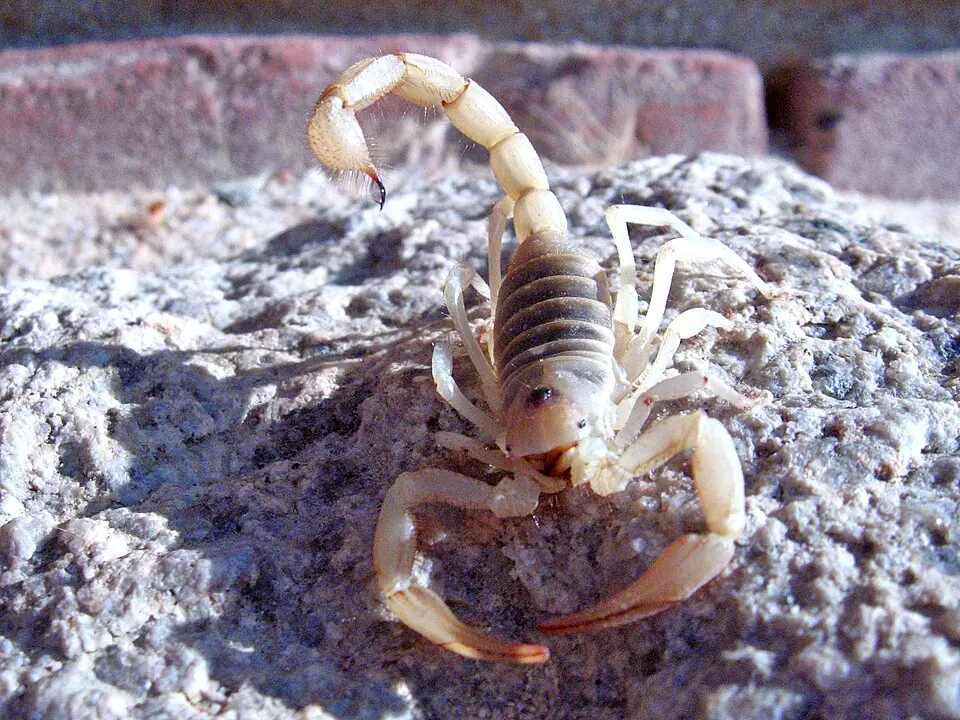
Usable internal space for 1 adult animal. One adult Hadrurus arizonensis; both sexes; minimum is scoped to the adult size description in this guide, not related species or breeding groups. Adults can approach 5½″ (14 cm) total length with the tail extended. Related Hadrurus are not automatically covered.
Height is the usable internal envelope, including the space reserved for substrate and water. Check the remaining movement space and lamp clearance after installation.
The larger editorial target increases floor area and soil capacity; reserve 14″ (35.6 cm) soil and 6″ (about 15.2 cm) above it before furnishings. Not a studied optimum.
Creature Corner editorial allocation of usable floor, retreat, substrate and clearance informed by the cited ecology and husbandry practice. Exact dimensions are not experimentally validated welfare limits. The article explains the conditions and limits behind this recommendation.
- Floor space
- 2′ × 1′ (61 × 30.5 cm) internal floor; retain accessible routes after the retreat and water provision are installed.
- Climbing space
- Stable low cover and supported burrow entrances; prioritize diggable depth and floor, not tall exposed climbing. Preferred enclosure reserves 14″ (35.6 cm) of soil with 6″ (about 15.2 cm) above.
- Substrate
- Reserve 10″ (25.4 cm) of substrate and 6″ (about 15.2 cm) of space above it before furnishings. These are internal dimensions; the stated height already includes the substrate.
- Water
- Clean shallow drinking water continuously available; stable vessel, easy exit, inspected daily and after contamination.
- Security and ventilation
- One animal. Latch or clip the lid securely, keep gaps too small for escape and retain effective ventilation. Plan safe service access and transfers with a catch cup and a large empty catch tub in a closed room. Check the furnished enclosure against the retreat, water and safety requirements as well as its dimensions.
Meeting these dimensions alone does not establish suitability. Check the usable layout, environmental conditions, equipment clearance and the individual animal’s requirements before occupation.
Build a desert burrow, not just a desert surface
A desert hairy scorpion is a nocturnal burrowing animal. The exposed surface and the protected soil retreat are different environments, and a dry-looking enclosure with only a shallow sand layer does not reproduce that choice. Expect long periods below ground rather than a continuously visible display.
This guide covers Hadrurus arizonensis Ewing, 1928. Similar common names are used for other Hadrurus, including H. spadix; keep the scientific name and provenance. Current taxonomic treatments place the species in Hadruridae, while older natural-history and retail material often uses Caraboctonidae. That historical family name does not establish a separate care animal.
Adults can approach 5½″ (14 cm) total length with the tail extended. L.A. Zoo describes possible longevity of 15–20 years in human care, without a sex-specific survival sample. Treat that as a planning horizon, not a guaranteed average or remaining life for a wild-caught adult. Favor traceable captive-bred animals when available and ask honestly whether age and source are known.
Choose a footprint and soil reserve together
Our recommended minimum for one adult is 2′ × 1′ × 16″ (61 × 30.5 × 40.7 cm) usable internal length × depth × height. Reserve 10″ (25.4 cm) for cohesive burrowable substrate, leaving 6″ (about 15.2 cm) above it before furnishings. We prefer 30″ × 18″ × 20″ (76.2 × 45.8 × 50.8 cm), reserving 14″ (35.6 cm) for soil and the same 6″ (about 15.2 cm) upper clearance. The larger plan adds digging volume, ground routes and room for retreat choices.
These exact layouts are Creature Corner editorial recommendations. Primary sediment experiments demonstrate burrowing and the importance of substrate properties; they do not validate one cage minimum or soil depth. Commercial references range from much shallower layers to deep setups. We choose space that can actually retain a substantial burrow rather than translating a gallon label into an assumed habitat.
Fit a securely latched lid and stage-appropriate vents and gaps. A scorpion can use furnishings and enclosure seams to approach an opening, so keep escape routes and service access in mind. The stated 6″ (about 15.2 cm) clearance is upper space within a secure box, not permission to provide tall exposed climbing or unstable stone piles.
Provide a cohesive medium and stable roof supports
Use a clean sand/soil/clay mixture that can be compacted and tested to retain a starter tunnel. Exact proportions depend on the materials; a universal recipe cannot account for every soil or clay product. Avoid fertilizers, pesticides and dusty unknown construction additives. Loose sand alone and a stable cohesive medium are not interchangeable.
Install stable low cork or supported stone cover before adding deep substrate. Heavy pieces must not rest on a future tunnel roof that can collapse. Start a depression beneath secure cover and let the scorpion extend it. Do not create a sealed artificial tunnel that you cannot inspect or that holds water.
Keep the upper substrate mostly dry and well ventilated, with a localized slightly moister lower zone if needed. Add a small amount of water at an accessible corner and inspect the result instead of soaking the whole depth. The goal is a dry surface plus refuge choice, not a uniformly wet or uniformly powder-dry box. Do not excavate the scorpion simply to look at its work.
Measure air and protect the cooler soil refuge
Our starting air-temperature plan is about 80–82°F (27–28°C) at the warmer end and 72–77°F (22–25°C) at the cooler end, with nights around 70–75°F (21–24°C). These are moderate editorial operating choices within published keeper ranges, not measured biological optima or tolerance limits. Warmer protocols exist; they are not a reason to heat every retreat equally.
Measure shaded air close to the surface at both ends and check the accessible lower soil near the enclosure edge with an appropriate probe, without dismantling a burrow. Record day/night readings and room conditions. A surface infrared reading does not measure air or temperature inside the burrow.
If supplementary heat is necessary, use a compatible controlled external side source or room warming, preserving a cooler end and deeper refuge. Secure the thermostat probe according to the actual equipment and verify the result independently. Do not heat the full floor underneath the scorpion. Direct sun and unregulated lamps can defeat the retreat’s protective function.
Offer water while retaining a dry surface
Keep clean drinking water in a stable shallow dish with an easy exit. Refresh it daily and after contamination. Place it where you can service it without collapsing a burrow. This is our chosen practical provision despite some keeper advice that relies on prey moisture or rare spraying.
We do not assign a whole-enclosure humidity percentage. A dry upper surface, ventilation, localized lower moisture and drinking access describe different resources. Record any hygrometer reading with its position and temperature, and inspect the soil itself. A meter in the warm upper air cannot certify the conditions at the bottom of a retreat.
Persistent condensation or wet decomposing material means the water/airflow arrangement needs attention. Conversely, a desert origin does not justify withholding a drink or letting every layer become indefinitely dry. Young scorplings need especially close attention to the lower moisture provision and a species-qualified raising plan.
Keep ordinary daylight and a dark night
Provide a shaded visible daytime period and darkness at night. A 12-hour light/12-hour dark timer is a practical starting routine when room light is irregular. Retain covered retreats and avoid direct sun. No routine ultraviolet B (UVB) fixture or numerical exposure dose is established here.
Fluorescence under a blacklight does not show that the animal needs prolonged ultraviolet exposure. We do not recommend continuous red or blacklight illumination for night viewing, and we do not repeat unverified claims that ultraviolet exposure makes an exoskeleton fuse to the body. Use brief necessary inspection with minimal disturbance instead of turning the habitat into a night display.
No forced winter cooling or breeding manipulation is prescribed for ordinary maintenance. Wild seasonal extremes and deep-burrow conditions cannot simply be copied into a small captive enclosure.
Use modest insect offers and verify the meal
Offer well-kept captive-reared insects such as crickets or roaches near an accessible retreat entrance. Start with modest prey rather than relying on the large vertebrates this species can sometimes overpower in nature. Vary suitable prey, maintain the feeder insects well and use a record of what was taken.
Begin adult feeding reviews every ten to fourteen days, juvenile reviews about weekly and small scorpling offers once or twice weekly. These are adjustable starting routines, not fixed rations. Offer one item at a time, stop when the animal refuses and reconsider portions from condition, previous meals and molt history.
Remove uneaten prey and carcasses. Do not leave biting insects in a hidden scorpion’s enclosure to wait indefinitely. No routine calcium/vitamin-dusting program or vertebrate prey is prescribed. A nutritional or feeding problem needs assessment rather than an automatic reptile supplement.
Protect a hidden growing scorpion
Growing animals molt and may stop feeding while remaining in their retreat. Keep the established environment stable, remove loose prey and do not dig the animal out to check the molt. Pulling retained cuticle or applying a home bath/oil treatment can add injury.
Wait for normal movement and hardening of the new exoskeleton and mouthparts before offering modest prey again. A calendar interval alone cannot establish readiness. Adult scorpions do not continue growing through repeated routine adult molts, so do not copy an annual adult-molt schedule from a generic sheet.
Very young animals need smaller secure raising accommodation that still provides cohesive soil, shelter and moisture choice. Increase substrate capacity and floor as they grow; the temporary container must not be mistaken for the adult recommendation. Early-instar survival and molting are consequential gaps in readily available care literature, so obtain demonstrated species-specific raising guidance rather than assuming adult dryness can be scaled down unchanged.
Provide one animal and protected service access
House one desert hairy scorpion. It can prey on other scorpions, and the space recommendation is not a communal design. Do not add another scorpion or a mixed-species cleanup animal as a presumed companion. A female carrying young is a separate reproductive situation requiring an appropriate plan.
Use long tools and a catch cup for necessary transfers, with a large empty catch tub in a closed room prepared before opening. Do not grip the tail or limbs and do not use bare-hand handling for photographs. A scorpion described as having lower medical significance can still pinch or sting; that description does not prove an individual person cannot have a serious response.
Validate the burrowing setup before arrival
Test the final substrate, support stability, closure and climate through day and night before introducing the animal. Check that the starting tunnel remains stable, that the bottom is not flooded and that drinking water can be serviced from above without excavation. Obtain actual source, age/stage, last food and molt information rather than filling unknowns with estimates.
Inspect water, security and obvious condition daily, removing accessible prey remains and spoiled material. Do not dismantle an established burrow for routine cleaning. Major contamination or a necessary transfer calls for a planned safe containment step first. Plants are optional and do not replace substrate stability or inspection.
Prepare the specified adult enclosure, enough suitable burrowing medium, stable low cover, shallow dish, independent air/soil probes, controlled heating only if required, feeder containers, long tools and catch cup. Budget for long-term care and a veterinarian willing to assess invertebrates.
Act on deterioration without guessing a treatment
Fluid loss, visible injury, persistent inability to stand, abnormal discharge or a clearly incomplete molt with deterioration needs prompt invertebrate-capable veterinary advice. A hidden animal or a refused insect alone does not diagnose illness. Record body condition, actual meals, molt history, measured air/soil conditions and watering changes.
Do not use household mite sprays, guessed medication or manual molt procedures. Send clear photographs and the care record when arranging help. If a person is stung, obtain appropriate medical or poison-information advice; never use a care sheet’s venom comparison to decide that worsening symptoms can be ignored.
A failed molt or a shriveled appearance can have more than one cause. Keep the environmental and feeding record available for veterinary assessment rather than diagnosing dehydration from appearance or trying a home fluid treatment.
Why we choose deep soil and continuous drinking access
Published keeper references disagree on soil depth, heat and water dishes. They do not describe the same apparatus or measurement location, and there is no comparative welfare trial settling all of them. Our numerical layout reserves more burrowing space than shallow retail examples and keeps upper clearance modest. Its preferred larger option expands both floor and soil, not just advertised volume.
The water dish is a deliberate choice alongside a ventilated dry surface. No evidence reviewed demonstrates that a small shallow drink must be withheld to avoid harmful humidity. This does not justify a wet enclosure; lower-soil moisture, air exchange and the drinking vessel still need separate checks.
Sources & further reading
Read the full recommendations and check details for your animal, equipment, and local conditions.
- The Scorpion Files: Hadruridae
- Neoichnology of the desert scorpion Hadrurus arizonensis: burrows to biogenic cross lamination
- Scorpions interpretive manual
- Desert Hairy Scorpion
- The Care and Maintenance of the Desert Hairy Scorpion
- Hadrurus (Giant Desert Hairy Scorpion) Care Guide
- Desert Hairy Scorpion Care Sheet
- The hemolymph composition of the African emperor scorpion & suggestions for parenteral fluids
Original Creature Corner guide. Editorial fact and citation checks are recorded; independent veterinary review has not been performed.