Use this guide as a starting point alongside the detailed sources below. Health concerns, unexplained changes in behavior, or feeding problems belong with a reptile veterinarian.
Adult enclosure recommendation
Our recommended minimum: 3′ × 18″ × 18″ (91.5 × 45.8 × 45.8 cm), length × depth × height.
Preferred target: 4′ × 2′ × 2′ (122 × 61 × 61 cm), length × depth × height.
Usable internal space for 1 adult animal. One adult Heterodon nasicus up to 3′ (91 cm) total length; females usually need more room than males.
Height is the usable internal envelope, including the space reserved for substrate and water. Check the remaining movement space and lamp clearance after installation.
Our preferred 4′ × 2′ × 2′ (121.92 × 60.96 × 60.96 cm) layout adds digging area and easier separation of retreats and lighting. This is an editorial target, not a tested threshold.
Our editorial minimum rounds up the specialist female minimum to allow burrowing, retreats and a useful heat gradient. Published dimensions are husbandry guidance, not a validated welfare threshold.
For an unusually long adult, use at least its total length for enclosure length and half its total length for depth and height. Example: a ≈ 39.37″ (100 cm) adult needs at least ≈ 39.4″ × 19.7″ × 19.7″ (100 × 50 × 50 cm), with burrowing and lamp clearances checked separately.
- Floor space
- Keep the full 3′ × 18″ (91 × 46 cm) footprint usable around hides; house singly.
- Climbing space
- Fit low, firmly supported branches without removing digging space.
- Substrate
- Provide about 5″ (13 cm) for a large female and at least 3–4 in / 8–10 cm for a smaller male. The 18″ (45.72 cm) internal envelope includes this layer, leaving about 13″ (33 cm) above 5″ (12.7 cm) of substrate; check lamp clearance at the final surface.
- Water
- Keep clean water in a stable bowl that fits the entire coiled snake, with easy entry and exit.
- Security and ventilation
- Lock doors and cable ports, ventilate the dry surface, and anchor heavy hides before adding substrate.
Meeting these dimensions alone does not establish suitability. Check the usable layout, environmental conditions, equipment clearance and the individual animal’s requirements before occupation.
Identify the animal and the fit
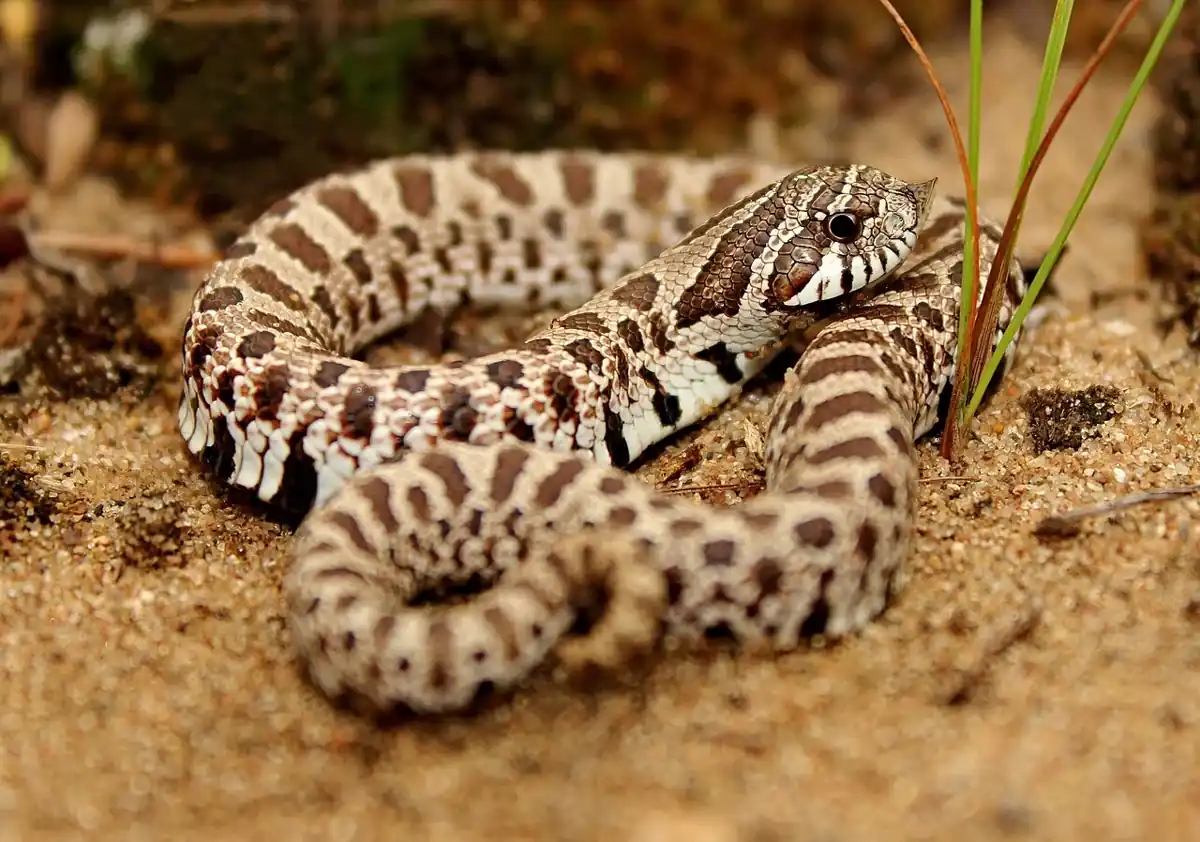
This guide covers the plains or western hognose, Heterodon nasicus. Eastern, southern and Madagascar hognoses need separate research. Hognoses dig, investigate and give conspicuous defensive displays; repeated hissing or playing dead is a reason to reduce disturbance. They are rear-fanged venomous snakes, so choose one with informed handling expectations and keep fingers away from feeding interactions.
Housing that rewards digging
We recommend a minimum of 3′ × 18″ × 18″ (91 × 46 × 46 cm), length × depth × height of usable internal space, for one adult western hognose up to 3′ (91 cm) total length. Males commonly remain 1′–2′ (30–61 cm); females can approach 3′ (91 cm). Our preferred target is 4′ × 2′ × 2′ (122 × 61 × 61 cm), providing more digging room and better separation of shelter and heat.
Provide about 5″ (13 cm) of burrowable substrate for a large female, or at least 3–4 in / 8–10 cm for a smaller male. The minimum height includes the substrate: a 5″ (12.7 cm) layer leaves about 13″ (33 cm) above it. Fit the lamp safely at the finished surface, anchor heavy hides underneath the bedding, and provide warm, cool and humid retreats, a stable water bowl that fits the entire coiled snake and low climbing opportunities. Use the snake’s total length as the enclosure length, with at least half that length for depth and height, if it outgrows this recommendation. A ≈ 39.37″ (100 cm) adult therefore needs at least ≈ 39.4″ × 19.7″ × 19.7″ (100 × 50 × 50 cm). Juvenile housing must offer the same choices and be replaced before it restricts full extension. Dimensions alone do not establish suitability; a bare box, unsafe lamp or collapsing burrow still fails this animal.
Heat, UVB (ultraviolet B) and measurement
Create a basking zone around 90–95°F (32–35°C), with a separate middle range of 75–85°F (24–29°C) and cooler shelter. Measure the basking surface with an infrared thermometer and air at snake level with probes; the specialist source describes a basking zone rather than proving an exact body temperature. Use thermostatically regulated overhead heat and keep the whole enclosure from reaching the basking setting. Let it cool at night; 60°F (16°C) is the source’s lower reference for a healthy animal, not a routine target for a new juvenile or an instruction to brumate.
Provide a 12-hour light cycle, shaded burrows and low-level UVB. The specialist target is UVI (ultraviolet index) 2–3 at the highest exposed position, with full shade available. Measure at the snake’s back, accounting for mesh and substrate depth. A lamp’s percentage does not establish the exposure.
References: [2]
Humidity and shelter
Keep the ventilated enclosure around 30–50% relative humidity, with a clean humid retreat available. Record temperature and location beside each humidity reading. Keep the main surface dry and inspect the lower burrows for wet, spoiled bedding. Eastern hognose humidity guidance does not apply automatically to Heterodon nasicus.
References: [2]
Food and daily decisions
Choose a captive-bred youngster with dated records of several voluntary meals. Offer appropriately sized whole thawed mice with tongs. Start hatchlings under 6 months around every 4–5 days, juveniles 6–11 months every 6–7 days, and adults every 1–2 weeks, then adjust to body condition and growth. Keep prey no wider than the snake’s widest part. Record weight and refusals instead of repeatedly disturbing a reluctant feeder. Weight loss or persistent refusal warrants a reptile veterinarian’s assessment.
Commitment, costs and pitfalls
Plan for approximately 10–15 years, potentially longer. Our standard budget tier still includes the adult enclosure, thermostat, measuring tools, replacement lighting, frozen prey and a veterinary reserve. Before buying, write down who will check water and equipment during absences. Small adult size does not reduce the need for shelter, adequate substrate or measured heating.
References: [1]
Give the substrate a maintenance plan
Use dust-free aspen that holds tunnels, or a carefully managed soil and sand blend with dry surface conditions. Check that burrows remain usable and that the snake can reach every retreat. Remove soiled bedding around and beneath droppings, inspect below hides and water bowls, and replace contaminated material promptly. Recheck depth, lamp clearance and surface temperatures after a full change.
Where recommendations differ
ReptiFiles encourages dietary variety and is more cautious about a mouse-only menu; Chicago Exotics presents whole mice as the ordinary captive diet. This is a difference in husbandry guidance, not evidence that a properly portioned whole-mouse diet inevitably harms western hognoses. We recommend a reliable whole-prey diet with weight and condition monitoring. An accepted alternative complete whole prey can add variety; frog legs, meat pieces and egg are not equivalent to a whole prey animal. Do not add supplements automatically to an already complete whole-prey diet; discuss a documented nutritional need with the reptile vet.
Loose sand and a maintained soil-and-sand mixture are different choices. Chicago Exotics cautions against loose sand but also permits suitable bioactive soil mixes. We recommend dust-free aspen as a straightforward starting substrate. A soil-and-sand blend is an alternative when it holds usable tunnels and the keeper can maintain dry surfaces and clean feeding presentation.
Avoid provoking defensive displays
Reduce disturbance when the snake repeatedly hisses or plays dead. Do not provoke defensive displays for photographs. Keep fingers away from feeding interactions and use tongs for prey.
Record what preceded repeated defensive behaviour, then review shelter, servicing and handling. Support the snake calmly and let it withdraw rather than repeatedly uncovering it.
Ask what established feeding means for this youngster
Ask for the youngster's meal dates, prey type and presentation method, including whether feeding was voluntary. Choose an animal already eating several meals reliably, and continue that documented routine while it settles.
Log food offered separately from food eaten. Check the enclosure before trying multiple new prey types. Mouth swelling, lip scabs, breathing changes or declining condition need veterinary assessment.
References: [6]
Sources & further reading
Read the full recommendations and check details for your animal, equipment, and local conditions.
- ReptiFiles — hognose identity and lifespan
- ReptiFiles: hognose temperature, humidity and lighting
- ReptiFiles: hognose enclosure size
- ReptiFiles; How to Feed Your Pet Hognose Snake, feeding tools
- ReptiFiles: hognose substrate
- Chicago Exotics Animal Hospital; western hognose feeding establishment and health
- Julia Whittington DVM: reptile nutrition, whole-prey feeding (DVM: Doctor of Veterinary Medicine)
Original Creature Corner guide. Editorial fact and citation checks are recorded; independent veterinary review has not been performed.