Use this guide as a starting point alongside the detailed sources below. Health concerns, unexplained changes in behavior, or feeding problems belong with a reptile veterinarian.
Adult enclosure recommendation
Our recommended minimum: 3′ × 18″ × 18″ (91.5 × 45.8 × 45.8 cm), length × depth × height.
Preferred target: 4′ × 2′ × 2′ (122 × 61 × 61 cm), length × depth × height.
Usable internal space for 1 adult animal. One Eryx colubrinus up to 3′ (91 cm) total length, including large females. Males often remain smaller; keep the same base recommendation and enlarge for a longer animal.
Height is the usable internal envelope, including the space reserved for substrate and water. Check the remaining movement space and lamp clearance after installation.
Our 4′ × 2′ × 2′ (122 × 61 × 61 cm) preferred layout adds burrowing floor and separates hides and water from the full-extension route. It is an editorial expansion of the veterinary minimum, not a validated preferred threshold.
The veterinary 3′ × 18″ × 18″ (91.44 × 45.72 × 45.72 cm) minimum permits full extension of large females and useful burrowing. We recommend it as a welfare planning reference, not an experimentally validated consensus.
- Floor space
- 4.5 sq ft (0.42 m²) of gross floor. Retain a full-length route through diggable substrate around supported hides and water.
- Climbing space
- Offer low, stable cork cover and gentle climbing choices. The 18″ (46 cm) internal envelope includes at least 4″ (10 cm) substrate, leaving about 14″ (36 cm) before furnishings and lamp clearance.
- Substrate
- Provide at least 4″ (10 cm) of loose sand, suitable sandy soil or clean aspen; increase depth where it remains maintainable. The whole animal must be able to conceal itself.
- Water
- Provide a shallow stable bowl of clean water and a separate maintained humid refuge. No swimming pool is required.
- Security and ventilation
- Support heavy objects independently of loose substrate. Check tiny escape gaps, secure the lid and doors, maintain ventilation and guard thermostatic heat.
Meeting these dimensions alone does not establish suitability. Check the usable layout, environmental conditions, equipment clearance and the individual animal’s requirements before occupation.
Enjoy a snake that often disappears
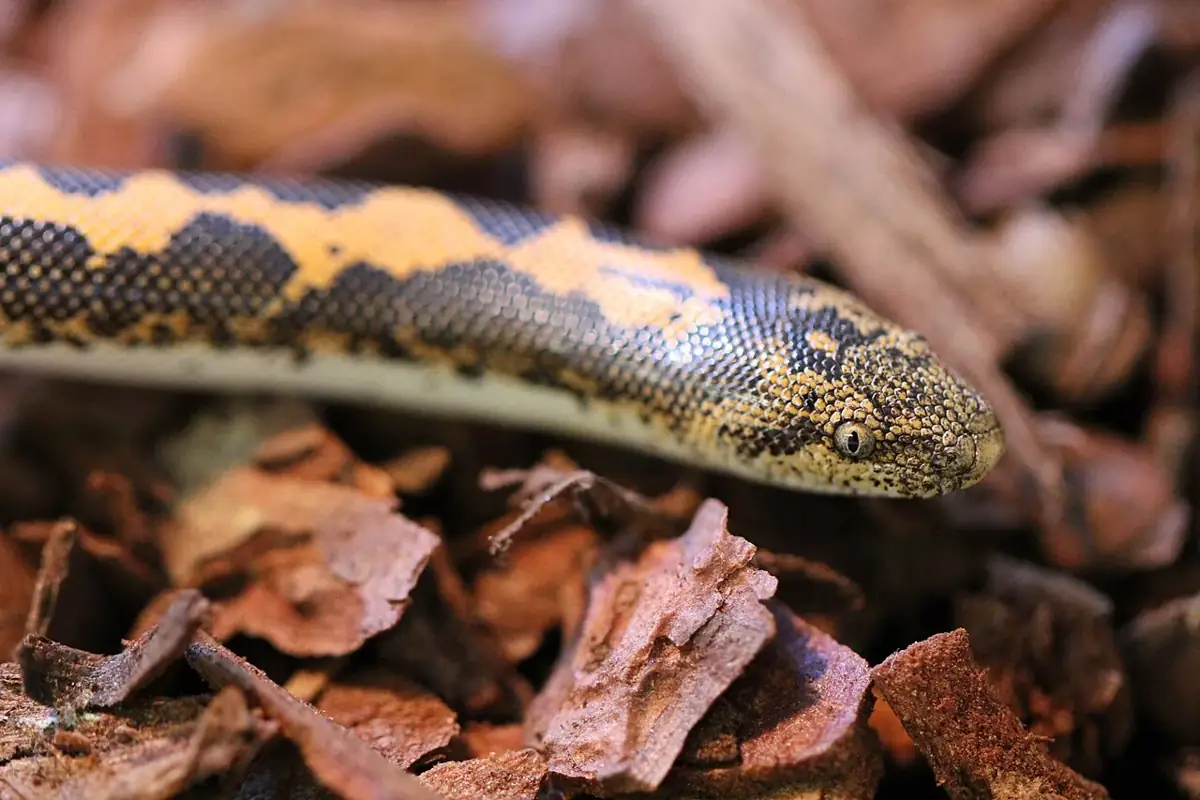
Kenyan sand boas spend much of their time beneath cover or substrate. A keeper should be comfortable with that behaviour rather than continually digging the animal up for display. This is a burrowing ambush predator, and females are generally larger than males. This entry covers Eryx colubrinus; other sand boas are separate animals with their own planning needs.
Give burrowing a safe structure
We recommend at least 3′ × 18″ × 18″ (91 × 46 × 46 cm, length × depth × height) of usable internal space for one adult. Our preferred target is 4′ × 2′ × 2′ (122 × 61 × 61 cm), giving more uninterrupted burrowing space around hides and water. The minimum covers the large females that can approach 3′ (91 cm); enlarge for a longer individual.
Provide at least 4″ (10 cm) of loose substrate in which the whole snake can disappear. The 18″ (45.72 cm) height includes that bed, leaving 14″ (36 cm) before furniture and lamp clearance. Sandy soil, suitable reptile sand or clean aspen can support burrowing; preserve a humid refuge separately from the mainly dry bed. Deep substrate that is compacted, dirty or inaccessible is not useful burrowing space.
Place heavy rocks, hides and water vessels on independent supports before adding bedding. Include low cork cover, a shallow drinking bowl and a long route through the substrate. Keep one snake, inspect hatchling-sized escape gaps and preserve ventilation. Dimensions alone do not establish suitability.
Measure the surface and buried refuge
Provide a basking surface around 95°F (35°C), cooler shelter air around 75–80°F (24–27°C, rounded) and night air around 70–75°F (21–24°C). This is our implementation of the veterinary sheet, using ReptiFiles’ explicit surface-measurement method for the basking point. Check the surface with an infrared thermometer and air with shielded probes, including the occupied buried refuge.
Provide 12 hours of daylight and darkness overnight. We recommend a measured UVI (ultraviolet index) of 2–3 at the highest exposed body position as the selected ReptiFiles lighting protocol, with retreats and burrowing areas approaching zero. It is specialist guidance, not a demonstrated species optimum. Check mesh and reachable climbing cover with a UV (ultraviolet) Index meter; a lamp percentage alone cannot establish exposure. Turn off visible lamps overnight and add guarded, controlled lightless heat only if the room cannot maintain the stated night range.
A dry habitat still needs water
Keep the general substrate mainly dry and maintain a clean humid refuge on the cooler side. During shedding, the veterinary sheet gives 50–60% relative humidity in that refuge as a practical reference; measure there and record temperature rather than treating a central enclosure reading as the hide’s condition.
Keep shallow drinking water available at all times, refresh it daily and clean the dish whenever soiled. Do not saturate the entire burrowing bed to raise a reading. Compare temperature, cover and cleanliness if the animal repeatedly avoids a retreat; hiding alone cannot identify the cause.
Meals without guesswork
Offer thawed whole rodents near the boa’s widest girth. Start babies every 5–7 days, juveniles every 1–2 weeks and adults every 2–4 weeks, then adjust prey size and interval to growth and body condition. These veterinary starting intervals are not a target for maximum growth.
Use soft-tipped tongs or a small clean feeding dish to limit bedding on prey. We recommend feeding in the established enclosure to avoid an unnecessary transfer. Complete whole prey generally supplies calcium and vitamins, so routine dusting is not our default; obtain a specific nutrition plan when a dietary or medical problem is identified.
Plan for ongoing care costs
Plan for decades of care: Oakland Zoo reports 15–30 years in protected care. Budget for substrate replacement, regulated heat, replacement lamps, prey storage and veterinary care, as well as the furnished adult enclosure. Keep a substitute caretaker familiar with the hidden supports beneath the bedding.
References: [3]
Review feeding as the boa grows
Keep age, current length, prey size and actual meals together. Move toward longer intervals as growth slows rather than increasing both meal size and frequency. Adult males may show seasonal appetite changes, but weight loss or other illness signs need veterinary review.
A concealed snake still needs routine observation. Check water and signs of movement without excavating the whole bed daily, and arrange deliberate direct inspections when needed. A fasting label should never conceal missing condition records.
Observe at the times the snake uses
Expect concealment by day and activity at night or early morning, with individual variation. Natural retreats include holes, logs, rocks and loose substrate, so provide several forms of low cover rather than an exposed bed of sand alone.
Let a settled, regularly feeding animal move onto supported hands where possible. Keep optional handling brief and stop when it repeatedly tries to escape. Do not excavate the snake for display or handle it just after a meal. Sudden changes in movement or prolonged concealment accompanied by weight loss need investigation.
Design a check that does not require daily excavation
Check drinking water, waste and accessible retreats daily without excavating the whole bed for display. Use planned direct inspections and comparable weights to follow condition. Remove soiled substrate promptly and replace the bed when its condition requires it; the veterinary reference uses a three-month maximum interval for a conventional setup.
During substrate replacement, inspect independent supports beneath rocks and bowls, restore the burrowing depth and remeasure occupied warm and cool positions. Retained shed, swelling or reduced movement needs investigation; do not peel skin or assume extra misting solves every problem. Keep a secure holding container ready for major cleaning.
Bring the useful history to the annual visit
Arrange a reptile-veterinary examination soon after arrival, ideally within two weeks, and discuss ongoing physical and fecal checks. Keep a new arrival separate from other reptiles with dedicated equipment and a screening plan suited to its origin.
Bring meal, weight, shed and environmental records to appointments. Breathing difficulty, mouth discharge, marked weakness, repeated regurgitation or substantial weight loss needs prompt attention. Do not force-feed or medicate on the assumption that every hidden or fasting snake is behaving seasonally.
Where recommendations differ
ReptiFiles gives 2′ × 1′ × 1′ (60.96 × 30.48 × 30.48 cm) for an average 2′ (60.96 cm) snake; the veterinary sheet gives 3′ × 18″ × 18″ (91.44 × 45.72 × 45.72 cm). This is partly an adult-size difference. We choose the larger minimum so a keeper is not left with inadequate space for a large female, and prefer still more burrowing floor.
The veterinary sheet suggests a separate feeding container, while the specialist guide allows tongs or a plate inside the enclosure. We choose the latter to limit disturbance while reducing substrate on prey. Neither practice makes dirty bedding or oversized prey acceptable.
ReptiFiles also suggests occasional vitamin/mineral dusting, while VCA advises that complete whole-prey diets generally need no routine supplements. We choose the latter to avoid unmeasured additions, with veterinary-directed supplementation when there is an identified need. The exact diet and health status matter more than copying a generic powder schedule.
Sources & further reading
Read the full recommendations and check details for your animal, equipment, and local conditions.
- Colorado Exotics: Kenyan sand boa care
- ReptiFiles: Kenyan sand boa care
- Oakland Zoo; Kenyan Sand Boa, behaviour and ecology
- VCA Animal Hospitals: feeding snakes
- VCA Animal Hospitals: common snake diseases
- VCA Animal Hospitals: the new reptile visit
Original Creature Corner guide. Editorial fact and citation checks are recorded; independent veterinary review has not been performed.