Use this guide as a starting point alongside the detailed sources below. Health concerns, unexplained changes in behavior, or feeding problems belong with a reptile veterinarian.
Adult enclosure recommendation
Our recommended minimum: 8′ × 4′ × 2′ (243.9 × 122 × 61 cm), length × depth × height.
Usable internal space for 1 adult animal. One adult Testudo horsfieldii, including active smaller males; juvenile temporary housing differs.
Height is the usable internal envelope, including the space reserved for substrate and water. Check the remaining movement space and lamp clearance after installation.
Use additional furnished space whenever available. The sources do not establish a separate numerical preferred target, so none is presented as a biological threshold.
Choose the veterinary 8′ × 4′ (243.84 × 121.92 cm) adult floor over the specialist 7′ × 42″ (213.36 × 106.68 cm) floor. Add a 2′ (60.96 cm) total internal height from specialist guidance, including the digging bed; check actual containment and lamp clearance. No experimental minimum is established.
- Floor space
- 8′ × 4′ (243.84 × 121.92 cm) usable floor (about ≈ 32.292 ft² (3 m²)), with walking and foraging routes.
- Climbing space
- Low stable terrain only; no objects beside walls that provide escape steps.
- Substrate
- At least 6″ (15 cm) adult digging substrate within the stated 2′ (61 cm) total height leaves about 18″ (46 cm) above it. Increase height with deeper soil or climbing aids. Adult females need workable nesting soil with enough depth to complete a nest.
- Water
- Broad shallow, non-slip drinking dish sunk to substrate level, easy exit.
- Security and ventilation
- Opaque escape-resistant walls and digging barrier outdoors; predator protection, weather shelter and shade.
Meeting these dimensions alone does not establish suitability. Check the usable layout, environmental conditions, equipment clearance and the individual animal’s requirements before occupation.
Meet the species
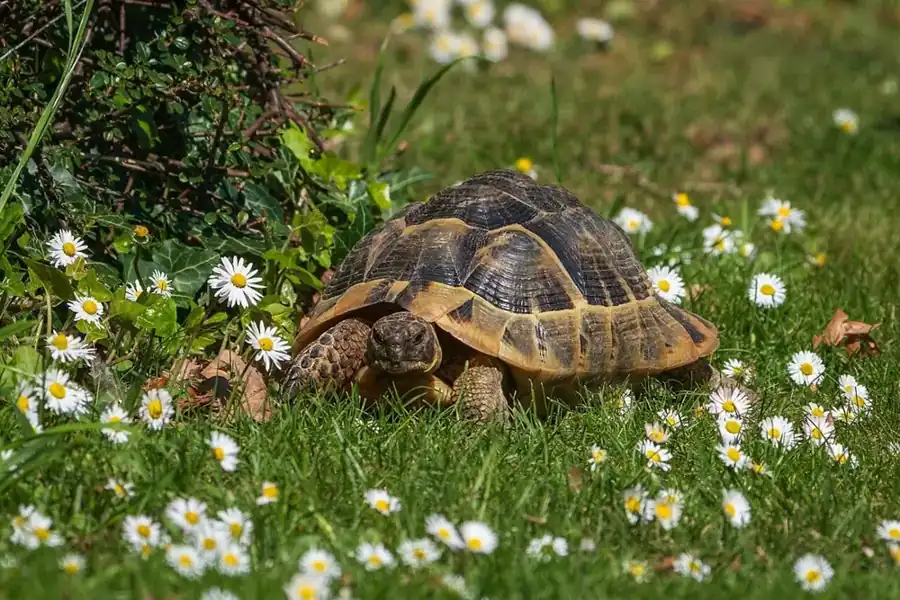
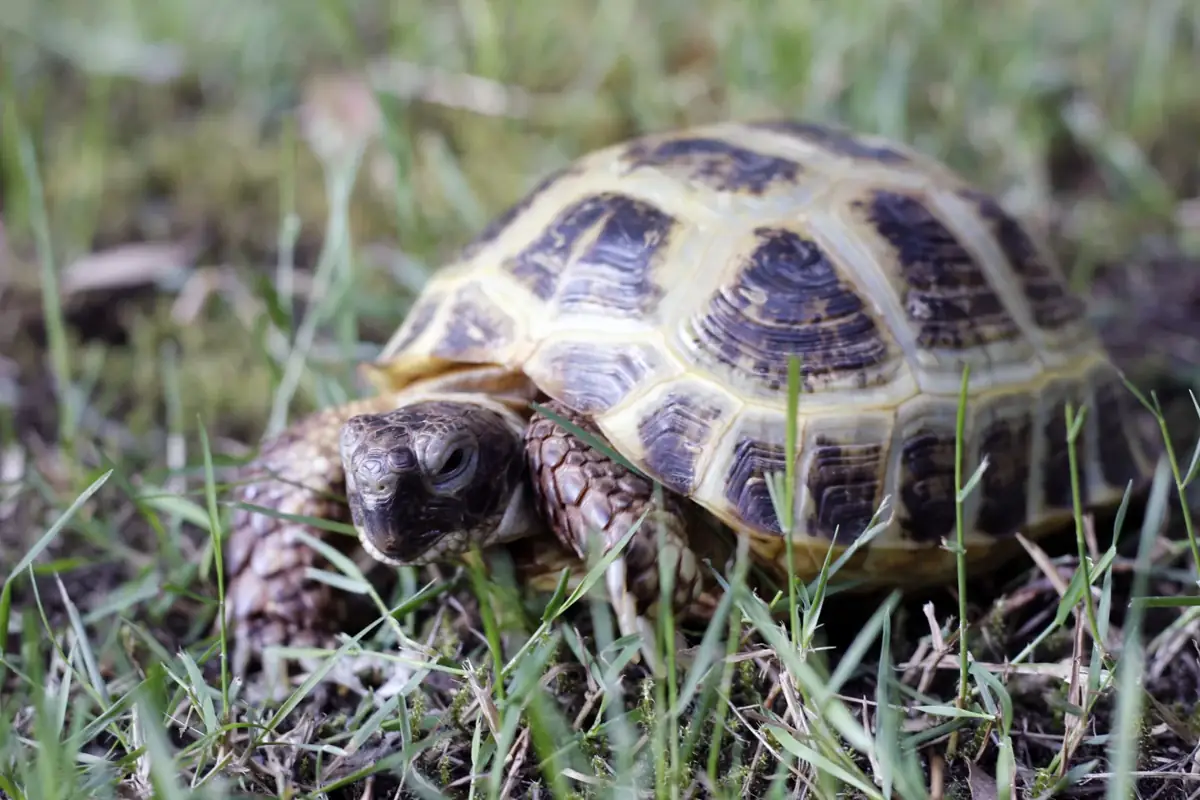
Also called the Horsfield’s tortoise, this daytime herbivore needs room to walk, forage and dig. Plan for a very long commitment. Good care combines a varied plant diet, effective heat and UVB (ultraviolet B), hydration and enough space to exercise normally.
Housing
Our recommended minimum for one adult Russian tortoise is 8′ × 4′ × 2′ (about 244 × 122 × 61 cm), length × depth × height of usable internal enclosure space. The 8′ × 4′ (243.84 × 121.92 cm) floor provides about 32 ft² (3 m²) for walking and foraging. Our recommendation combines veterinary advice for floor area with a specialist two-foot enclosure height. It is not a tested universal welfare threshold.
Provide at least about 6″ (15 cm) of adult digging substrate. The 2′ (60.96 cm) total internal height includes the substrate, leaving about 18″ (46 cm) above a 6″ (15.24 cm) bed. That remaining wall must prevent climbing out, with corners and adjacent furnishings checked carefully; increase the wall if necessary. Secure outdoor pens against digging and predators and provide shade, drainage and a dependable weather shelter. Outdoors is useful only while local conditions are suitable, with appropriate indoor accommodation ready.
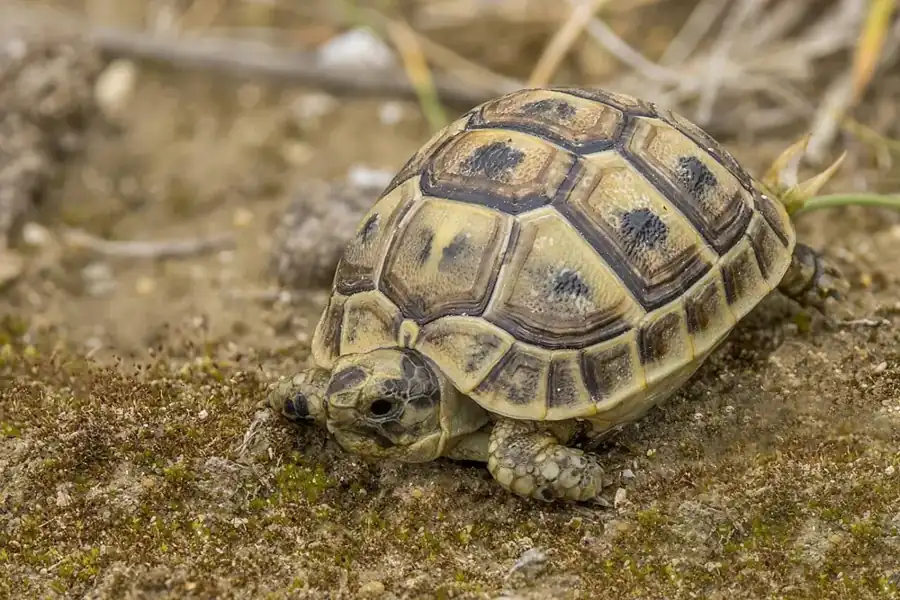
Smaller males remain active and do not automatically qualify for a smaller floor area. Young tortoises need especially accessible food, water and humid shelter; a 4′ × 2′ × 2′ (about 122 × 61 × 61 cm) grow-out enclosure is temporary, not our adult recommendation. More safe furnished floor area is preferred, but the sources do not establish a separate numerical optimum. Dimensions alone cannot supply grazing, humidity choices, safe water, heat or UVB.
Heat and light
For a healthy adult kept active indoors, provide a broad basking surface near 95°F (35°C) and a shaded cool retreat around 64–68°F (18–20°C). This follows the detailed veterinary guide’s cooler-end approach, with the shared basking target. A probe on the basking surface and a shaded probe at shell level answer different questions; record both. Maintain warmer walking space between the two ends, use thermostatic heat control and check that the entire shell can warm without touching a lamp.
Young tortoises need a more stable protected environment. We recommend the specialist indoor range of 75–84°F (24–29°C) in their cooler occupied area and 70–73°F (21–23°C) overnight, while retaining the basking area and humid retreat. This warmer juvenile choice is our application of the specialist’s general indoor guidance, not a demonstrated age-specific optimum.
Humidity
For adults, aim for about 40–50% humidity in the shaded cool area while keeping a separate humid refuge. For juveniles, use a wider 40–75% daily cycle, lower by day and higher at night, measured near the middle at tortoise height. Record temperature with each humidity reading. Keep the lower digging layer slightly moist and the enclosure well drained; damp refuge does not mean a permanently cold, wet floor.
Keep a shallow, non-slip water dish available, no deeper than the tortoise’s knees, with an easy exit. Replace it whenever soiled. For young animals, a supervised 10–15 minute shallow lukewarm soak twice weekly is a practical starting routine from specialist guidance; keep the head well clear and stop if the animal struggles. This supplements free access to water, not a substitute for it.
Food and routine
Offer correctly identified, pesticide-free leafy plants and edible weeds daily, using a feeding tile or dish. Build variety with dandelion, plantain, clover and appropriate leafy greens instead of a fruit-led or meat-based diet. Remove old food and waste promptly and track shell growth with body weight.
Provide cuttlebone and use a reptile calcium/vitamin supplement suitable for a herbivorous tortoise with effective UVB. Lightly sprinkle meals at the product’s labeled frequency; do not combine several vitamin products or add high-dose vitamin D3 automatically. Product concentrations differ, so record the brand and amount rather than copying another keeper’s number of scoops. Review the plan for growing or egg-producing animals with the veterinarian.
Avoid
Avoid meat-based diets, routine fruit feeding, slippery water dishes and keeping the enclosure bone-dry. Do not improvise hibernation: assess suitability, health and preparation with a reptile vet well beforehand.
Hatchlings need a different moisture plan
A juvenile’s humid refuge must remain reachable and clean. Provide at least 4″ (10 cm) of suitable digging substrate, increasing to at least 6″ (15 cm) for adults. A soil and clean play-sand mix that holds a shallow scrape without becoming dusty is practical; check moisture below the surface and keep food off it. Do not treat the small grow-out enclosure as permanent adult housing.
Adults still need a humid refuge, but they also need substantial exercise space. Our adult minimum provides 8′ × 4′ (about 244 × 122 cm) of usable floor. Wall height must account for the actual substrate depth and every climbing aid. An outdoor pen needs escape-resistant edges, secure digging barriers, shade and a dependable weather shelter.
A mature female can produce eggs without a male. Provide a quiet area of workable, slightly moist digging soil, increasing its depth if she cannot form a complete nest. Repeated unsuccessful laying attempts, weakness or a persistent change in appetite need veterinary assessment; do not press her abdomen or try to remove eggs yourself.
Daily grazing and steady growth
Offer fresh, varied leafy forage daily at every life stage. Growing tortoises need enough suitable food for steady development; adult portions should reflect activity and condition. A shell-sized loose pile of leaves is only a rough starting measure, because a compact pile and a fluffy pile contain very different amounts. Record leftovers and adjust portions gradually.
Build variety from correctly identified edible weeds and suitable leaves, not fruit or animal protein. Grow some forage if practical and keep a backup supply for seasons when outdoor plants are unavailable. Record body weight under similar conditions and review the trend with shell growth and activity. A single weight after drinking or passing waste is less useful than a consistent series.
Shell care, handling and foraging
Check the shell and skin for new cracks, wounds, soft or crumbly areas, and photograph changes for the veterinarian. Do not pick at attached shell material or apply polish or oils. Keep routine lifting brief and support all four limbs and the body with both hands close to a safe surface.
Use broad, stable low terrain, separate feeding spots and edible planting to encourage walking and exploration. Keep a direct route back to shelter. Avoid steep obstacles or décor beside walls that could cause overturning or provide a ladder. The enclosure should provide opportunities to explore between meals.
Three setup problems to investigate
Constant boundary pacing: inspect sightlines through transparent walls, usable walking routes and access to shade. Check whether the tortoise is trying to reach food or shelter placed beyond a barrier. Reassess available space before merely adding distractions.
The surface is dry but the bed smells damp: check drainage underneath water dishes and shelters. Compare moisture deeper in the substrate with the open surface; remove soiled areas and repair leaks while retaining the intended humid refuge.
Activity or feeding has fallen: log actual basking readings, light timing, recent weights and changes in the room or outdoor weather. Do not assume seasonal slowing means it should hibernate. Persistent changes or weight loss need veterinary assessment before any cooling plan.
Lifetime commitment and costs
Plan care and succession arrangements for several decades. Lives of 60 years or longer are reported in veterinary guidance, so the plan should outlast your present home and routine.
Plan the full floor area, a secure digging boundary, deep substrate and weather-appropriate housing; the enclosure uses far more space than a small hatchling suggests.
Recurring costs include suitable forage, indoor UVB and heating where needed, equipment replacement, and veterinary help with seasonal care decisions.
References: [2]
Measure the lighting installation
Measure exposure at the top of the shell in the basking position, not on the empty floor. Preserve space for shade and movement. Outdoor sunlight does not remove the need to plan for shelter and weather; indoor UVB does not pass through ordinary window glass.
Arrival and quarantine planning
Retain suitable digging and shelter opportunities in the separate setup. Arrange a veterinarian’s arrival assessment before planning hibernation or mixing tortoises.
Prepare a separate species-appropriate arrival enclosure and dedicated equipment. Agree observation, screening and release criteria with a reptile veterinarian. Keep the animal’s identity, origin, baseline condition and care history together.
Measure indoor light and night conditions
For healthy active adults, our indoor night target is 64–68°F (18–20°C), with all visible and UV (ultraviolet) lights off. This is our operating choice above the veterinary guide’s 61°F (16°C) night floor; it is not a hibernation temperature. Use the warmer juvenile plan above for young animals. Maintain daytime UVI (ultraviolet index) around 3–4 at the top of the basking shell, with lower exposure and full shade nearby. Start with a regular 12-hour light cycle; seasonal changes need a deliberate plan.
Check the entire light and temperature gradient after moving a lamp, adding substrate or changing the basking stone. Outdoor sunlight is useful only with safe local weather, shade, secure boundaries and suitable shelter. Do not copy an outdoor survival limit into routine indoor care.
Where recommendations differ
ReptiFiles recommends a 7′ × 42″ × 2′ (213.36 × 106.68 × 60.96 cm) adult enclosure; Bright Side Vets recommends an 8′ × 4′ (243.84 × 121.92 cm) floor. We choose the larger floor for walking, foraging and distinct sheltered areas, with a 2′ (60.96 cm) total internal height that includes digging substrate. Neither source demonstrates an experimentally established minimum. Extra usable floor is welcome, but no separate numerical preferred threshold is established.
Temperature advice differs substantially. ReptiFiles gives a 75.2–84.2 °F (24–29°C) cool zone and 69.8–73.4 °F (21–23°C) nights for indoor care. The veterinary PDF (portable document format)’s detailed text gives an 64.4–68 °F (18–20°C) cool end and a 60.8 °F (16°C) night floor; its summary graphic inconsistently prints 60.8–66.2 °F (16–19°C) for the cool end. We use the detailed cooler-retreat plan for healthy adults so they can choose a wider gradient while retaining a warm basking area. We use the warmer specialist plan for juveniles as a cautious editorial choice. These are husbandry judgments; comparative evidence does not settle the best year-round schedule, and illness or planned seasonal cooling requires an individual plan.
Sources & further reading
Read the full recommendations and check details for your animal, equipment, and local conditions.
- ReptiFiles: Russian tortoise care
- Bright Side Vets: caring for Horsfield tortoises
- Tortoise Trust: practical Horsfield care
- Tortoise Trust: indoor housing and floor area
- VCA: reptile lighting requirements
- The Unusual Pet Vets; reptile quarantine
- VCA Animal Hospitals; the new reptile visit
- Bright Side Vets: Horsfield tortoise husbandry guide
Original Creature Corner guide. Editorial fact and citation checks are recorded; independent veterinary review has not been performed.