Use this guide as a starting point alongside the detailed sources below. Health concerns, unexplained changes in behavior, or feeding problems belong with a reptile veterinarian.
Adult enclosure recommendation
Our recommended minimum: 4′ × 2′ × 2′ (122 × 61 × 61 cm), length × depth × height.
Preferred target: 6′ × 3′ × 3′ (182.9 × 91.5 × 91.5 cm), length × depth × height.
Usable internal space for 1 adult animal. One confirmed adult Timon lepidus through 2′ (61 cm) total length including tail, alone.
Height is the usable internal envelope, including the space reserved for substrate and water. Check the remaining movement space and lamp clearance after installation.
The preferred 6′ × 3′ × 3′ (183 × 91.5 × 91.5 cm) layout adds movement, digging space and separated refuges for an active adult.
The later specialist page raises the same author’s older baseline to 4′ (121.92 cm) × 2′ (60.96 cm) × 2′ (60.96 cm). We choose that current minimum and preserve the change; no dimensional welfare trial is claimed.
This numerical example applies only through 2′ (61 cm) total length including tail. For a larger animal, reopen usable length/depth, unimpeded full-body turns, covered walking and climbing routes, and separate thermal/ultraviolet/refuge choices after furnishing; enlarge axes as the actual layout requires. The preferred example is not automatically adequate for an exceptionally large individual and no scientific scaling formula is asserted.
- Floor space
- Keep 4′ × 2′ (122 × 61 cm) usable internal floor with routes around shelters and water.
- Climbing space
- Anchor low rockwork and broad branches to support movement and basking without lamp contact.
- Substrate
- Reserve about 6″ (15 cm) of diggable sandy soil, leaving 18″ (46 cm) above it before fixtures in the minimum; provide a damp retreat.
- Water
- Supply a stable shallow clean drinking dish without forcing bathing.
- Security and ventilation
- Single occupancy, positive locks, ventilation, base-supported heavy objects and controlled measured heat/light.
Evidence gaps requiring review:
- Confirm actual adult size and the furnished layout. Animals larger than 2′ (61 cm) total length need individual enlargement and fit assessment.
Meeting these dimensions alone does not establish suitability. Check the usable layout, environmental conditions, equipment clearance and the individual animal’s requirements before occupation.
A full floor for an active lacertid
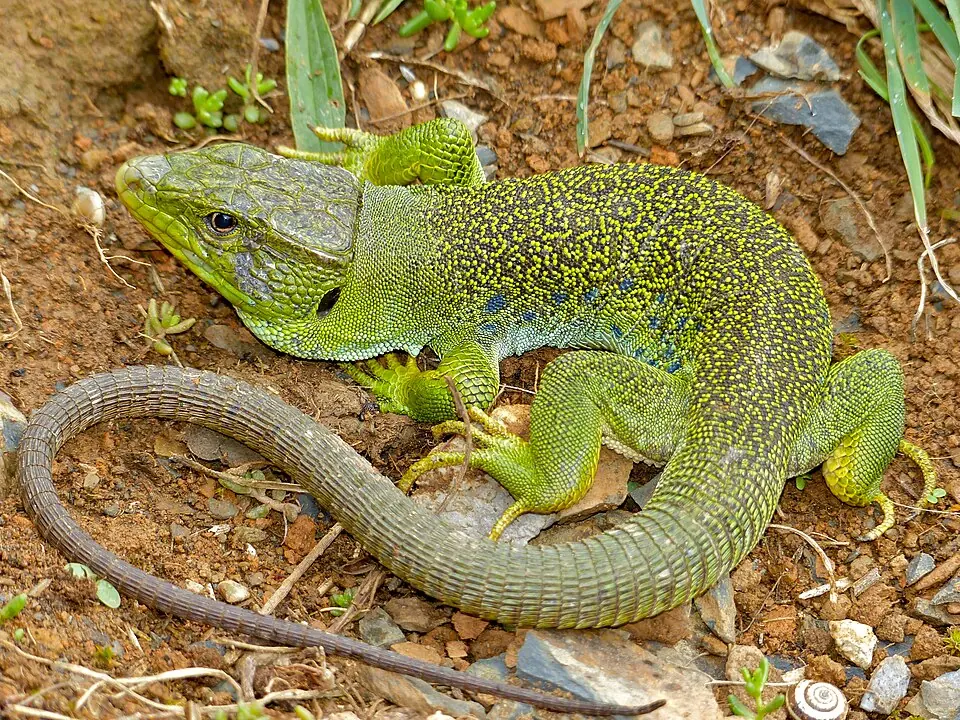
Timon lepidus is the southwestern European jeweled or ocellated lizard, formerly Lacerta lepida. This guide excludes T. nevadensis and North African Timon species. Confirm identity and captive-bred provenance rather than relying on a green-and-blue appearance.
The adult example through 2′ (61 cm) is total length including a substantial tail, not snout-to-vent length. Females are often smaller, but activity, digging and resource separation still matter. Prepare for a continuing commitment, a reliable cultured-food supply and veterinary care; a small purchase price does not measure those demands. Our numerical habitat example stops at 2′ (61 cm) total length; that is not the species maximum. Typical males can reach roughly 22–28″ (55–70 cm), with exceptional records around 35.5″ (90 cm). Reassess and enlarge the furnished habitat for a larger individual rather than treating the smaller example as a universal adult fit.
Anchor the furnishings before the soil
Use the adult panel’s internal minimum for one animal, with the larger preferred target where possible. The same specialist’s older breeder PDF (portable document format) uses smaller housing than the later curated page. We follow the larger revision and state the preferred dimensions as our furnishing judgment, not independent scientific agreement.
Anchor rockwork and broad branches directly to the base, then add around 6″ (15.2 cm) of digging substrate. One specialist recipe uses 40% untreated topsoil, 40% sand and 20% reptile excavator clay; exclude fertilizer, manure and perlite. Preserve walking routes and several retreats, including a damp hide with coconut fiber or sphagnum moss. Digging must not undermine heavy furnishings or create a route into lamps.
A hot surface needs a genuinely cooler destination
The selected practice protocol provides a localized full-body basking surface of 100–120°F (37.8–48.9°C), cool occupied air of 70–80°F (21.1–26.7°C), and dark-night air of 65–75°F (18.3–23.9°C). Measure surfaces and air separately, control the heat source and check the cool retreat. A high number is not a whole-enclosure target.
Provide bright visible light and ultraviolet B (UVB), with a measured peak ultraviolet index (UVI) of 4–6 at reachable back height and zero in shelter. A 12–14-hour working day is a practical seasonal starting context. The actual fixture, mesh, distance and furniture determine exposure; source bulb models are not interchangeable with measured readings.
Watch condition rather than feeding without a limit
Keep shallow clean drinking water and a damp refuge available. The current specialist page recommends 40–60% relative humidity. Place a digital probe near the center at occupied height, within 12″ (30.5 cm) of the substrate, and record its temperature too. Keep the humid hide damp while allowing the general surface to dry; do not saturate the whole enclosure to humidify one refuge.
Use varied cultured insects, including crickets and roaches, as the main food supply; optional small plant treats should not replace them. The breeder’s starting routine offers small meals every other day for adults and growing young, adjusted to actual intake, growth and body condition. Nourish the feeders before use and remove uneaten biting insects.
One documented supplement implementation uses original Repashy Calcium Plus, the exact all-in-one named by that breeder, lightly on insects at every insect meal. Offer coated insects promptly and do not add a separate multivitamin or vitamin D3 system. This original formula contains vitamin D3 and is not interchangeable with Calcium Plus LoD or SuperCal. The selected measured UVI 4–6 patch and this keeper routine are practical source choices, not a controlled species dose trial; different lighting, a major dietary change, reproduction or abnormal growth needs individual reassessment. Fruit and the breeder’s other treats remain optional, rather than replacing the insect-led menu.
Let the lizard approach
Use single housing in this plan. A breeder’s successful pair or group adds social, territorial and reproductive management that these dimensions do not certify. Use food and predictable quiet presence to build familiarity, and let the animal step onto a supported hand when possible.
Never restrain the tail or promise that every individual will tolerate handling. Check skin and toes after shedding without pulling attached material. Persistent retention, wounds or a change in movement needs environmental and veterinary review.
References: [2]
Seasonal behavior is not a refrigerator instruction
Brumation is a period of winter dormancy. The breeder account states it is not necessary, so do not induce it automatically when appetite or activity falls. Check the environment, weight and health first; any planned seasonal cooling needs an individual care plan.
An adult female may need deeper suitable laying provision even without a male. Straining, prolonged decline, weakness or suspected reproductive difficulty warrants a reptile veterinarian. Breeding and incubation require a separate plan.
Prepare for the animal’s ordinary day
Before arrival, run the furnished enclosure through repeated day/night checks. Prepare secure adult housing, stable rockwork and retreats, soil, drinking water, controlled heat, ultraviolet and visible light, a timer, air and humidity probes, a surface thermometer and exposure-meter access. Keep feeder storage and dedicated cleaning tools easy to use.
Record the first week’s food capture, waste and ordinary activity without forcing interaction. Replace drinking water daily, remove waste and contaminated bedding promptly, and scrub dishes at least weekly. Inspect both digging areas and the damp hide. Arrange veterinary help for breathing effort, injuries, weakness or progressive weight loss.
Sources & further reading
Read the full recommendations and check details for your animal, equipment, and local conditions.
- Timon lepidus | The Reptile Database
- Keeping and Breeding Jeweled Lacertas (Timon lepidus)
- Jeweled Lacerta care guide
- Repashy Calcium Plus: original formulation label
Original Creature Corner guide. Editorial fact and citation checks are recorded; independent veterinary review has not been performed.