Use this guide as a starting point alongside the detailed sources below. Health concerns, unexplained changes in behavior, or feeding problems belong with a reptile veterinarian.
Adult enclosure recommendation
Our recommended minimum: 2′ × 2′ × 2′ (61 × 61 × 61 cm), length × depth × height.
Preferred target: 2′ × 2′ × 3′ (61 × 61 × 91.5 cm), length × depth × height.
Usable internal space for 1 adult animal. One adult Anolis carolinensis; both sexes, individually housed.
Height is the usable internal envelope, including the space reserved for substrate and water. Check the remaining movement space and lamp clearance after installation.
The added usable space supports a broader gradient and more furnished movement routes; this is an editorial target, not a validated optimum.
Minimum adopts the species specialist's 2′ (60.96 cm) cube. Preferred 3′ (91.44 cm) height is our judgment to provide more connected perch levels while retaining the floor footprint.
- Floor space
- 2′ × 2′ (60.96 × 60.96 cm) footprint (about ≈ 3.983 ft² (0.37 m²)); do not replace it with a tall narrow column.
- Climbing space
- Dense connected fine branches and foliage through warm, cool and shaded levels.
- Substrate
- At least 2″ (5 cm) of moisture-retaining bedding with leaf litter; deeper planting requires appropriate drainage. Internal height includes bedding: about 22″ (56 cm) remains above 2″ (5.08 cm) bedding in the minimum, 34″ (86 cm) in the preferred enclosure, before lamp clearance.
- Water
- Reachable drinking droplets plus an elevated shallow dish; no aquatic swimming requirement.
- Security and ventilation
- Fine escape-resistant mesh and door/cable gaps; fresh airflow, drainage and protected overhead lamps.
Meeting these dimensions alone does not establish suitability. Check the usable layout, environmental conditions, equipment clearance and the individual animal’s requirements before occupation.
References: [1]
Meet the species
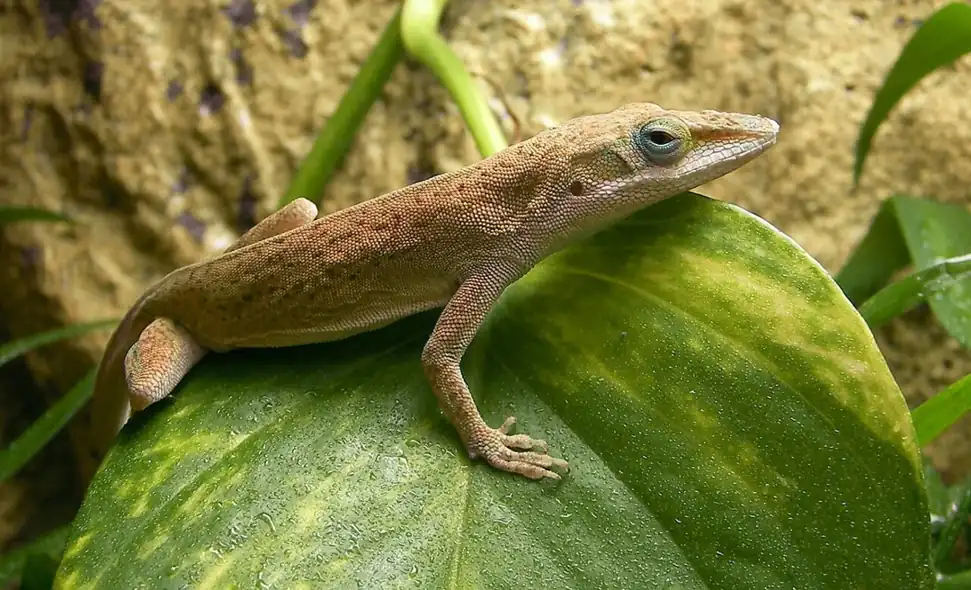
Native to the southeastern United States, green anoles are daytime insect hunters. They occupy varied habitats, including forests, grassland edges and developed spaces. Their color may range from green to brown according to mood and surroundings; a single color change does not tell you everything about their health.
References: [2]
Housing
Our recommended minimum for one adult green anole is 2′ × 2′ × 2′ (about 61 × 61 × 61 cm), length × depth × height of usable internal space. We prefer 2′ × 2′ × 3′ (about 61 × 61 × 91 cm) when it can be densely furnished, adding more perch levels without reducing the footprint. The minimum follows species-specific specialist guidance; the added height is our editorial design target.
Connect slender branches and leafy cover through several levels. Use at least 2″ (5 cm) of suitable soil-based or coconut-fiber bedding with leaf litter; planted systems may need more depth and a drainage layer. The stated enclosure height includes this bedding: 2″ (5.08 cm) leaves about 22″ (56 cm) above it in the minimum enclosure, or 34″ (86 cm) in our preferred enclosure, before allowing safe lamp clearance. Increase total height if deeper planting would crowd the perches. Provide drinking droplets on reachable foliage and an elevated shallow dish with an easy exit.
House one anole, including one male, rather than treating extra height as permission to add companions. Hatchlings need finer perches, tiny prey and tighter gap checks. Both sexes need usable movement and cover. A cube of the stated size with one bare branch is not an adequate habitat; verify the thermal and UV (ultraviolet) gradients and prevent burns at reachable ceiling mesh.
References: [1]
Heat and light
Set an occupied basking branch near 90°F (32°C), with shaded lower air around 70–77°F (21–25°C). Fix a probe at the basking branch and another in the lower shaded habitat. Control heat with a thermostat and check the highest reachable mesh for burn risk. Suspend hot fixtures beyond reach; green anoles can hang upside down from the ceiling. Provide bright daytime illumination, UVB (ultraviolet B) and shaded leaf cover.
Humidity
Maintain daytime humidity around 60–70%, with a natural rise at night. Mist foliage to provide droplets, allow ventilation and offer a small elevated bowl of clean water. Check the actual pattern with a digital hygrometer.
References: [1]
Food and routine
Prepare small live insects and keep their gut-loading food and water fresh. Remove uneaten insects, droppings and dirty bedding promptly; wash the drinking dish and clean misting equipment. Watch the anole hunt and compare its activity with its own normal pattern. A hidden feeder is not evidence that the lizard ate it.
Avoid
Avoid frequent restraint, tail grabbing, housing competing males together and keeping the enclosure permanently wet. These quick lizards are best enjoyed through observation. Plan maintenance around their escape speed, with the room secured before opening the enclosure.
Hatchling and adult priorities
A hatchling needs very small prey, fine gripping branches and especially careful gap checks. Watch it actually capture food; insects disappearing into foliage do not prove the anole has eaten. Use accessible feeding and drinking positions close to cover. Recheck door tracks, cable openings and mesh joints whenever equipment changes.
For one adult, keep at least 2′ × 2′ × 2′ (about 61 × 61 × 61 cm) of usable space; the housing section explains our taller preferred target. Arrange several continuous routes through the enclosure rather than one decorative branch. Privacy matters at eye level as well as overhead, and a full adult setup still needs a cool, sheltered lower zone.
Meals, supplements and body condition
Feed growing juveniles daily and healthy adults every other day. Start an adult with two or three small insects, using prey no larger than the gap between its eyes, and adjust to size, hunting success and condition. Alternate suitable crickets, small roaches, flies and other appropriately sized feeders. Gut-load and hydrate them for 24–48 hours before feeding.
With the measured UVB setup described here, we recommend a reptile all-in-one calcium and vitamin product intended for regular use under UVB, such as a low-vitamin D3 formulation, applied as a light dusting at meals according to its label. Do not add another multivitamin or extra D3 on top. Separate-powder schedules are possible, but their frequency must match the actual formulation; a 50/50 mix of arbitrary products is not interchangeable with a formulated supplement. Record the product, feeding dates and growth, and have the plan reviewed if the anole is growing poorly or producing eggs.
Shedding and low-disturbance enrichment
Anoles can shed quickly and may eat shed skin, so finding no shed is unsurprising. During routine observation, check toes and tail for lingering material. Review drinking opportunities and humidity if shedding seems incomplete; do not peel skin. An animal with a persistent problem should be assessed by a reptile vet.
Treat handling as a skill for necessary care. For transfers, prepare a secure container and let the animal move onto a removable branch where possible. Never grab the tail. Fine branches, textured backgrounds and safe foliage create opportunities to climb, hide and choose hunting positions. Change a small part of the route while retaining familiar cover.
Three setup problems to investigate
The anole stays hidden or looks brown: color alone is inconclusive. Check its normal activity window, viewing traffic and available leaf cover. Record basking-perch and shaded-air readings before assuming it needs more heat.
Water droplets disappear too quickly: watch one complete misting cycle and check whether reachable leaves receive droplets. Clean spray nozzles and the elevated water dish, then compare humidity before misting and later in the day.
Persistent wetness or mold: inspect the drainage layer, blocked vents and decaying leaves. Remove spoiled material and correct drainage while preserving drinking opportunities. Do not solve stagnation simply by adding another fan or more spray. Changes in appetite, movement or breathing require veterinary advice.
Lifetime commitment and costs
Plan for roughly 4–8 years of care, while allowing for an individual that lives longer. Merck lists that captive range; it is not a predicted expiry date.
Budget for an escape-proof planted climbing enclosure, UVB, heat and humidity monitoring, regardless of the animal’s purchase price.
Small live feeders, gut-loading supplies and regular misting or a maintained water-delivery system continue throughout its life.
References: [5]
Measure the lighting installation
Measure where the anole perches rather than only on the enclosure floor. Maintain cover away from the lit basking area, and prevent access to hot fittings or mesh directly beneath a hot lamp. Plants can change exposure as they grow.
Arrival and quarantine planning
Observe from outside the enclosure and confirm that small prey is being eaten; handling is not required to create a useful daily care record.
Prepare a separate species-appropriate arrival enclosure and dedicated equipment. Agree observation, screening and release criteria with a reptile veterinarian. Keep the animal’s identity, origin, baseline condition and care history together.
Set the night and UV conditions
Allow nighttime temperatures to fall to about 65–75°F (18–24°C), with visible and UV lights off. During the day, offer a measured UVI (ultraviolet index) of about 3–4 at the basking position and complete shade elsewhere. Check at the anole's back height and at the highest reachable perch; a lamp's label cannot show the exposure through your mesh. Record humidity with local temperature near the middle of the habitat, including the drying period after misting. Use a regular 12-hour day as our practical starting schedule; seasonal changes toward 10 hours in winter and 14 in summer are an alternative described by the specialist source. Do not leave colored lamps on overnight.
Where recommendations differ
Small aquariums and group housing still appear in hospital and retail care sheets. Chicago Exotics lists a 10-gallon group setup but also calls a 2′ (60.96 cm) cube ideal; ReptiFiles makes the cube its minimum for one anole. These are practice recommendations, not controlled tests establishing a welfare threshold. We choose the furnished cube for one animal because it provides room for covered climbing routes and distinct basking and retreat areas. We do not recommend the smaller group cages as permanent adult housing.
Supplement instructions also differ: separate calcium and weekly vitamins appear in veterinary guidance, while ReptiFiles describes dusting every meal and identifies a formulated low-D3 product. The products contain different concentrations, so those schedules cannot be combined mechanically. Our recommendation is one suitable formulated product used as labeled alongside measured UVB; a tailored separate-product plan is an alternative with veterinary guidance.
Sources & further reading
Read the full recommendations and check details for your animal, equipment, and local conditions.
- ReptiFiles: green anole care
- Oakland Zoo: green anole natural history
- Chicago Exotics Animal Hospital: anole care
- Reptiles Magazine: Phil Purser on green anoles
- Merck Veterinary Manual; average captive reptile lifespan
- The Unusual Pet Vets; reptile quarantine
- VCA Animal Hospitals; the new reptile visit
- PetMD: anole care and veterinary warning signs
Original Creature Corner guide. Editorial fact and citation checks are recorded; independent veterinary review has not been performed.