Use this guide as a starting point alongside the detailed sources below. Health concerns, unexplained changes in behavior, or feeding problems belong with a reptile veterinarian.
Adult enclosure recommendation
Our recommended minimum: 18″ × 18″ × 2′ (45.8 × 45.8 × 61 cm), length × depth × height.
Preferred target: 2′ × 2′ × 3′ (61 × 61 × 91.5 cm), length × depth × height.
Usable internal space for 1 adult animal. One confirmed adult Phelsuma laticauda, approximately 4–6″ (10.2–15.2 cm) total length including tail, alone.
Height is the usable internal envelope, including the space reserved for substrate and water. Check the remaining movement space and lamp clearance after installation.
The preferred 2′ × 2′ × 3′ (61 × 61 × 91.5 cm) layout adds sheltered routes, feeding stations and safe separation from equipment.
The clinic’s adult enclosure reference is assigned to one animal here. Our preferred dimensions add connected canopy and working clearance; no minimum trial is claimed.
- Floor space
- Retain 18″ × 18″ (46 × 46 cm) internal floor and a serviceable lower layer, without treating it as the only movement area.
- Climbing space
- Connect broad branches, cork/bamboo and foliage at several heights, preserving shaded retreats and clear lamp boundaries.
- Substrate
- Reserve around 3″ (7.6 cm) for moisture-retaining bedding and drainage provision, leaving about 21″ (53.3 cm) above it before fixtures in the minimum.
- Water
- Provide drinking droplets on clean foliage and a very shallow safe backup dish; no standing dirty drainage.
- Security and ventilation
- Secure every juvenile-scale gap, doors and cable entry, with ventilation and safe necessary cup-transfer access.
Meeting these dimensions alone does not establish suitability. Check the usable layout, environmental conditions, equipment clearance and the individual animal’s requirements before occupation.
References: [2]
Keep the species identity with the animal
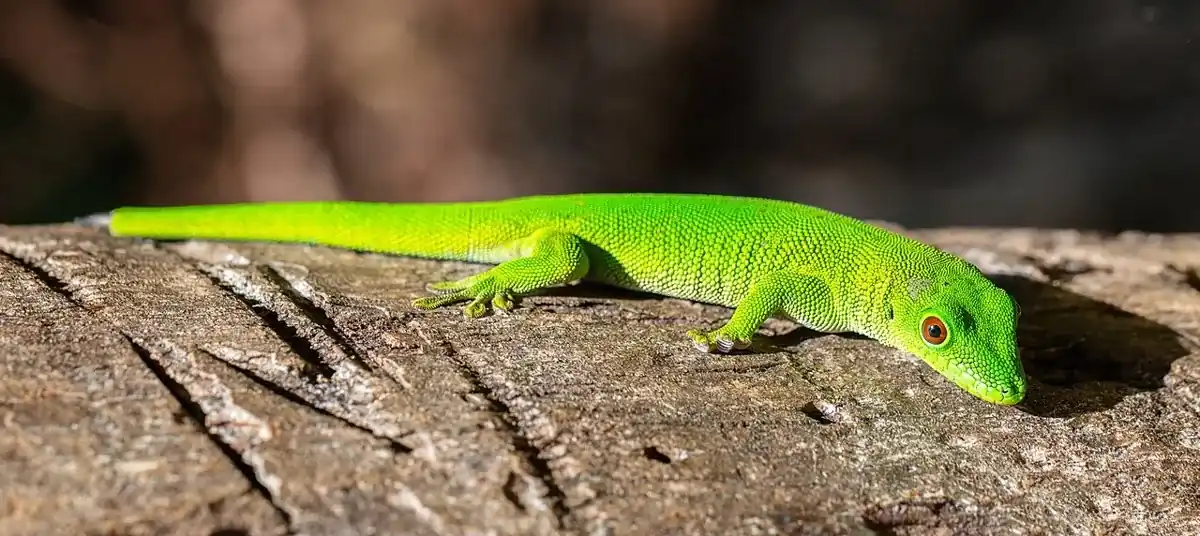
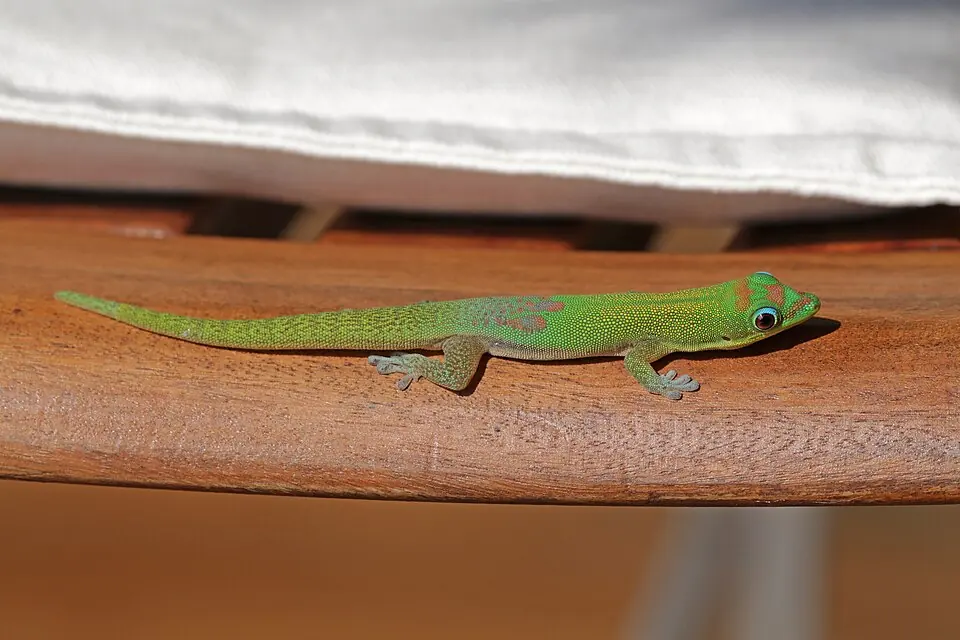
This guide covers Phelsuma laticauda, including its recognized laticauda and angularis forms. Gold dust is not a synonym for every small day gecko: P. grandis, P. lineata and P. quadriocellata need their own care. Confirm captive-bred provenance and current applicable rules rather than collecting an introduced population or an unidentified hitchhiker.
A daytime canopy animal of about 4–6″ (10.2–15.2 cm) total length can still need careful equipment and food preparation. Its fast movement and delicate skin make observation the ordinary interaction; a calm moment is not permission to grip it. Arrange an exotic veterinarian and continuing care before acquisition.
Join shelter, food and drinking routes
Use the internal adult dimensions in the enclosure panel for one gecko. Our larger preferred canopy adds usable routes rather than relying on empty height. Connect broad perches, foliage and cork or bamboo retreats so food and shelter are accessible without a leap toward a door or a hot lamp.
Reserve around 3″ (7.6 cm) below for moisture-retaining bedding, such as coconut fiber with suitable orchid bark, and any drainage provision. Check remaining canopy and lamp clearance. Keep feeding stations easy to inspect and clean, and prevent standing dirty water below. Check cable entries, vents and door edges at the smallest animal’s size, and position a catch cup before opening the enclosure.
Measure warmth and a voluntary ultraviolet basking patch
Start with daytime air at 78–82°F (25.6–27.8°C), a localized basking area at 85–88°F (29.4–31.1°C) and night air at 72–75°F (22.2–23.9°C). This guide treats the clinic’s basking figure as a surface target; the source does not specify the measurement object. Check surfaces and air separately, control the heat and retain a cooler sheltered choice.
Provide bright visible light and ultraviolet B (UVB) on a regular 12-hour starting day. Use a restricted basking patch at ultraviolet index (UVI) 3–4 at the nearest reachable back height, with shaded routes and completely shaded refuges. This is a specialist practice reference, not a proven dose optimum.
Start with the lamp manufacturer’s current clearances, then measure the complete reachable canopy through the installed mesh. Adjust the fixture or branches to create the intended patch. Day geckos can reach glass and the roof, so check those routes too. A bulb marked 5–6% does not tell you the exposure at the animal.
Make drinking available without permanent saturation
Use the clinic’s 60–80% relative-humidity reference, recording local temperature and the daily cycle. ReptiFiles gives a lower 40–70% range, so published practice differs. Provide clean drinking droplets on foliage and let surfaces dry with fresh airflow between waterings. Adjust watering to the measured canopy conditions; avoid continuous soaking or unchecked fogging.
Keep a very shallow backup dish with an easy exit and inspect drainage for standing dirty water. Food residue, wet leaf litter and an obstructed drain can worsen even when a humidity display looks correct. Check hydration, feeding and ordinary activity together.
References: [2]
Use a cup for necessary transfers
Keep this plan to one gecko. Optional pair or group examples in a source introduce territorial and breeding management that the single-animal dimensions do not settle. Use a catch cup for necessary transfers, without grabbing skin or tail.
Inspect toes and the eye region after shedding without peeling attached material. A mature female may need suitable egg-laying provision even if a male was not intended. No incubation or automatic cooling protocol is prescribed. Skin tears, swelling, sunken eyes, weakness or declining weight require an exotic veterinarian.
Validate access as carefully as the readings
Prepare secure vertical housing, connected furnishings, accessible food ledges, drinking-water provision, controlled gentle heat, a timer, air/humidity probes, surface thermometer, appropriate ultraviolet equipment and exposure-meter access. Establish the finished canopy and verify food/water access before arrival, measuring the actual canopy gradient above.
During the first week, keep quiet intake, waste and ordinary movement records. Remove spoiled formula and contamination, renew water and check drains, doors and controls.
References: [2]
Sources & further reading
Read the full recommendations and check details for your animal, equipment, and local conditions.
- Phelsuma laticauda | The Reptile Database
- Gold Dust Day Gecko Care Sheet
- Love these Gold Dust Day Geckos
- Gold Dust Day Gecko Care Sheet
- Gold Dust Day Gecko care sheet
- Questions About Pangea Gecko Diets | Pangea Reptile
Original Creature Corner guide. Editorial fact and citation checks are recorded; independent veterinary review has not been performed.