Use this guide as a starting point alongside the detailed sources below. Health concerns, unexplained changes in behavior, or feeding problems belong with a reptile veterinarian.
Adult enclosure recommendation
Our recommended minimum: 18″ × 18″ × 3′ (45.8 × 45.8 × 91.5 cm), length × depth × height.
Preferred target: 2′ × 2′ × 3′ (61 × 61 × 91.5 cm), length × depth × height.
Usable internal space for 1 adult animal. One adult Rhacodactylus auriculatus, typically 8″–10″ (20–25 cm) total length.
Height is the usable internal envelope, including the space reserved for substrate and water. Check the remaining movement space and lamp clearance after installation.
The wider 2′ × 2′ × 3′ (60.96 × 60.96 × 91.44 cm) target gives a less proficient climber more horizontal routes, foliage and feeding access without sacrificing height.
Our recommended minimum adopts the specialist's explicit adult 18″ × 18″ × 3′ (45.72 × 45.72 × 91.44 cm) baseline, with a wider preferred size supported by breeder housing examples and this gecko's horizontal movement and imperfect grip. These are husbandry recommendations, not experimentally validated thresholds.
- Floor space
- An 18″ × 18″ (46 × 46 cm) minimum footprint, preferably 2′ × 2′ (61 × 61 cm), supports sideways routes as well as upward movement.
- Climbing space
- Connect rough branches, cork and covered resting sites across the height and width. Do not require smooth-glass climbing or long unsupported jumps.
- Substrate
- Provide 2″–4″ (5–10 cm) of moisture-retaining bedding for established animals. The 3′ (91 cm) internal envelope includes this, leaving about 32″–34″ (81–86 cm) above before fixtures or additional drainage layers.
- Water
- A shallow clean drinking cup plus droplets after misting. No pool is needed; keep dishes accessible from safe perches.
- Security and ventilation
- House singly in an escape-proof, ventilated enclosure with shaded retreats and guarded equipment. Enclosure size does not by itself establish a safe thermal or UV (ultraviolet) gradient.
Meeting these dimensions alone does not establish suitability. Check the usable layout, environmental conditions, equipment clearance and the individual animal’s requirements before occupation.
Plan for an evening animal
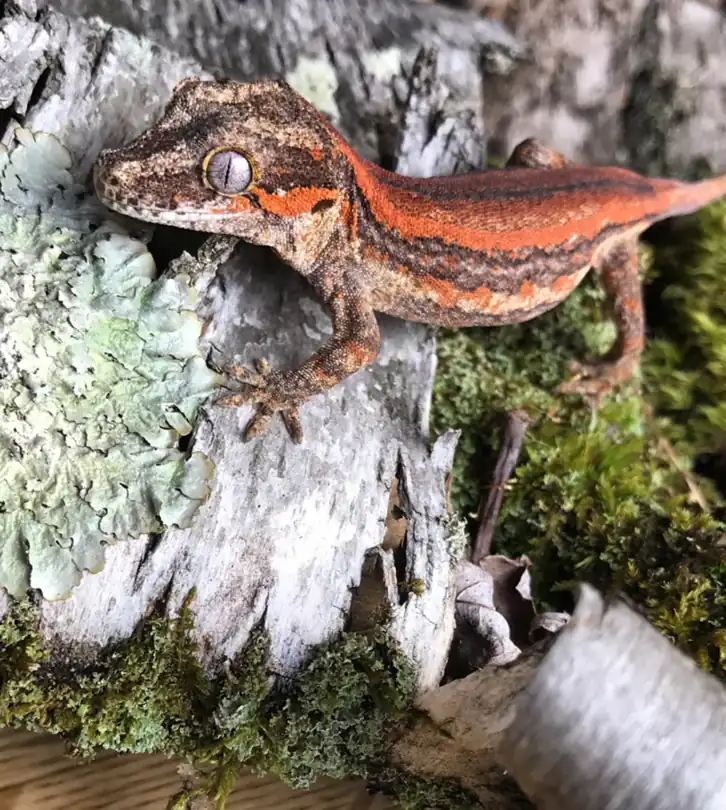
Choose a captive-bred Rhacodactylus auriculatus with an established feeding record. This New Caledonian gecko spends much of the day concealed and explores after dark. Plan for 15–20 years of care and potentially longer; the breeder account records individuals beyond twenty years, not a guaranteed maximum. A colour or pattern name does not reduce the adult housing commitment.
Housing and safe routes
For one adult gargoyle gecko, our recommended minimum is 18″ × 18″ × 3′ (46 × 46 × 91 cm), length × depth × height of usable internal space. We prefer 2′ × 2′ × 3′ (61 × 61 × 91 cm) for more horizontal movement and cover. These are specialist-informed editorial recommendations, not scientifically established thresholds. Adult geckos commonly reach 8″–10″ (20–25 cm) total length; neither sex needs a smaller permanent home.
Fit rough branches and cork that connect feeding ledges, sheltered perches and lower retreats. Gargoyles do not grip smooth surfaces as effectively as crested geckos, so make horizontal and diagonal travel possible without long jumps. Reserve 2″–4″ (5–10 cm) for bedding; the stated 3′ (91 cm) internal height includes it, leaving about 32″–34″ (81–86 cm) before lamps or any extra drainage layer. Measure the actual finished layout.
Keep one gecko. A hatchling may begin in a smaller monitored grow-out enclosure, but it is temporary housing and needs its own safe lighting and temperature plan. Size alone cannot establish suitability: every resting level needs shade, stable footholds, a reachable drinking cup and safe access for cleaning.
Create measured choices in warmth and moisture
Provide a local daytime basking area around 84°F (29°C) while retaining a cool retreat at 72–74°F (22–23°C). Measure occupied surfaces with an infrared thermometer and air beside the perches with probes. Use a thermostat-controlled heat source only if it can provide warmth without eliminating the cool zone. Aim for dark nights around 68–77°F (20–25°C); avoid using the source's reported extremes as everyday targets.
Provide about 12 hours of daylight and low-level UVB (ultraviolet B) with complete shade. Our starting specialist reference is UVI (ultraviolet index) 1–2 at the accessible basking position, measured with a suitable meter, not inferred from a lamp percentage. This is a husbandry recommendation rather than a gargoyle-specific dose trial. Check the nearest reachable branch, mesh loss and shade after every layout change.
Let humidity rise after evening misting, then fall toward 50% before the next misting. Around 50–70% is a useful ordinary range; brief peaks of 80–100% immediately after misting are not an all-day target. Check a hygrometer at resting height and inspect lower bedding so a damp floor does not conceal poor ventilation. Provide fresh water in a shallow cup even when the gecko drinks droplets.
Feed a complete diet and offer hunting opportunities
Use a nutritionally complete diet labelled for crested and gargoyle geckos, mixed according to its current instructions. Offer it daily to growing youngsters and every other day to established adults; remove leftovers within 24 hours. Begin with the diet the animal recognises, then introduce other complete formulations once intake is reliable. Fruit or baby food alone is not a complete replacement.
Offer suitably sized gut-loaded crickets or roaches about twice weekly to adults. Growing animals can be offered smaller insect meals every other day under the specialist schedule, adjusted to intake and growth rather than automatically feeding every offered insect. Choose crickets and roaches no wider than the gap between the gecko's eyes. Keep comparable weight records and reduce excess portions if condition becomes too heavy.
Observe, clean and handle carefully
Change drinking water daily, remove droppings and discarded food, and check toes for trapped shed or dried diet while observing the gecko in the evening. Keep a record of appetite, shedding and comparable weights. Clean with dedicated equipment during separation from other reptiles, and arrange veterinary assessment when an animal persistently loses weight or cannot shed normally.
Let handling remain brief and voluntary, with support close to a safe surface. Never lift by the tail. Gargoyles can lose the tail during rough handling or conflict, even though it can regrow. Budget for the furnished habitat, lamp replacement, complete diet, insects and veterinary care across the animal's long life.
Keep calcium and the diet label coordinated
Lightly dust feeder insects with a phosphorus-free calcium supplement. With the measured UVB provision described here, the specialist plan uses calcium without added vitamin D3. A gecko maintained without UVB needs an appropriate dietary D3 plan; follow the complete food and supplement labels and obtain veterinary guidance when these overlap.
Do not add routine calcium or multivitamin powder to a diet already labelled complete unless its instructions or your reptile vet specifically require it. Feed the insects a suitable gut-loading diet before offering them. Keep product labels and lighting records together so a change of food or lamp prompts a review of the whole plan.
Use a floor you can maintain
Use absorbent paper during initial monitoring when it helps you find droppings and check feeding. For an established animal, provide 2″–4″ (5–10 cm) of suitable moisture-retaining substrate without sharp fragments, added fertilizer or persistent standing water. Do not use the damp lower layer as a reason to keep every surface wet.
In a planted enclosure, allow room for any drainage layer and keep access to the bottom. Plants and waste-processing organisms do not remove the need to collect food waste, inspect droppings and maintain the substrate. Small hatchlings need particular attention to accidental ingestion and accessible food ledges.
References: [6]
Remeasure after every enclosure move
A hatchling under about ≈ 0.459 oz (13 g) in a small grow-out container can be exposed to excessive heat or UVB by an adult lighting arrangement. Test the complete temporary setup before use; fixture distance, mesh and the closest accessible perch matter more than the package's nominal lamp strength.
Before moving into the adult enclosure, install the bedding, branches and cover, then measure warmth, cool retreats and UV exposure at the actual resting positions. Confirm the gecko finds food and water after the move. Upgrade on the basis of growth and usable routes, not merely the container's volume.
Where recommendations differ
Published housing advice varies substantially: Aurora Animal Hospital lists a 1′ × 1′ × 18″ (30.48 × 30.48 × 45.72 cm) adult enclosure, Gargoyle Queen describes larger but sometimes lower arrangements, and ReptiFiles' explicit adult baseline is 18″ × 18″ × 3′ (45.72 × 45.72 × 91.44 cm). These are practice recommendations, not comparative welfare trials. We choose the taller baseline and prefer a wider footprint because the gecko needs covered routes both vertically and horizontally. A lower temporary grow-out enclosure is a different life-stage decision.
Humidity advice also differs. The veterinary sheet maintains 60–70% continuously with repeated peaks, while the specialist and breeder accounts permit a drying interval. We recommend the drying cycle with a humid retreat because it supplies drinking opportunities without requiring constantly wet surfaces. In a dry room, substrate and misting may need adjustment to achieve the same cycle.
ReptiFiles calls regular insects essential, while the veterinary sheet and breeder report allow a complete formulated diet alone. No comparative gargoyle trial in these sources establishes that insects are mandatory when a complete diet meets nutrient needs. We recommend offering insects for hunting and dietary variety, while a consistently thriving gecko that refuses them can continue on an appropriate complete diet. Appetite or weight problems call for assessment rather than force-feeding or supplement stacking.
Temperature advice also differs: Aurora permits nights near 60°F (16°C) and describes ordinary room temperatures, while the specialist plan uses 68–77°F (20–25°C) nights and a local daytime warm area. We use the narrower maintenance range with a cool retreat. Lower seasonal nights may be appropriate for an established animal under a documented seasonal plan; they are not a requirement for a newly acquired gecko.
Sources & further reading
Read the full recommendations and check details for your animal, equipment, and local conditions.
- ReptiFiles: gargoyle gecko identity
- ReptiFiles: gargoyle housing
- ReptiFiles: gargoyle heat, light and moisture
- ReptiFiles: gargoyle feeding
- Gargoyle Queen: breeder care observations
- ReptiFiles: gargoyle substrate
- Aurora Animal Hospital: gargoyle gecko care
Original Creature Corner guide. Editorial fact and citation checks are recorded; independent veterinary review has not been performed.